
icon icon Home
icon icon Accounts
icon icon Quick start
icon icon Symbols

How to Protect Your Investments: Safest Assets for Stagflation

Author
Abe Cofnas
Abe Cofnas
calendar Last update: 1 April 2026
watch Reading time: 10 min

Stagflation occurs when prices continue to rise while the economy slows, making everyday life more expensive and growth weakens. During these periods, many people wonder what the Safest asset during stagflation really is.

Should you hold gold, invest in oil, or simply keep cash? As inflation reduces purchasing power and uncertainty increases, choosing wisely becomes essential.

In this article, we break everything down in simple terms so you can understand your options and feel more confident about protecting your money. Keep reading to discover which assets may offer stability when markets struggle.

bookmark
Key Points:
  • Identifying the safest asset during stagflation often requires combining commodities, defensive equities, and diversified holdings rather than relying on one asset.
  • Successful investing in a stagflationary environment depends on monitoring inflation indicators and adjusting portfolios as economic conditions evolve.
  • The debate around gold vs inflation highlights how real assets can preserve value when traditional investments struggle.
  • Long-term resilience during stagflation often stems from diversification, disciplined allocation, and a focus on assets with real economic demand.

Understanding Stagflation and Its Economic Impact

Stagflation combines high inflation with stagnant economic growth and rising unemployment. This rare condition disrupts normal economic cycles. It leads to an economic slowdown in which prices rise while jobs and output stall.

Causes often stem from supply-side shocks, such as energy crises or policy mistakes. For instance, the 1970s oil embargo triggered inflation rates up to 13% in the US. This eroded savings and cut consumer spending.

Broader effects include weakened purchasing power and strained businesses. Measured by the Consumer Price Index (CPI), these pressures slow recovery. Such events challenge traditional fixes.

sms-star

Key Point:
Stagflation reduces real returns on fixed-income assets, pressuring portfolios as inflation outpaces yields.
What Stagflation Means for Investors

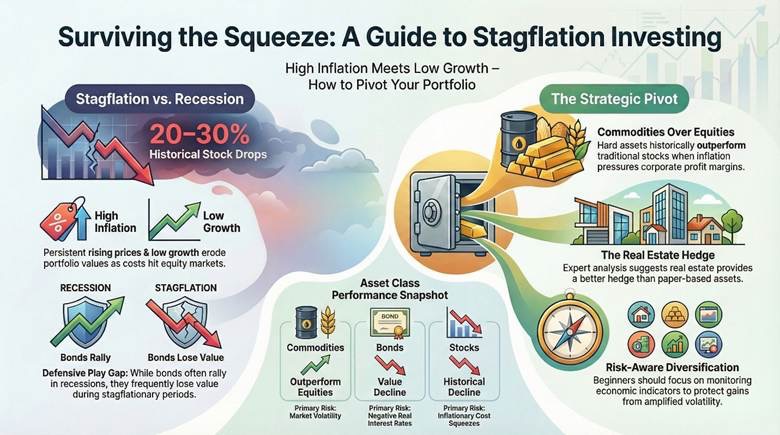
Investing in stagflation requires caution as it erodes portfolio value. Higher costs and weak returns hit hard. Stocks historically dropped 20-30% in such periods.

Beginners encounter amplified volatility. Education on monitoring indicators is key. Focus on risk-aware diversification to protect gains.

Commodities often outperform equities here. Bonds suffer from negative real interest rates. Shift to safe-haven assets for stability. According to Lyn Alden, real estate and hard assets provide better hedges.

Q&A: How does stagflation differ from recession for traders?

Stagflation adds persistent inflation to recession’s low growth. In recessions, bonds may rally as rates fall. But stagflation makes bonds lose value due to rising prices.

Stocks behave differently, too. Recession hits cyclicals hard. Stagflation pressures all via cost squeezes.

Traders should compare: recessions allow defensive plays. Stagflation favours commodities over bonds. Trading involves risk of capital loss. Consult professionals.

surviving squeeze

Role of CPI and Purchasing Power in Economic Slowdowns

The Consumer Price Index (CPI) is one of the most widely used indicators for measuring inflation and evaluating changes in the cost of living.

It tracks the price changes of a basket of goods and services that households regularly purchase.

When CPI rises quickly during an economic slowdown, it signals that inflation is reducing consumer spending capacity and weakening economic activity.

According to SmartAsset, the CPI helps policymakers and investors understand how inflation affects household purchasing power, which directly influences consumer demand and investment behaviour.

Central banks often respond with tighter monetary policy. A Hawkish Federal Reserve may raise interest rates to reduce inflation, but higher borrowing costs can also slow business activity and investment.

Supply disruptions, such as a supply chain shock, can intensify these pressures by increasing production costs and limiting economic output.

Identifying the Safest Assets During Stagflation

Determining the safest asset during stagflation requires understanding how different assets react when inflation rises while growth slows.

Historically, gold, oil, and cash have been compared because each provides a different type of protection.

Gold and commodities often act as safe haven assets, while cash offers liquidity but may lose value when negative real interest rates persist.

commodities and precious metals have often performed better than traditional financial assets during inflationary slowdowns.

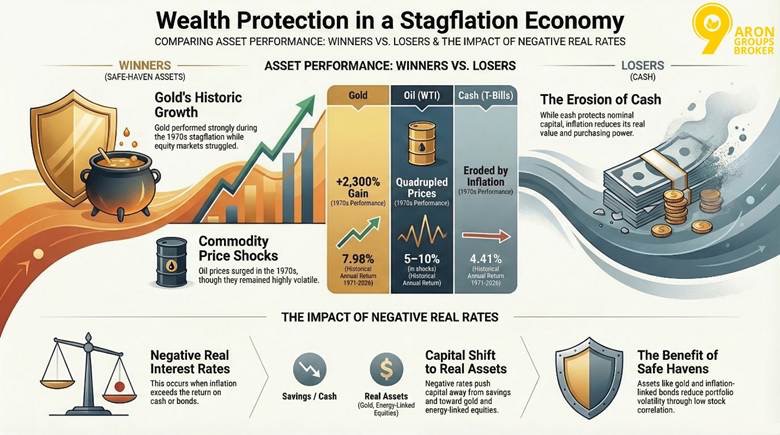
AssetHistorical Annualised Return (1971-2026)

Performance in the 1970s Stagflation

Gold

7.98%

+2,300% gain

Oil (WTI Crude)

Variable, often 5-10% in shocks

Quadrupled prices, but volatile

Cash (e.g., T-Bills)

4.41%

Eroded by inflation

Q: Is cash truly safe in stagflation?

A: Cash protects capital in nominal terms but inflation reduces its real value. If inflation is higher than savings yields, purchasing power declines.

investor guide

Safe Haven Assets and Why They Matter

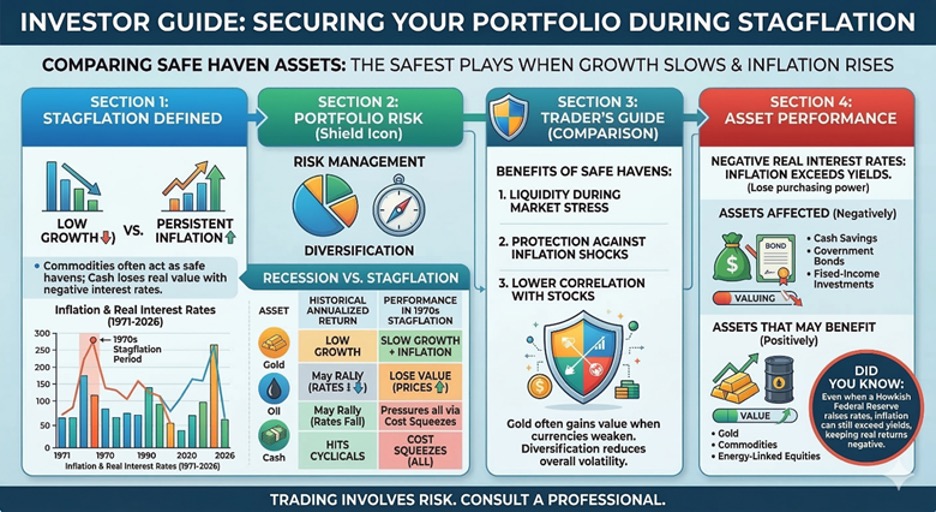
Safe haven assets are investments that tend to retain value during an economic slowdown or market stress. Examples include gold and inflation-linked bonds. These assets often move differently from equities, which helps stabilise portfolios.

Benefits of safe havens:

  • Liquidity during market stress
  • Protection against inflation shocks
  • Lower correlation with stocks
sms-star

Key Insight:
Diversifying across safe haven assets can reduce overall portfolio volatility when economic uncertainty rises.
Gold vs Inflation: Defensive Strategies

The debate around gold vs inflation remains central because gold often gains value when currencies weaken.

Investors may access gold through physical holdings, ETFs, or derivatives such as CFDs. Many traders participate in gold trading markets to hedge inflation risks.

inflation reduces currency value over time, which explains why investors seek assets like gold to preserve purchasing power.

Q: How does gold compare to stocks during inflation?

A: Gold historically performed strongly during the 1970s inflation period, while many equity markets struggled with weak growth.

Negative Real Interest Rates and Asset Safety

Negative real interest rates occur when inflation exceeds the return on cash or bonds. This means investors lose purchasing power even if they earn interest. Such environments often push capital toward commodities and real assets.

Assets affected by negative real rates:

  • Cash savings
  • Government bonds
  • Fixed-income investments

Assets that may benefit:

  • Gold
  • Commodities
  • Energy-linked equities
wealth protection
sms-star

Did You Know:
Even when a Hawkish Federal Reserve raises rates, inflation can still exceed yields, keeping real returns negative.
Practical Investing Strategies During Stagflation

Practical portfolio planning matters more when inflation stays high and growth weakens. The goal of investing in stagflation is not to chase one winning asset, but to spread exposure across areas that may hold value better during an inflation shock or a supply chain shock.

In practice, that means using diversification, defensive sectors, and disciplined risk management rather than relying on growth-heavy positions alone.

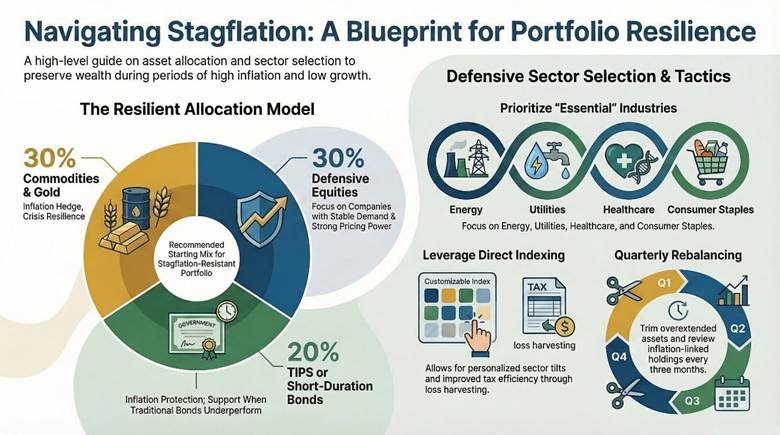
A simple starting mix could look like this:

Asset group

Example allocation

Why it may help

Commodities and gold

30%

Inflation hedge and crisis resilience

Defensive stocks

30%

Stable demand and pricing power

TIPS or short-duration bonds

20%

Partial inflation protection

Cash

10%

Liquidity for opportunities

Broad international exposure

10%

Reduces single-market dependence

Q: How to start investing in stagflation?

A: Begin with a diversified portfolio, avoid concentrating in speculative assets, and add inflation-aware exposure gradually. Start small and review allocations regularly.

navigationg stagflation

Diversifying Across Stocks, Bonds, and Commodities

A balanced portfolio can reduce the damage caused by inflation and slower growth. Traditional bonds may underperform when inflation stays elevated, but Treasury Inflation-Protected Securities can offer more support.

Commodities and selected equities may help offset weakness in fixed income, especially when inflation is tied to supply pressures.

Useful rebalancing steps include:

  • Trim assets that have become too large in the portfolio
  • Add to the underweight defensive areas
  • Review inflation-linked holdings quarterly
  • Keep cash available for market dislocations
sms-star

More Info: Investors who want simpler access can use ETFs focused on commodities, TIPS, utilities, or broad defensive equity baskets.

Selecting the Best Stocks for Stagflation

The best stocks for stagflation are usually companies with steady demand, strong cash flow, and pricing power.

Utilities, energy producers, pipelines, healthcare firms, and consumer staples often stand out because their products remain necessary even in weaker economies.

High-growth shares that depend on cheap financing may struggle more when rates stay restrictive.

Sectors often favoured in stagflation include:

  • Energy
  • Utilities
  • Consumer staples
  • Healthcare
  • Materials

Leveraging Direct Indexing for Personalised Exposure

Direct indexing lets investors hold individual shares that mirror an index, while still adjusting sector weights and exclusions.

This can be useful during inflation because investors can tilt towards energy, materials, or defensive businesses that may better protect purchasing power. It may also improve tax efficiency through selective loss harvesting. According to Fidelity, this strategy provides personalisation beyond ETFs.

sms-star

Key Point:
Direct indexing can give investors more control than a standard fund, but it usually works best for larger portfolios and long-term planning.

Timing Investments with Hawkish Federal Reserve Policies

A Hawkish Federal Reserve usually means tighter policy, higher rates, and stricter financial conditions.

That can pressure broad equity valuations, especially when negative real interest rates remain in place despite rate hikes.

Instead of trying to call the exact bottom, many investors phase in positions and monitor inflation, yields, and earnings trends.

Indicators worth watching include:

  • Inflation trend versus bond yields
  • Central bank guidance
  • Energy prices
  • Credit conditions
  • Corporate earnings revisions
sms-star

Warning:
Market timing is difficult. Gradual entries and diversification are usually safer than making one large directional bet.
Commodity and Currency Strategies for Stagflation

Commodities and currencies often react faster than stocks when inflation pressure rises and growth weakens. That is why they matter when assessing the safest asset during stagflation.

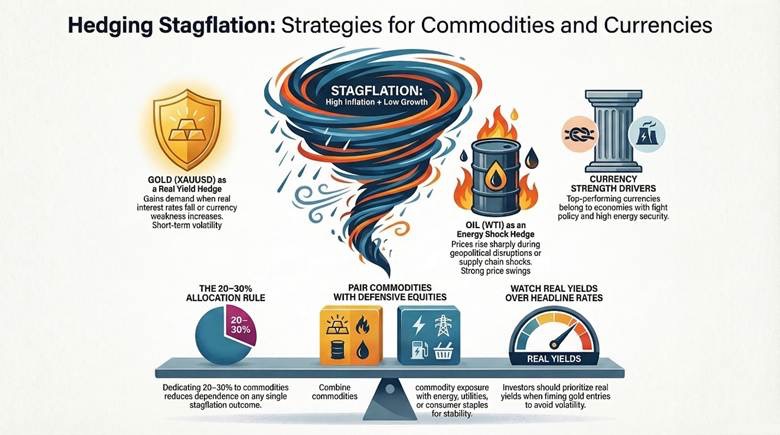
Gold is often used as a monetary hedge, while oil can benefit from supply-driven price shocks. Currencies also matter because some hold value better than others when inflation and growth risks rise.

Q: How do currencies fare in stagflation?

A: Stronger currencies usually belong to economies with tighter policy and better energy security. Weaker currencies often suffer when inflation rises faster than domestic rates.

hedging stagflation

XAUUSD as a Defensive Hedge Against Inflation

XAUUSD tracks the price of gold against the US dollar, so it is central to the gold vs inflation discussion.

Gold often attracts demand when investors worry about currency weakness, falling real yields, or market stress.

That is also why traders closely watch what factors affect gold prices, including real interest rates, central bank policy, and geopolitical risk.

Practical XAUUSD tips:

  • Watch real yields, not just headline rates
  • Use position sizing carefully
  • Avoid overleveraging during volatile news events
sms-star

Warning: Gold can hedge inflation, but XAUUSD remains volatile. Trading leveraged products involves the risk of loss of capital.

WTI Crude Oil: Diversifying Commodities Exposure

WTI Crude Oil often becomes important when inflation is driven by energy markets. A geopolitical disruption or supply chain shock can lift oil prices quickly, which may support energy-linked investments even as broader growth slows.

Oil is less stable than gold, but it can be a powerful hedge during inflationary supply events.

Common ways to gain oil exposure include:

  • Energy ETFs
  • Oil producer shares
  • Futures-based funds
  • Broad commodity funds

Balancing Commodities and Equities for Portfolio Stability

A balanced allocation can reduce dependence on any single stagflation outcome. Some investors use 20–30% commodity exposure, then pair it with defensive equities such as energy, utilities, or consumer staples.

This approach can help when inflation stays elevated without moving fully into hyperinflation territory.

sms-star

Key Insight:
Commodities can support a portfolio during inflation shocks, but combining them with equities may create a more stable long-term mix than holding commodities alone.


Conclusion

In navigating stagflation, prioritising diversification into commodities and TIPS as the safest asset during stagflation helps counter rising Consumer Price Index (CPI) pressures and slow growth. Investing in stagflation demands ongoing education on market shifts and professional advice for personalized plans. Look forward to our future insights on 2026 trends like AI-driven overheating. Trading involves the risk of loss of capital. Consider whether you understand how CFDs work.

Continue Reading
not-found
calendar 1 April 2026
Rate this article
Plugin not installed

Leave a Reply

Your email address will not be published. Required fields are marked *

No thanks