





The increasing risk of inflation can reduce the real value of assets and threaten the purchasing power of investors, even when the returns on investments appear positive. Many people overlook the difference between nominal and real returns, thereby underestimating the impact of inflation on their investments. By understanding the true effect of inflation on investments and using strategies to protect capital from inflation, you can prevent asset depreciation and preserve the real value of money. If you want to learn how to mitigate the risk of reduced purchasing power through inflation-proof investments, stay with us until the end of this article.

- Inflation risk can reduce the real value of capital, and ignoring it leads to erosion of purchasing power.
- Understanding inflation measurement tools and indicators, such as the CPI and interest rates, helps investors predict the risk of capital depreciation.
- Inflation-proof investment strategies, including gold, commodities, and TIPS bonds, can prevent asset depreciation.
- Diversification and long-term planning are the most important methods for protecting capital against inflation and reducing purchasing power risk.
What is Inflation Risk and Why Should Investors Take It Seriously?
If you’re wondering what inflation risk is, it’s the risk of a reduction in the real value of assets due to unexpected price increases. Even if your investment shows nominal returns, inflation can reduce the real value of your money and lower your purchasing power. For example, with a 5% inflation rate, $1,000 today will only have the purchasing power equivalent to $950 next year.
Historically, periods of high inflation, such as the 1970s in the U.S., have shown that the real returns of the stock market can be negative, and investors who don’t plan properly can suffer losses. Therefore, understanding the impact of inflation on investments and planning to mitigate the risk of reduced purchasing power is essential. Using long-term risk management strategies can help preserve the real value of assets and protect investors from the negative effects of inflation.
The Difference Between Inflation Rate and Inflation Risk
The inflation rate represents the general increase in prices over a specified period, typically measured by the Consumer Price Index (CPI). This index shows the average price changes of consumer goods and services and helps investors assess the overall trend of inflation. For example, if the inflation rate is 3%, it means that the average price of goods has increased by 3% compared to the previous year.
On the other hand, inflation risk refers to the possibility of inflation exceeding the expected level, which can reduce the real value of capital. For instance, if the expected inflation rate is 3% but it rises to 5%, the real return on an investment with a 4% nominal return will actually be -1%. This illustrates the importance of understanding inflation risk for investors and highlights the necessity of planning to mitigate this risk.
The table below makes this difference more clear:
| Feature | Inflation Rate | Inflation Risk |
|---|---|---|
| Definition | General price increase (CPI) | Risk of inflation exceeding expectations |
| Nature | Predictable | Unexpected and dangerous |
| Effect on Money | Gradual loss of value | Rapid and hidden loss |

According to Investopedia, "Inflation is the reduction of the purchasing power of money over time, and failing to predict changes in inflation creates a risk that the real return on an investment or the future value of an asset may be lower than expected."
The Impact of Inflation Risk on Different Investments
Inflation risk can reduce the real value of assets and affect different types of investments in various ways. By understanding how inflation impacts different assets, investors can use diversification and appropriate strategies to prevent the erosion of the real value of their assets.
Impact of Inflation Risk on the Stock Market
In the stock market, rising inflation typically leads to more price volatility. However, experience shows that stocks tend to grow in the long term. Specifically, value stocks perform better than growth stocks during inflationary periods because they are less sensitive to interest rate changes. Paying attention to the impact of inflation on investments when selecting stock types and using fundamental analysis can help investors preserve the real value of their capital.
Impact of Inflation Risk on Bonds and the Decline in Real Returns
Bonds with fixed interest rates are vulnerable to inflation because the real value of the income received declines. For example, if the yield on a bond is 5% and inflation rises to 7%, the investor’s real return will be negative. This highlights the importance of protecting investments in fixed-income securities from inflation and requires precise management strategies.
Impact of Inflation Risk on the Real Estate Market
The real estate market is typically resistant to inflation, and as prices rise, the value of assets also grows. However, an increase in interest rates can reduce demand and have a negative impact on the real estate market. Understanding this trend helps investors better manage the impact of inflation on their real estate investments.
Impact of Inflation Risk on Liquidity, Bank Accounts, and Purchasing Power
Holding liquidity in a bank with low interest rates during inflationary periods can lead to erosion of the real value of money. For example, if the deposit interest rate is 1% and inflation is 3%, the investor will face a reduction in purchasing power. In such conditions, considering purchasing power risk and using strategies to protect capital from inflation is essential.
In periods of high inflation, fixed-rate bonds can have negative real returns, as their fixed interest rates cannot offset the rising cost of living.
Inflation Risk Measurement Indicators and Tools
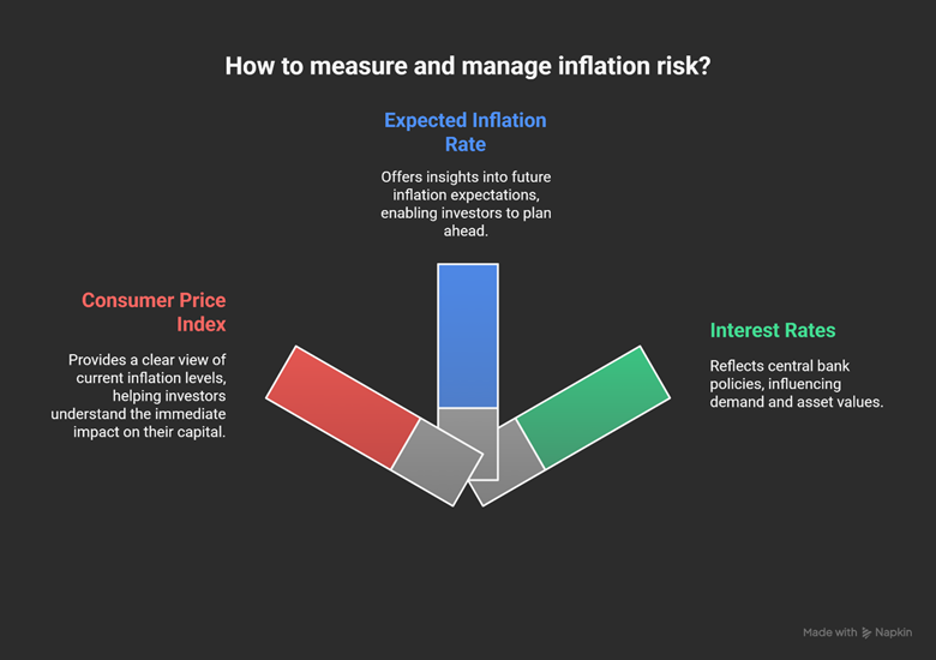
Investors need to assess the level of inflation risk to make better decisions, and there are tools available to measure this risk, helping prevent the erosion of the real value of assets. Using these indicators aids in planning and adopting strategies to protect capital.
Consumer Price Index (CPI): The Main Inflation Measurement Tool
One of the most important tools is the CPI, which shows changes in the prices of goods and services over time and is the primary measure of inflation. For example, if the CPI increases by 3% in a year, it means that the prices of goods and services have increased by an average of 3%. Familiarity with this indicator helps investors better understand what inflation risk is and how it may reduce the real value of their capital.
Expected Inflation Rate
Knowing the expected inflation rate is crucial for investment planning. This rate is usually derived from the difference in the yields between regular bonds and TIPS (Treasury Inflation-Protected Securities), reflecting what the market expects for future inflation rates. With this information, investors can predict how inflation will impact their investments and make more informed decisions.
Interest Rates
The central bank’s interest rate, such as the Federal Reserve’s, is another important tool that impacts inflation and the economy. Changes in interest rates can either reduce or increase demand in the economy, thereby affecting the real value of assets. Paying attention to interest rates helps investors implement strategies to protect their investments against inflation.
Adding specific asset classes such as commodities or real estate to a diversified portfolio of stocks and bonds can provide protection against inflation.
Methods to Protect Capital from Inflation
Rising inflation can reduce the real value of capital and impact the purchasing power of money. By using appropriate strategies, investors can prevent the depreciation of their assets and preserve the real return on their investments.
What is Inflation-Proof Investment and Why is it Important?
Some investments are designed to be resistant to inflation, helping to preserve the real value of capital. This type of inflation-proof investment is crucial because it helps investors avoid experiencing a loss in purchasing power during inflationary periods, preserving the value of their money. Using these methods can be an important part of any individual’s financial strategy.
Gold, Currency, and Commodities as Inflation Hedges
Gold is commonly recognized as a safe asset against inflation, maintaining its value over time. Additionally, commodities like oil, grains, and major currencies can act as hedges against rising prices. These assets are essential tools for inflation-proof investing and protecting capital from inflation.
Inflation-Protected Investment Funds and Related Securities
Inflation-protected government bonds (TIPS) and similar funds are instruments whose returns are adjusted according to the inflation rate. Using these tools is one of the practical methods for inflation-proof investing, helping to preserve the real value of assets even in inflationary conditions.
Long-Term Strategies to Preserve Capital Value
Diversifying an investment portfolio and focusing on assets that grow over the long term can help preserve capital value. These methods reduce the risk to purchasing power and increase real returns against inflation, making them an important part of long-term capital management.
Common Mistakes Investors Make When Facing Inflation
When dealing with inflation, some investors make mistakes that can reduce the real value of their capital and purchasing power. Recognizing these mistakes helps investors make better decisions to preserve the value of their assets.
Focusing Too Much on Nominal Returns Without Considering Inflation
Sometimes, investors focus only on the nominal returns of their investments and overlook the role of inflation in reducing real returns. This perspective can lead to an improper assessment of inflation’s impact on investments and result in ineffective financial decisions. For example, if the nominal return on an investment is 8% but the inflation rate is 5%, the real return will only be 3%.
Holding Excess Cash During Inflationary Periods
Holding large amounts of cash in bank accounts with low-interest rates during inflationary periods can erode purchasing power. In such conditions, purchasing power risk increases, and capital loses value over time. Therefore, liquidity management and proper capital allocation are crucial.
Lack of Diversification in the Investment Portfolio
Focusing solely on one type of asset can make capital vulnerable to inflationary fluctuations. Diversifying the investment portfolio ensures better protection against inflation. Combining stocks, bonds, and physical assets can reduce the risk of real asset value depreciation.
According to DupreeFinancial: Holding excessive liquidity during inflationary periods can lead to a reduction in its real value, as fixed interest rates cannot offset the rising cost of living.
Conclusion
Inflation can reduce the real value of capital and purchasing power, but by using inflation-proof investments and diversifying the asset portfolio, this decline can be prevented. Understanding what inflation risk is and making smart planning helps investors preserve the real return on their investments. Historical experience shows that even after periods of severe inflation, such as the 1970s, markets have provided long-term growth opportunities. Adhering to these principles allows investors to make more confident decisions and preserve the value of their assets over time.