

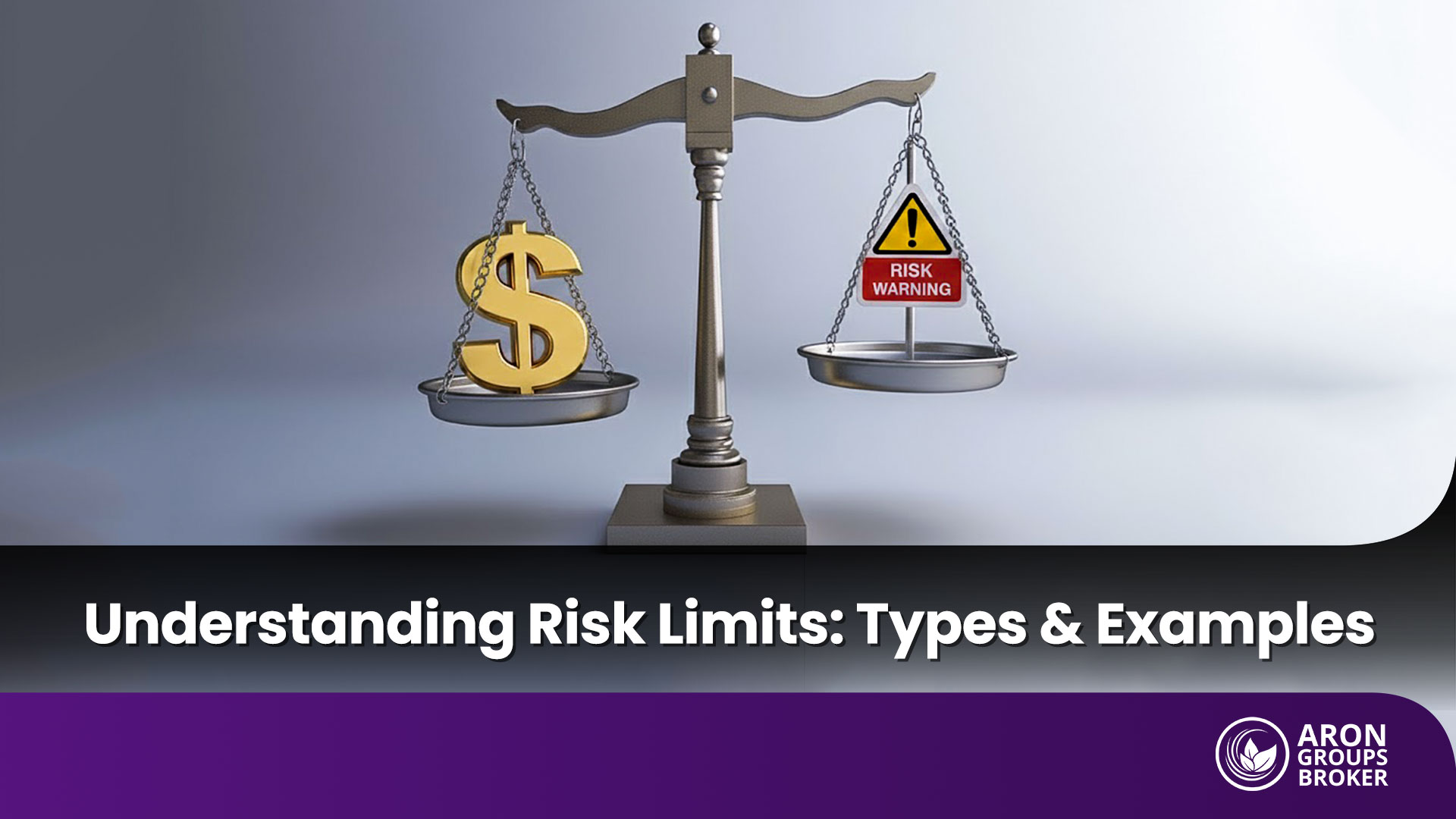




The majority of trading account liquidations do not stem from faulty market analysis. Instead, they are primarily driven by uncapped downside and inconsistent position sizing. Implementing a formal risk limit addresses these structural weaknesses by establishing a definitive ceiling on potential losses and total market exposure.
Key Takeaways
- Document your risk limits in a trading constitution so discipline survives stress and decision fatigue.
- Calibrate limits to your strategy’s expected drawdown using backtests or at least a 100-trade sample.
- Add a time-at-risk rule, since long exposure often increases tail risk more than position size does.
- Use a pre-trade checklist that blocks entries when volatility, spreads, or funding rates exceed your thresholds.
What Is a Risk Limit?
According to value-at-risk, A risk limit is a pre-set maximum loss or exposure that you will not exceed. It ensures that any single trade, day, or position cannot materially damage your account. When the limit is reached, you follow a defined response by reducing risk or stopping trading.
A risk limit is built from three parts:
- Risk metric: what you measure (loss, leverage, VaR, delta, exposure).
- Risk measure: how you calculate it (model, pricing, volatility, correlations).
- Bound: the line you do not cross (the actual limit).
Also, A risk limit can be expressed as:
- Financial loss: Max $250 loss per day.
- % of equity: Max 1% per trade.
- Position size: Max $10,000 notional in one stock.
- Leverage cap: Max 3× effective leverage.
- Exposure by asset or theme: Max 25% in one sector.
- VaR / Expected Shortfall (institutions): limits based on estimated tail risk.
- Delta exposure (options desks): limits on directional sensitivity to price moves.
Why Use Risk Limits in Trading?
Beginners rarely fail because they don’t know enough indicators. They fail because their risk exposure has no ceiling. When losses are unlimited, one bad streak can wipe out weeks of progress.
The Real Purpose of Risk Limits: Survival Over Being Right
A risk limit is not designed to predict the market; it exists to keep your account alive long enough for your edge to manifest. It serves as a structural shield for three critical areas:
- Capital Protection: Ensuring you remain in the game even after a statistical losing streak.
- Decision Quality: Preventing the psychological pain of a large loss from triggering emotional, irrational trades.
- Consistency: Ensuring your results reflect a repeatable method rather than the variance of random position sizing.
Risk limits also block two classic account-killers:
- Revenge trading: forcing trades to win it back immediately.
- Leverage creep: increasing position size after a few wins without noticing.
While both behaviours may feel rational in the heat of the moment, they are the primary drivers of account liquidation over the long term.
Key Point:
Risk limits are not about avoiding losses entirely. They are about preventing standard losses from evolving into catastrophic ones.
Risk Limit vs Stop-Loss
Both controls relate to loss, but they operate at different levels. A stop-loss is a trade-level exit tool. A risk limit is an account-level boundary that restricts total damage.
What a Stop-Loss Does and Where It Fails?
A stop-loss defines the price level or condition that triggers an exit from a single trade. It may be placed as an order, set as an alert, or applied as a manual rule. Its purpose is to limit loss when the trade thesis is invalidated.
However, stop losses can fail to deliver the intended outcome in live markets:
- Slippage: Rapid price moves can produce fills worse than the stop level.
- Gaps: Price can jump past the stop level before any execution occurs.
- Limited liquidity: Thin order books can cause partial fills and poor average prices.
- Human override: Traders may cancel or widen stops under emotional pressure..
Q: Which matters more, a stop-loss or a risk limit?
A stop-loss manages trade-level risk. A risk limit protects the account when losses compound across trades.
Key Risk Management Terms
Several risk terms appear interchangeable, but they serve different functions. Mixing them up leads to the appearance of discipline without effective control.
Risk Exposure vs Exposure Limits vs Maximum Risk
- Risk exposure: The potential loss you face if the price moves against your position.
- Exposure limit: A cap on the amount of exposure you are permitted to carry.
- Maximum risk: The worst loss you accept under your rules for a trade, day, or portfolio.
You may also encounter risk thresholds and risk boundaries used in similar contexts. In practice, they usually refer to the same concept: a level that should not be breached.
Risk Appetite vs Risk Tolerance
- Risk appetite: The amount and type of risk you are willing to take in pursuit of objectives.
- Risk tolerance: The level of loss or volatility you can withstand before outcomes become unacceptable.
In trading terms, risk appetite defines your intended risk budget. Risk tolerance defines your hard stop for drawdown and stress. Risk limits translate both into measurable, enforceable boundaries.
Q: What is risk limitation?
A: Risk limitation is the broader discipline of reducing downside through sizing, limits, hedging, and rules. A risk limit is one strict boundary within that broader approach.
Types of Risk Limits
You can set risk limits at the trade, day, and portfolio level. The right mix depends on your strategy and trading frequency. Use fewer limits first, then add complexity only when needed.
| Risk limit type | What it caps | Who uses it | Beginner-friendly default |
| Per-trade risk limit | Loss on one trade | Everyone | 0.5%-1% of equity |
| Daily loss limit | Total loss per day | Active traders | 1.5%-3% of equity |
| Weekly or monthly drawdown limit | Total drawdown over a period | Systematic traders | 4%-8% depending on style |
| Position size or notional limit | Maximum size in one instrument | Everyone | Cap single-position concentration |
| Leverage or margin limit | Maximum effective leverage | Derivatives traders | Keep leverage low by default |
| Portfolio concentration limit | Max exposure to one theme | Serious traders | Avoid “one bet in disguise” |
| VaR or ES limit | Risk metric bound | Institutions | Learn the concept, avoid over-engineering early |
| Delta and Greeks limits | Options sensitivity | Options desks | Prefer defined-risk structures early |
Per-Trade Risk Limit
This is the primary risk limit for most retail traders. It ensures that a single trade cannot materially impair weekly performance. It also promotes consistent position sizing across changing volatility conditions.
Daily Loss Limit
A daily loss limit functions as a circuit breaker during poor trading sessions. It reduces emotional trading, excessive turnover, and revenge-driven behaviour. It is particularly valuable for day traders and strategies exposed to news volatility.
Weekly or Monthly Drawdown Limit
This limit protects the account from regime shifts and declining execution quality. When it is reached, the appropriate response is to pause and diagnose the cause. Attempting to trade harder typically increases risk while reducing judgment.
Position Size and Notional Exposure Limits
Notional caps prevent unintended overcommitment to a single instrument or theme. They are especially important in volatile markets and in low-liquidity instruments. They also reduce the risk of concentrated bets presented as “high conviction”.
Leverage and Margin Limits
Leverage limits reduce the probability of forced liquidation and margin cascades. They matter most in futures, CFDs, and perpetual contracts. A volatility expansion can rapidly turn moderate leverage into excessive risk.
Portfolio Concentration Limits
Concentration limits reduce correlated losses across multiple positions. They can be applied by asset, sector, theme, or factor exposure. Their purpose is to prevent the “five trades, one bet” problem.
How to Set Risk Limits Step by Step
This is the stage where many traders either develop a disciplined system or experience avoidable losses. Risk limits should not be chosen intuitively.
They should be set using clear calculations, realistic assumptions about behaviour, and market stress scenarios.
Step 1: Define Your Account Risk Budget
Begin by determining your acceptable risk level. Align it with your time horizon, income stability, and psychological comfort with drawdowns. If a trading loss would affect rent, food, or essential bills, the risk budget is too large.
Step 2: Choose a Measurement Unit
Most retail traders start with %X of equity and $X loss limits. These measures are simple, transparent, and straightforward to enforce.
Institutional frameworks often use VaR, Expected Shortfall (ES), and sensitivity limits for portfolio-level consistency.
Step 3: Convert the Limit Into Position Size
Use fixed sizing rules rather than discretionary judgment. A robust sizing rule links risk to stop distance and the instrument’s value per point or pip.
Max $X loss per trade = Account equity × Risk %
Position size = Max $X loss ÷ (Stop distance × $X per point or pip)
If you cannot quickly calculate sizing, use a position sizing calculator sheet. Speed reduces errors when markets move quickly, and decisions become time-sensitive.
Step 4: Define the Breach Protocol
A risk limit without enforcement is ineffective. Specify in advance the action you will take when the limit is reached:
- Stop trading for the day.
- Reduce position size for the next N trades.
- Hedge exposure or flatten positions.
- Record the breach and review the cause before resuming.
Key Point: A limit without a breach protocol is only an intention, not a control.
Step 5: Stress Test Before You Scale Up
Stress testing answers a practical question: What conditions would break the plan?
It helps you identify hidden risks before they appear in live trading.
Use these simple stress tests:
- Gap test: Assume the stop fills 0.5× to 2× worse than expected slippage.
- Volatility spike: Assume stop distance must widen by 1.5× in fast markets.
- Correlation shock: Assume diversified positions move together during risk-off periods.
- Liquidity test: Assume partial fills and a worse average exit price.
- Behaviour test: Assume you will be tempted to override rules after a loss.
Adjust one variable at a time. Avoid tightening every rule simultaneously, as overly restrictive limits create churn and rule fatigue.
Q: What is a risk limitation example that includes stress testing?
A: Risk 1% per trade and apply a daily loss cap. Simulate slippage and reduce position size until worst-case losses remain tolerable.
Risk Limit Trading Examples
These examples illustrate how risk limits operate in practice. They highlight the assumptions that often remain hidden until markets move quickly. Treat them as calculation templates, not performance expectations.
Example 1: Forex Position Sizing With a Risk Limit
Assume the following:
- Account equity: $10,000
- Risk per trade: 1%
- Maximum loss per trade: $100
- Stop distance: 25 pips
- Pip value: $10 per pip per standard lot
Calculate position size:
Position size = $100 ÷ (25 × $10) = 0.40 lots
The stop-loss defines the distance to invalidation. The risk limit defines the maximum loss and, therefore, the position size. This is the most direct and measurable form of risk limitation.
Example 2: Crypto Perpetuals Risk Limits
In crypto markets, exchanges may impose risk limit tiers on position size. Higher leverage can reduce the maximum position size allowed under these tiers. Lower leverage can increase the permitted size, but it can still increase total exposure.
Apply your personal risk limit before relying on platform controls. Treat exchange tiers as an additional guardrail rather than a safety guarantee. Because perpetuals carry liquidation risk, conservative sizing is essential.
Example 3: Stock and Index Risk Limits
Assume you trade the Nasdaq index, a mega-cap technology stock, and a semiconductor ETF. The positions appear diversified, but they may share the same factor exposure. During a risk-off event, all three can decline simultaneously.
A daily loss limit prevents escalation after the first correlated loss. A concentration limit prevents repeated exposure to the same theme. Correlation is a primary source of hidden risk in multi-position portfolios.
Limited Risk in Options
In trading, limited risk usually refers to defined-risk structures, most commonly in options. It is not the same as an account-level risk limit, which controls total loss or exposure across trades. Limited-risk structures can help meet risk limits by capping worst-case losses on individual positions.
Limited Risk vs Unlimited Risk
- Limited risk: The maximum loss is capped by design. In many options positions, the maximum loss is limited to the premium paid.
- Unlimited risk: Losses can exceed the initial outlay. This can occur in strategies such as selling options without protection.
Common Limited-Risk Option Structures
Common limited-risk option strategies include:
- Debit spreads: Maximum loss is limited to the net premium paid.
- Protective puts: The Downside on a stock position is capped by buying put insurance.
- Collars: The Downside is limited while the upside is also capped, typically to reduce cost.
Defined-risk strategies reduce tail risk on a single position. Risk limits control aggregate risk across positions and time. Using both together typically improves portfolio durability.
Institutional Risk Limits
In professional settings, risk limits are not personal preferences. They function as governance controls and operational infrastructure.
Firms require consistent measurement across portfolios, desks, and traders. They also require escalation procedures to prevent unnoticed or unmanaged limit breaches.
Market Risk Metrics Institutions Use
Institutions commonly apply market risk limits through defined metrics, such as:
- Value at Risk (VaR) limits: caps based on modelled loss estimates over a set horizon and confidence level.
- Expected Shortfall (ES) limits: caps focused on tail risk beyond the VaR threshold.
- Delta limits: controls on directional sensitivity in options portfolios.
- Concentration limits: caps on exposure to single names, sectors, themes, or risk factors.
These limits are typically monitored continuously and reported systematically. Breaches are escalated through formal channels rather than handled informally. Risk control is therefore structural, not discretionary.
Risk Appetite Governance and Escalation Rules
Many firms define a risk appetite at the board level. That appetite is translated into quantitative limits at the portfolio and desk level. Escalation rules specify what happens when limits are approached, tested, or breached.
Typical actions include exposure reduction, hedging, trading restrictions, or mandatory review.
The principle applies to retail trading as well. The difference is implementation, not intent. Your equivalent governance tool is a written breach protocol and enforced limits.
Pre-Trade Risk Controls and Real-Time Guardrails
Large venues, brokers, and clearing firms may apply pre-trade risk controls. These controls can block orders that would exceed exposure or credit thresholds. They act as hard stops designed to prevent operational errors and runaway risk-taking.
Retail traders can replicate much of this effect with simpler tools. Checklists, automated sizing rules, and daily loss caps provide practical guardrails. The objective is not perfection, but fewer catastrophic errors under stress.
Common Risk Limit Mistakes Traders Make
Most failures happen when a “limit” exists on paper but not in behaviour. The limit must be measurable, enforced, and reviewed on a schedule.
Changing Limits After Losses
If you move limits mid-session, you no longer have a control system. You have bargaining. Keep limits fixed during trading, then adjust only during planned reviews.
Underestimating Correlation Risk
Diversification is about independent drivers, not the number of tickers. If positions share the same factor exposure, they can fail together when volatility spikes.
Increasing Position Size Without a Rule
Upsizing should follow a tested rule and a review cadence. Without that, position growth becomes gradual “leverage drift” that you notice too late.
Setting Limits That Are Too Restrictive
Overly tight limits create constant stop-outs, churn, and strategy hopping. Your limits should match the strategy’s normal variance, not your best-case mood.
Conclusion
A risk limit is a hard boundary that prevents uncontrolled drawdowns and cascading mistakes. Define it in measurable terms, translate it into position sizing, and enforce a clear breach protocol. Use defined-risk structures when suitable, but always cap total account-level damage across trades and time.