

Imagine a world without a central server, without intermediaries, but with every transaction recorded precisely in a way that no one can delete or alter anything. The secret to this flawless order lies in a simple yet powerful structure known as the block in blockchain.
Blocks, like the rhythmic beats of a heart, keep the life of the blockchain alive. Each block links the past to the future and preserves the security of the network within itself. But to truly understand what a block in blockchain is, what is stored inside it, and why it is so crucial, stay with us in this article from Aron Groups Broker.
- Each block in blockchain has a component called the "version," which indicates the network's consensus rules and the ability to update the protocol.
- The coinbase transaction, the first transaction within every block, includes the miner's reward. Since new tokens are generated in this transaction, it has no inputs.
- The difficulty of solving mining puzzles is automatically adjusted every few thousand blocks to keep the block creation time relatively constant. For instance, in Bitcoin, this adjustment occurs every 2016 blocks.
- The order of transactions within a block is extremely important. Even a slight change in the sequence of transactions alters the entire structure of the block in blockchain and its final hash.
What is a Block in Blockchain and Why is it Important?
A block in blockchain is like a “page in a digital ledger” where transaction data is recorded. Each block contains a collection of verified transactions, their timestamp, a code called a hash, and a reference to the previous block.
The importance of a block in blockchain lies in the fact that it stores information permanently, transparently, and in a way that cannot be altered within the network. Since each block is connected to the previous one, modifying a single block without altering the entire chain is impossible. This feature forms the foundation of security and trust in blockchain technology.
Components of a Block and How It is Formed
Each block in blockchain consists of two main sections:
- Block Header
- Block Body
The Block Header contains technical and key information used to identify and validate the block, such as:
- Block Version: Specifies the version of the protocol used to structure the block.
- Previous Block Hash: An encrypted code that connects the current block to the previous one.
- Merkle Root: A cryptographic summary of all the transactions within the block.
- Timestamp: The exact time the block was created.
- Target Difficulty: A number set by the blockchain network that determines the type of hash miners need to generate. The smaller this number, the harder it is to find a valid hash, meaning the “network difficulty” is higher.
- Nonce: A variable number that miners change repeatedly, recalculating the hash with each change. Their goal is to find a hash that is smaller than or equal to the target difficulty.
Some transactions can be set up in a way that they are only recorded and validated in blocks after a specific time. This feature is particularly useful for conditional transactions and smart contracts, where certain conditions must be met before the transaction is finalized on the blockchain.
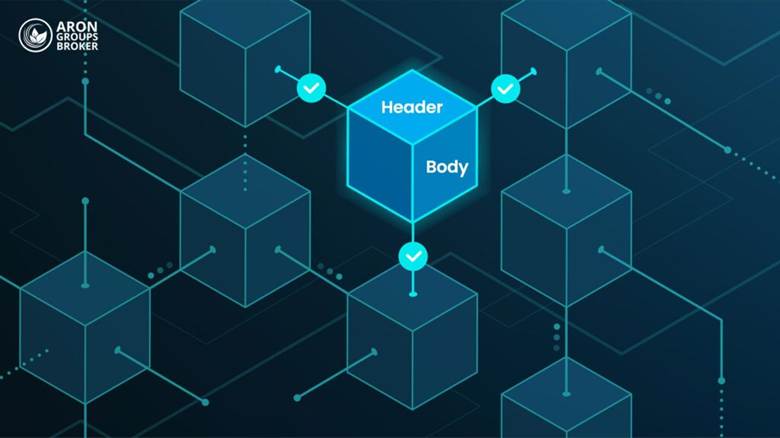
The Block Body contains a list of verified transactions that are permanently recorded in the network.
The process of forming a block in blockchain begins with transactions being collected from the memory pool (Mempool). Then, miners adjust the nonce and repeat the calculations, trying to create a hash that matches the target difficulty. Once this condition is met, the block is considered valid and is added to the chain.
Tasks of a Block in a Blockchain Network
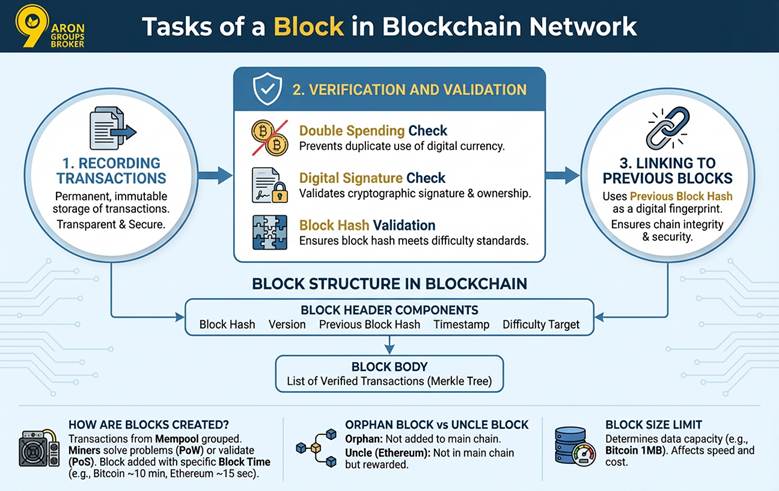
A block in blockchain is not just a container for storing information; it plays a crucial role in maintaining the order, security, and transparency of the entire system. Each block in blockchain is responsible for several important tasks, including:
- Recording Transactions
- Verification and Validation
- Linking to Previous Blocks
Let’s dive into each of these tasks in detail:
Recording Transactions
One of the primary responsibilities of a block in blockchain is the permanent storage of transactions. Whenever users send or receive digital currency, the transaction is initially held in a pending state and, after validation, is recorded inside a block. This process ensures that the history of all transactions is transparent and immutable, making it accessible and secure for anyone to verify.
Each block in blockchain also plays a key role in maintaining the block structure in blockchain, which consists of both the block header components (such as the block’s hash, version, and previous block’s hash) and the block body, which contains the list of verified transactions.
Verification and Validation
Before a new block in blockchain is added to the blockchain, it must undergo a thorough review to ensure the security and accuracy of the information. This step acts as a “final inspection,” ensuring that only valid blocks are permitted into the network.
The verification process includes several key checks:
- Double–Spending Check: In blockchain, each unit of digital currency should only be spent once. The system ensures that none of the transactions in the block have been previously recorded in other blocks. If a transaction is found to be used more than once, the block is rejected.
- Digital Signature Check: Every user uses a unique cryptographic signature to perform a transaction. The network verifies that the digital signature for each transaction is valid and was created by the rightful owner of the wallet.
- Block Hash Validation: Each block must have a valid hash. In Proof of Work systems, this hash is generated through complex calculations. In other algorithms, like Proof of Stake, validation is performed by nodes that hold a larger share in the network. If the block’s hash doesn’t meet the network’s difficulty standards, the block is not accepted.
Linking to Previous Blocks
Blocks in the blockchain are like links in a chain, placed one after the other and connected. This connection is made via the previous block hash. In each block, a cryptographic code (hash) of the previous block is stored. This code is placed in the block header components of the new block, acting like a digital fingerprint.
For example, if block #5 has a specific hash, block #6, when created, will store that hash in its header. Now, if someone tries to alter even a single bit of the content in block #5, its hash will change, and it will no longer match the value stored in block #6. This mismatch makes block #6 invalid, and as a result, the entire chain after it becomes disrupted.
This chain structure, where “each block’s hash is in the next block,” is one of the key pillars of blockchain security. To change a block, all subsequent blocks must also be altered, which would require an enormous amount of computational power, making it virtually impossible in practice.
How Are Blocks Created?
So, how are blocks created in the blockchain? The process begins when transactions are collected from the mempool and grouped into a block. Miners or validators then use the computational power of their devices to solve complex mathematical problems (in Proof of Work) or validate the transactions (in Proof of Stake). Once the conditions are met, the block is added to the blockchain.
The time it takes to create a block in blockchain is known as block time, which can vary depending on the network. For example, in Bitcoin, the block time is approximately 10 minutes, while in Ethereum, it’s much faster, around 15 seconds.
Orphan Block vs Uncle Block
In blockchain, sometimes a block gets disconnected from the main chain. This can happen when two miners discover a valid block at nearly the same time, causing a temporary fork in the chain. The orphan block is the block that is not added to the main chain. On the other hand, in networks like Ethereum, the term uncle block is used to describe a block that is not part of the main chain but is still recognized by the network, and the miner is rewarded for it, although less than for a regular block.
Block Size Limit
Each block in blockchain has a block size limit, which determines how much data it can hold. For instance, Bitcoin has a block size limit of 1MB, while other blockchains like Bitcoin Cash have larger limits to accommodate more transactions. The block size limit plays a role in the speed and cost of transactions, as larger blocks can help handle more transactions but also put more strain on the network.
Blocks that are mined almost simultaneously with the main block but are not connected to the main chain are called uncle blocks, and miners who mine these blocks are rewarded to encourage the mining of such blocks.

The Process of Adding a Block to the Chain
When a number of new transactions are made in a blockchain network, these transactions are first gathered in the network’s temporary memory (called the Mempool). Then, it’s time to create a new block to store these transactions.
In networks that use the Proof of Work algorithm, such as Bitcoin, miners are responsible for this process. They must solve an encrypted puzzle by changing a number called the nonce so that the hash of the new block matches the network’s difficulty conditions. This process may be repeated millions of times before a miner successfully finds a valid hash.
Once a valid hash is found:
- The new block, along with its hash, is sent to the network.
- Other nodes (participating computers in the network) check the block to ensure everything is correct, including the validity of signatures, the absence of double-spending transactions, and the authenticity of the hash.
- If the block is confirmed, it is linked to the previous block and officially added to the blockchain.
- The transactions within the block become final and immutable.
In other algorithms, like Proof of Stake, validators (instead of miners) are responsible for creating and verifying blocks, but the general process is similar.
The Role of Blocks in Blockchain Network Security
Blocks in blockchain play a crucial role in maintaining the security, transparency, and immutability of the network. Each block is cryptographically linked to the previous one, forming a continuous chain. This block structure in blockchain ensures that if someone tries to tamper with the content of a block, its hash will change, which disrupts its connection to the subsequent blocks. As a result, to modify a single block, the attacker would need to rewrite all the following blocks, a task that requires an immense amount of computational power and is virtually impossible.
Since each block’s hash must be calculated according to the consensus algorithm, like Proof of Work or Proof of Stake, creating fraudulent blocks is nearly impossible. These algorithms ensure that only blocks that meet the security criteria can be added to the blockchain, preserving the integrity of the network.
The block header components, such as the hash of the previous block, the block height, and the timestamp, serve as the unique identifiers for each block, providing further validation and security. The genesis block, being the first block in the chain, sets the foundation for this structure.
To modify a block or insert an invalid block, an attacker would need to alter the block time and the block size limit across all subsequent blocks, making the attack highly impractical. Furthermore, in blockchain systems, orphan blocks vs uncle blocks may occur when two blocks are mined simultaneously, but only one will be added to the main chain. The other will be considered an uncle block, still rewarded but not included in the main chain.
Each block in blockchain, including those in Ethereum, has a block size limit that dictates how much gas can be consumed. This limit determines how many transactions and operations can be processed within a single block, helping to balance the speed and security of the network.

The Role of Miners in Relation to the Block in Blockchain
Miners play a central role in blockchain networks by creating and validating new blocks. Using their computational power, they build blocks that contain the latest transactions from the network and prepare them for addition to the blockchain.
Miners are essentially the individuals (or systems) that perform intensive cryptographic computations in an attempt to find a valid hash for the block. Once a block is deemed valid, it is added to the blockchain.
In exchange for this process, miners receive a block reward, which includes newly minted coins and transaction fees from the transactions recorded within that block. This incentivizes miners to continue securing the network and ensuring its proper functioning.
Conclusion
Although a block in blockchain is just one component of the blockchain structure, its proper and coordinated functioning is the foundation of trust in decentralized networks. Each block is not only a carrier of information but also a symbol of transparency, security, and order within a system that operates without a central authority. A deeper understanding of how blocks function not only enhances our knowledge of blockchain technology but also changes our perspective on the concept of trust in the digital world. The future of the digital economy is built upon these seemingly simple yet vital units.