




Algorithmic trading software has transformed how traders engage with financial markets, offering automation, speed, and efficiency in executing strategies. From the basics of automation to advanced features for professional traders, this comprehensive guide covers everything you need to know about algorithmic trading software. Whether you’re new to trading or an experienced professional, understanding the various platforms, tools, and best practices will help you optimise your strategies for better trading outcomes.

- Custom Algorithmic Trading Software allows more flexibility for unique strategies, while pre-built solutions offer ease of use.
- Algorithmic trading platforms enable traders to test their strategies using historical data before going live.
- Writing your own Algorithmic Trading Software may involve higher upfront costs, but offers more control, while buying software provides quicker access with ongoing fees.
Algorithmic Trading Software and How It Works in Trading Strategies
Algorithmic trading refers to the use of computer algorithms to execute trades automatically based on specific, predefined criteria. It enables traders to automate their trading strategies, removing the need for manual intervention.
Algorithmic trading software is designed to monitor market conditions and make real-time trading decisions. By using complex mathematical models, these software programs help traders execute strategies quickly and efficiently, without the need for constant human input.
Example:
A trader may create a rule to buy a currency pair when its price increases by 0.5% within an hour or sell when it decreases by 1%. The software then executes these trades instantly when the conditions are met, ensuring high speed and precision.
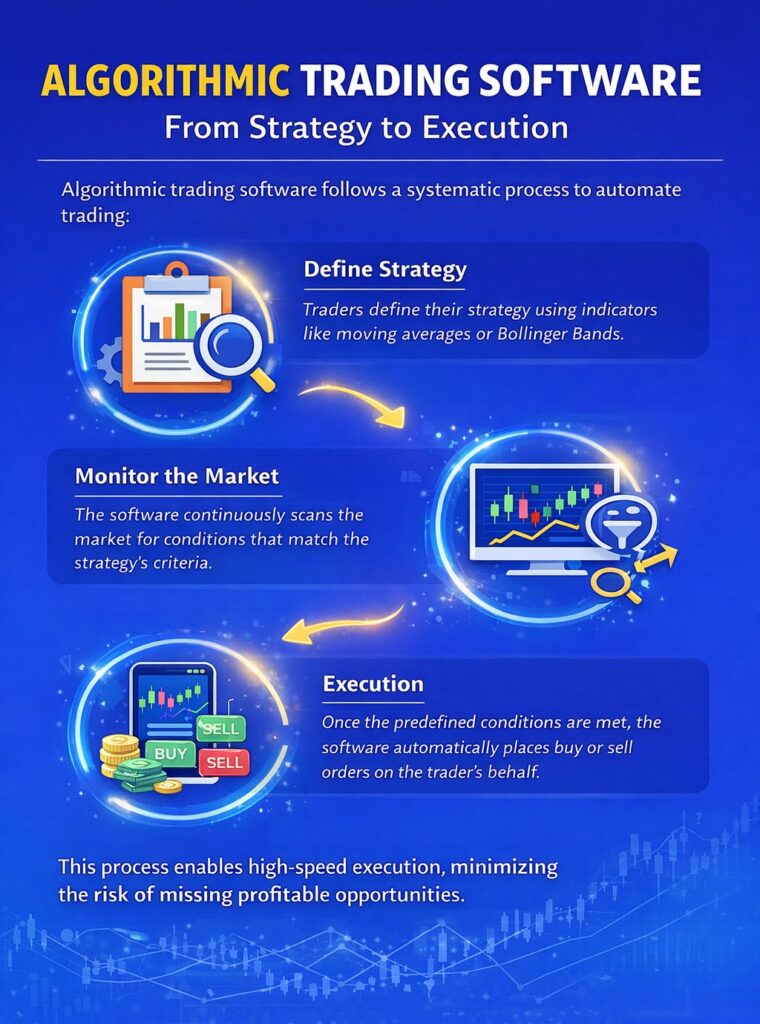
How Algorithmic Trading Software Works: From Strategy to Execution
Algorithmic trading software follows a systematic process to automate trading:
- Define Strategy: Traders set rules based on indicators like moving averages or Bollinger Bands.
- Monitor the Market: The software continuously scans the market to ensure it meets the strategy’s conditions.
- Execution: Once the predefined conditions are met, the software automatically executes buy or sell orders, enabling high-speed, accurate trade execution and reducing the risk of missing opportunities.
Benefits of Using Algorithmic Trading Software
Using algorithmic trading software offers several advantages, including:
- Speed and Efficiency: Algorithmic trading software can execute trades faster than humans.
- Reduced Emotional Bias: Because the software operates according to preset rules, it eliminates emotional biases.
- Backtesting Capabilities: Algorithmic trading software enables traders to test their strategies using historical data.
- 24/7 Trading: Algorithms can operate continuously, executing trades at all hours, which is particularly beneficial for global markets and assets like cryptocurrencies that are traded around the clock.
Core Components of Algorithmic Trading Software: Data, Strategy, Execution, and Risk Management
Algorithmic trading software relies on four key components: data, strategy logic, execution, and risk management, to automate and optimise trading.
- Data: Real-time market data, such as prices and volumes, drives the algorithm’s decision-making.
- Strategy Logic: This component defines the conditions under which the algorithm executes trades based on technical indicators, such as moving averages.
- Execution: The software ensures quick, accurate trade execution with no delays.
- Risk Management: Techniques like stop-loss orders and real-time portfolio risk monitoring help safeguard investments while optimising returns.
Essential Elements of an Effective Algorithmic Trading Software
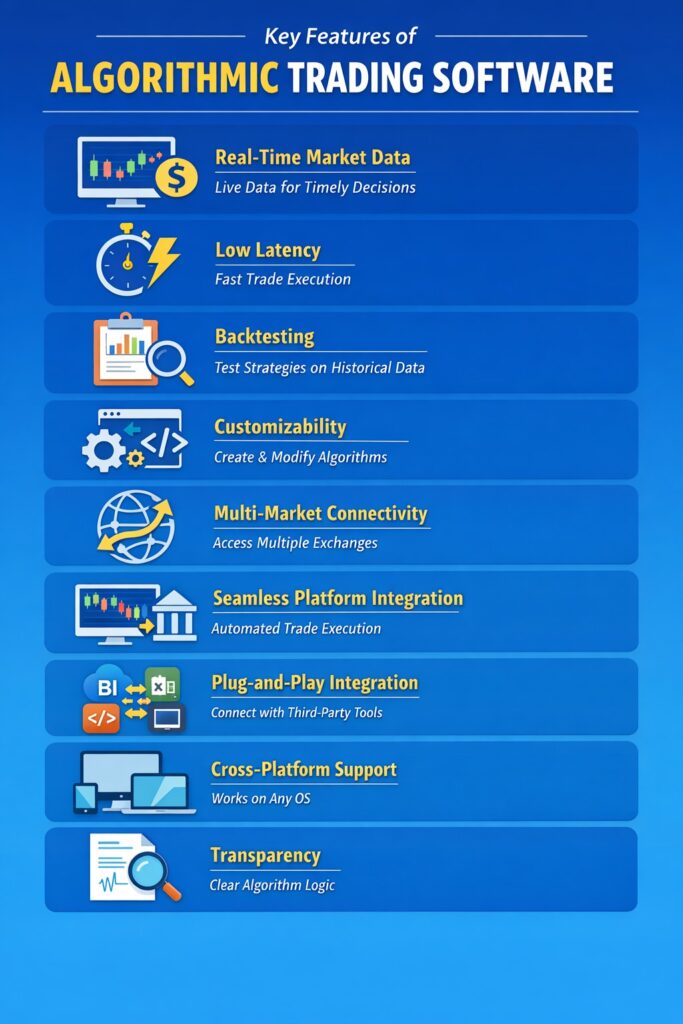
Algorithmic trading software offers essential features to enhance trading efficiency and minimise errors. According to Investopedia, the key features to consider are as follows:
- Real-Time Market Data Integration: Access to live market data for timely decision-making.
- Low Latency: Minimising delays to ensure fast trade execution, especially in high-frequency trading.
- Backtesting: Testing strategies on historical data to ensure effectiveness before live execution.
- Customizability: Ability to modify or create algorithms to fit specific trading strategies.
- Multi-Market Connectivity: Support for different market data formats and integration with multiple exchanges.
- Seamless Platform Integration: Efficient connection to brokers and exchanges for fast, automated trade execution.
- Plug-and-Play Integration: Easy integration with third-party tools like Bloomberg terminal or custom programs.
- Cross-Platform Support: ensures that algorithmic trading software is compatible with multiple operating systems, including Windows, macOS, and Linux. This is crucial, as some programming languages, such as C++, may run only on specific platforms, while others, such as Perl, are platform-independent.
- Transparency: Clear documentation of the algorithm’s logic for better understanding and reliability.
These features ensure that algorithmic trading software can automate strategies, enhance speed, and provide a reliable trading experience across various markets.
Using Algorithmic Software for Different Types of Trading: Spot, Intraday, and Multi-Asset
Algorithmic trading software is used across various trading strategies, including spot, intraday, and multi-asset. Each type targets different market conditions and offers unique advantages.
- Spot Algorithmic Trading: Focuses on short-term price movements. Algorithms buy and sell assets based on real-time market conditions to capitalise on small price fluctuations.
- Intraday Algorithmic Trading: Aims to profit from market volatility within a single day. Algorithms execute trades within minutes or hours, responding to intraday price patterns.
- Multi-Asset Algorithmic Trading: Uses the same algorithm to trade across multiple markets, such as Forex, stocks, and commodities. This diversification helps manage risk and optimise returns.
Choosing the Best Algorithmic Trading Software for Beginners and Professionals
Choosing the right algorithmic trading software depends on your experience, the markets you trade (Forex/crypto/stocks), and the level of control you need. Beginners usually want simplicity and pre-built automation. Professionals often need full custom coding, advanced backtesting, and broker-grade execution.
Best Algorithmic Trading Software for Beginners
Beginners should focus on platforms with an easy interface, ready-made scripts, and strong learning support.
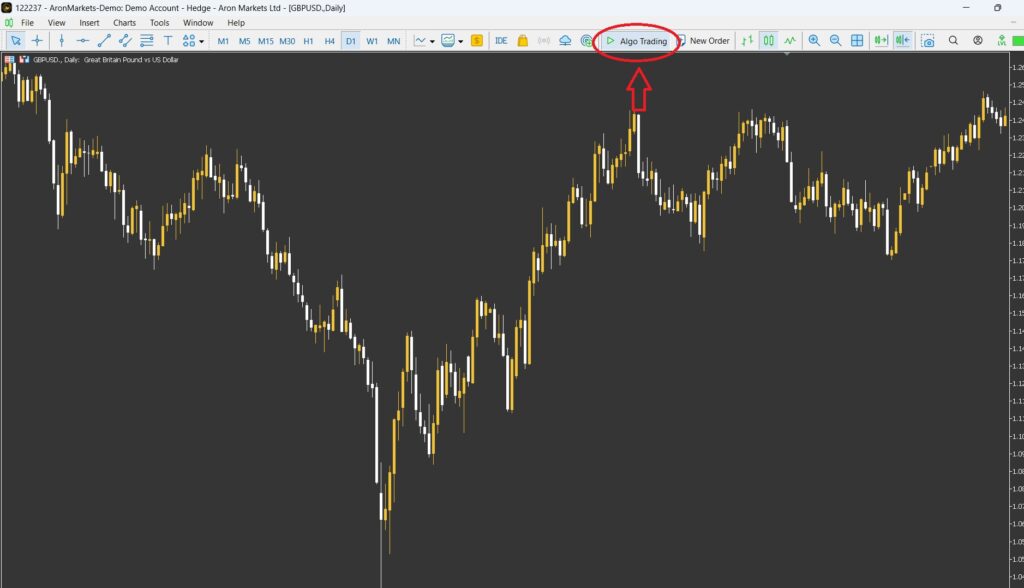
MetaTrader (MT4/MT5) is popular because it supports Algorithmic Trading and Expert Advisors (EAs) and has a large community.
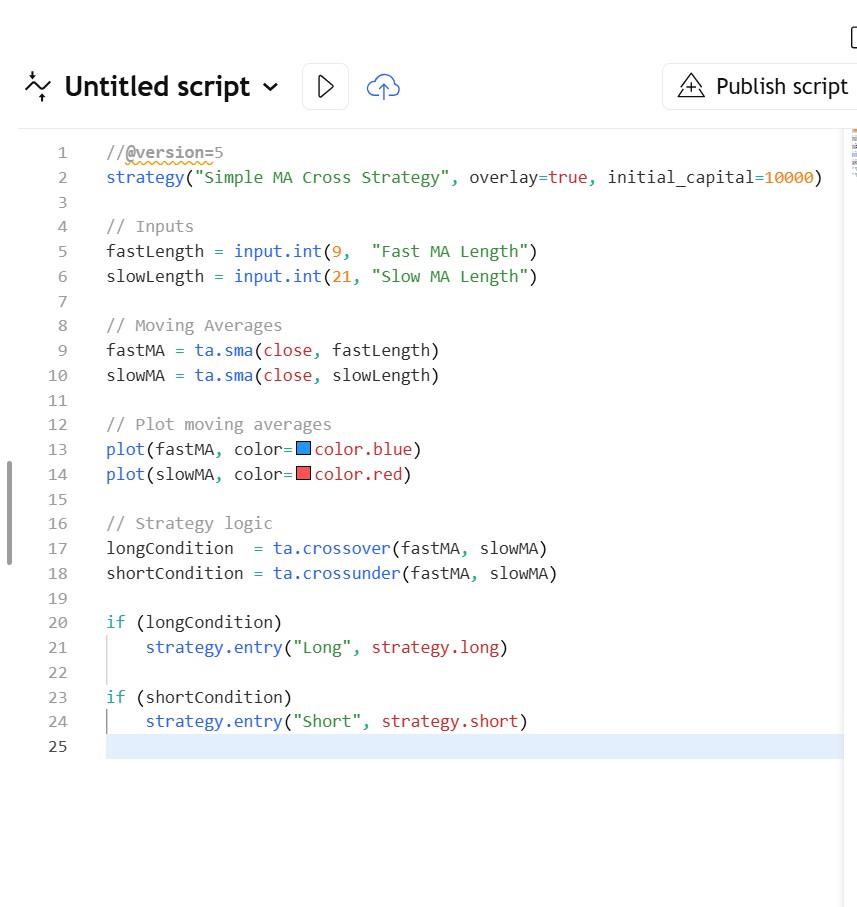
TradingView’s Pine Script is also beginner-friendly for building rule-based signals and strategy logic.

Key point:
Pine Script creates signals and strategies inside TradingView; actual automated execution usually happens via alerts/webhooks + a broker/API bridge, not “direct execution” from Pine Script alone.
Advanced Algorithmic Trading Software for Professionals
Professional traders need more advanced software with features like custom strategy development, real-time data analysis, and high-frequency trading (HFT) capabilities. Software such as MetaTrader, NinjaTrader, and QuantConnect offers these capabilities, enabling professionals to create and test complex strategies with greater precision.
The Role of Backtesting, Monitoring, and Analytics Tools in Optimising Algorithmic Trading Software
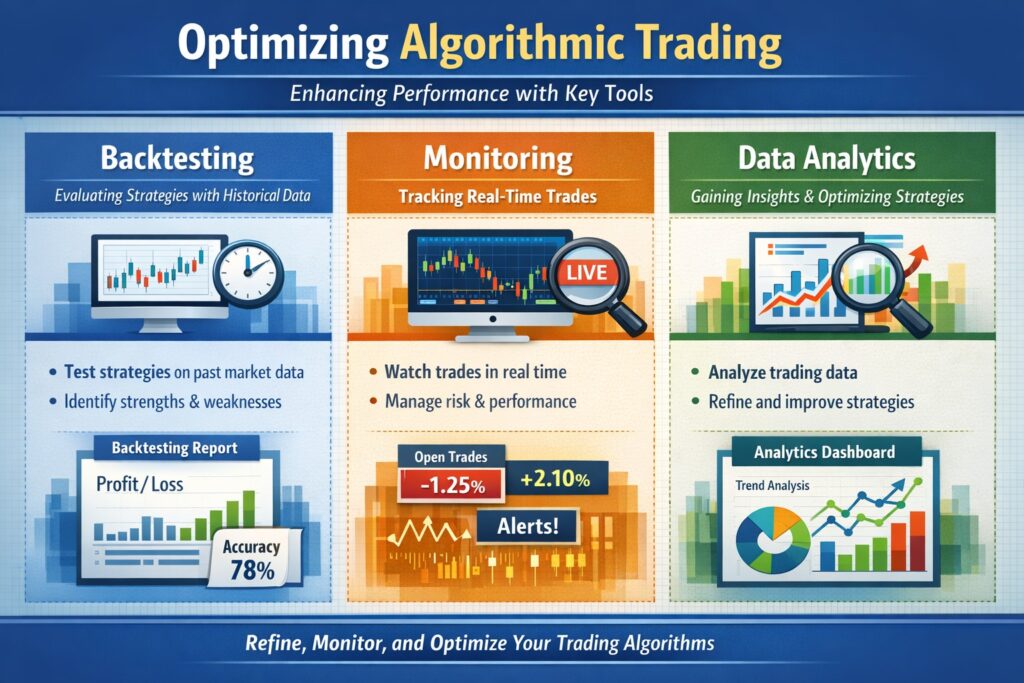
Backtesting, monitoring, and data analytics tools are essential for refining strategies and optimising algorithmic trading performance.
- Backtesting: Testing strategies on historical data to evaluate their effectiveness before using them in live markets.
- Monitoring: Real-time tracking of trades to ensure algorithms are performing as expected.
- Data Analytics: Using analytics tools to gain insights into market trends, performance, and optimise strategies.
Limitations and Risks of Using Algorithmic Trading Software in Financial Markets
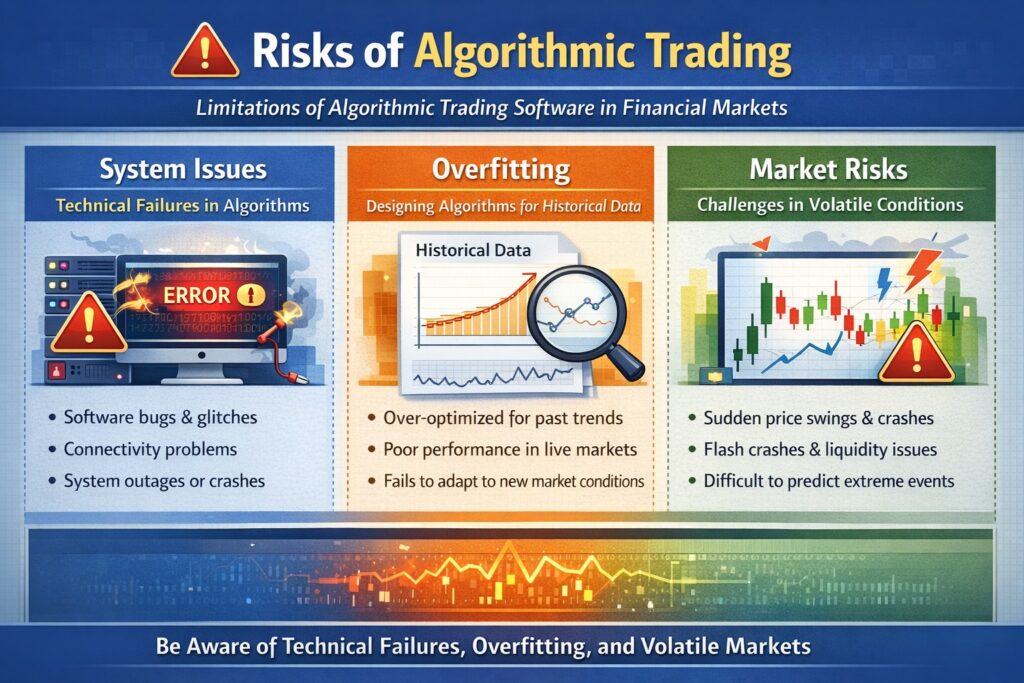
While algorithmic trading offers many advantages, it is not without its risks and limitations. These include technical failures, overfitting, and market volatility, all of which can significantly impact the performance of algorithmic strategies.
System Issues: The Risk of Technical Failures in Algorithms
One of the major risks of algorithmic trading is technical failures. These can occur due to software bugs, connectivity issues, or errors in the algorithm’s logic.
For example, if the algorithm misinterprets market data or encounters a system glitch, it may execute incorrect trades, leading to losses. Traders must ensure that their systems are robust, well-tested, and equipped with fail-safes to minimise these risks.
Overfitting: The Dangers of Designing Algorithms for Historical Data
Overfitting occurs when an algorithm is designed too specifically to fit historical data, leading it to perform well during backtesting but to fail in real-time trading. For instance, an algorithm that adapts too closely to past price movements might struggle to keep up with changing market conditions. Traders should ensure their algorithms are flexible and can handle unexpected market fluctuations, rather than being optimised for past trends.
Market Risks: Limitations of Algorithmic Trading in Volatile Conditions
Algorithmic trading is highly effective in stable markets but can struggle in volatile or unpredictable conditions. In times of extreme market volatility, such as during economic crises or unexpected news events, algorithms may react too quickly, executing trades based on incorrect assumptions.
These rapid, high-frequency trades can exacerbate market movements and lead to significant losses. To mitigate this, algorithms should be programmed to monitor for sudden market changes and adapt their strategies accordingly.
How to Choose the Best Trading Platform for Algorithmic Trading Software
Selecting the right trading platform is crucial for the effective use of algorithmic trading software. A good platform not only provides access to various markets but also ensures that the algorithms perform efficiently with the necessary tools and security features.
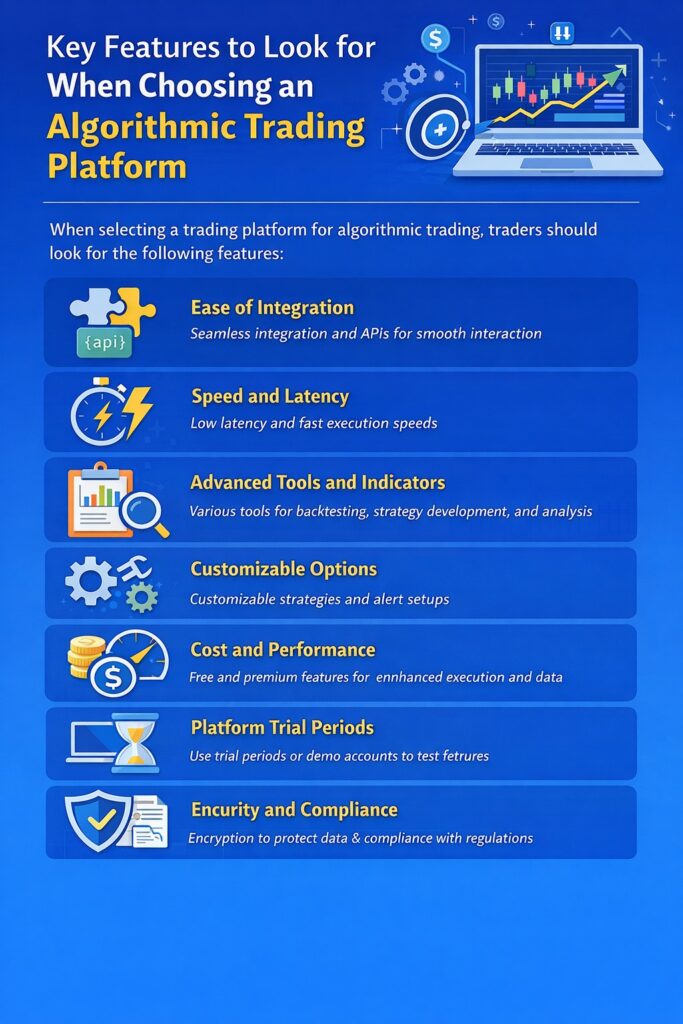
Key Features to Look for When Choosing an Algorithmic Trading Platform
According to Medium, traders should look for the following features when selecting a trading platform for algorithmic trading:
- Ease of Integration: The platform should seamlessly integrate with algorithmic trading software and offer APIs for smooth interaction.
- Speed and Latency: Low latency and fast execution speeds are vital for high-frequency trading strategies.
- Advanced Tools and Indicators: The platform should offer a range of tools for backtesting, strategy development, and real-time analysis.
- Customisation Options: The ability to customise trading strategies and set up alerts for specific market conditions.
- Cost and Performance: While many platforms offer free versions, traders may need to pay for premium features like faster execution, advanced indicators, and extended data feeds.
- Platform Trial Periods: Before committing to a trading platform, use its trial period or demo account to test its features and compatibility with your trading strategy.
- Security and Compliance: When choosing a trading platform, prioritise security. Ensure the platform uses encryption to protect data and complies with financial regulations such as those of the FCA or SEC to maintain a safe and trustworthy trading environment.
Algorithmic trading software integrates with trading platforms via APIs, allowing seamless execution of complex strategies.
How Different Traders Benefit from Algorithmic Trading Software
Algorithmic trading software offers significant benefits to traders of all types, enhancing efficiency, speed, and decision-making capabilities.
- Professional Traders and Financial Institutions:
Professionals use algorithmic trading for executing complex strategies at high speeds with minimal error. For example, hedge funds use high-frequency trading (HFT) to execute thousands of trades per second, capitalising on small price differences. Algorithms enable real-time data analysis and fast order execution, giving them a competitive edge.
- Investors and Beginner Traders:
For beginners, algorithmic trading simplifies decision-making by automating trades based on technical indicators like moving averages. It offers consistent, emotion-free trading, enabling new traders to execute trades automatically when specific market conditions arise, without constant market monitoring.
- Programmers and Developers:
Developers benefit by customising and creating trading algorithms to match specific market data and risk preferences. With platforms like MetaTrader 5 (MT5) and QuantConnect, they can build, backtest, and refine algorithms, giving them full control over their strategies and enhancing flexibility.
Deciding Between Writing and Buying Algorithmic Trading Software
When deciding between developing your own algorithmic trading software and purchasing pre-built software, consider the pros and cons based on factors such as technical skills, budget, and customization needs.
Writing Your Own Algorithmic Trading Software
- Pros:
- Customisation: Full control over strategies and customisation to fit your unique needs.
- Control: Complete authority over software updates, features, and performance.
- Cost Efficiency: Lower long-term costs as there are no ongoing subscription or licensing fees.
- Cons:
- Time-Consuming: Requires significant effort and programming skills.
- Ongoing Maintenance: Responsible for fixing bugs, updates, and performance issues.
- Complexity: Needs advanced programming knowledge and market experience.
Buying Pre-Built Trading Software
- Pros:
- Quick Setup: Ready to use immediately with minimal setup required.
- User-Friendly: Intuitive interfaces, educational resources, and customer support.
- Proven Reliability: Established platforms offer stability and reliability in live market conditions.
- Cons:
- Limited Customisation: May not fully meet unique needs or specific strategies.
- Subscription Fees: Continuous costs for licenses or subscriptions.
- Vendor Dependence: Relying on the vendor for updates and support, which may not align with your needs.
Key Considerations When Choosing Between Writing and Buying
- Skill Level: Write your own software if you have programming expertise; otherwise, buy pre-built.
- Customisation Needs: For highly specific strategies, writing your own software gives more flexibility.
- Time and Budget: Writing your own software takes time and investment; buying is quicker but may incur ongoing costs.
- Support and Maintenance: Pre-built software includes vendor support, while custom solutions require you to manage issues independently.
Table: comparison of writing vs. buying algorithmic trading software
| Factor | Writing Your Own Algorithmic Trading Software | Buying Pre-Built Trading Software |
|---|---|---|
| Customization | Fully customizable to meet specific needs and strategies. | Limited customisation; may not meet all specific needs. |
| Control | Full control over features, updates, and performance. | Dependence on the vendor for updates and support. |
| Cost | Potentially lower long-term costs but high initial investment. | Ongoing subscription or licensing fees. |
| Time & Effort | Time-consuming, requires programming expertise. | Quick setup, user-friendly for beginners. |
| Maintenance | Responsibility for updates, bug fixes, and performance. | Vendor handles maintenance and support. |
| Complexity | Requires advanced technical and market knowledge. | Ready-to-use with built-in strategies and tools. |
| Reliability | Depends on the developer’s coding and testing. | Proven reliability and stability in live trading conditions. |
Conclusion
Algorithmic trading software is an invaluable tool for traders at all levels of experience. Automating strategies, eliminating human error, and enabling faster execution help traders maximise their potential in fast-moving markets. However, whether you choose to write your own or buy pre-built software depends on your specific needs, technical expertise, and trading goals. With the right tools and platforms, algorithmic trading can help you stay ahead in competitive markets like Forex, stocks, and gold.