

icon icon Home
icon icon Accounts
icon icon Quick start
icon icon Symbols

A Practical Guide to Using ICT Silver Bullet in Trading

Author
Abe Cofnas
Abe Cofnas
calendar Last update: 6 April 2026
watch Reading time: 15 min

The ICT Silver Bullet strategy is often described as a simple intraday setup. In professional use, it is better treated as a constrained execution framework whose reliability depends on operational discipline: strict time window enforcement, explicit liquidity definitions, and confirmation rules that prevent discretionary pattern matching.

Most failure cases do not originate from the concept itself. They originate from treating a time-gated model as a visual template that can be applied anywhere on the chart, at any time, across any instrument, while ignoring spreads, news shocks, or time zone and DST mapping. A robust implementation treats the strategy as a workflow with decision gates, including the acceptance of “no trade” outcomes when preconditions are absent.

Risk warning: This material is educational only and does not constitute investment advice. Trading CFDs and leveraged products involves significant risk. Capital preservation is a prerequisite to any performance objective.

bookmark
Key Takeaways
  • Silver Bullet is time-dependent. The session window is a rule, not a preference. 
  • A setup requires a liquidity sweep first. A pattern without the sweep is not qualified. 
  • Displacement plus a market structure shift provides confirmation. The FVG is an entry trigger, not the directional reason. 
  • The one move discipline reduces churn. The objective is a single repricing leg, then stop trading that window. 
  • Time zones and DST are operational variables. mis-mapping windows makes results non-comparable. 
  • Win rate is not meaningful without clean samples, realistic costs, and stable rule application.

Discover What the ICT Silver Bullet Strategy Is

Silver Bullet lookalikes occur when a trader sees an imbalance or a market structure break and labels it as Silver Bullet without satisfying the preconditions. The most common form of this trap is entering because an FVG appears, while skipping the liquidity event, ignoring the time window, or applying an MSS definition that is too loose for the chosen execution timeframe.

sms-star

The professional countermeasure is procedural: convert the model into a strict gate sequence and enforce “no trade” outcomes when any gate fails.

Q: What is the fastest way to avoid forcing trades with this model?

A: Treat the time window, the sweep, the displacement, the retracement, and the invalidation as mandatory gates. If any gate fails, you stand down.

Core Concept of the ICT Silver Bullet & One-Move Session Logic

The core idea is to treat the session as a delivery process that often begins with a liquidity run and then reprices once participation increases. The “one move” discipline means the objective is not multiple scalps inside the same hour. The objective is the cleanest leg that follows a qualified sweep and confirmation.

Operationally, “one move” functions as a risk-control mechanism: it reduces decision frequency, limits exposure to chop, and prevents the strategy from turning into repeated attempts after the highest-quality opportunity has already passed.

How the ICT Silver Bullet Fits Into ICT’s Time-Based Framework

Within ICT’s time-based logic, Silver Bullet acts as a specialised execution layer. It assumes that certain session handovers and liquidity injections produce more repeatable auction behaviour, including stop runs, rapid repricing, and imbalance formation.

The method does not replace broader context. It narrows execution to moments where that context can translate into a trade with clear risk boundaries. In professional terms, it is a time-gated method intended to standardise opportunity quality by aligning execution with predictable liquidity behaviour.

Best Trading Hours & Session Windows

This model is defined by explicit session windows. These windows should be treated as non-negotiable because the strategy’s assumptions about liquidity and follow-through rely on them. When the window constraint is relaxed, false positives increase and the strategy becomes difficult to test consistently.

London & New York ICT Silver Bullet Windows Explained

The most commonly cited Silver Bullet windows are expressed in New York local time and cover a London open window, New York AM, and a New York PM variant.

Mini time zone table (baseline mapping)

These are baseline conversions. In practice, DST shifts can temporarily alter the mapping between New York and London because the US and the UK change clocks on different dates. This makes time zone handling an operational requirement rather than a cosmetic detail.

WindowNew York timeLondon timeUTC
London window03:00–04:0008:00–09:00 (GMT)08:00–09:00
New York AM window10:00–11:0015:00–16:00 (GMT)15:00–16:00
New York PM window14:00–15:0019:00–20:00 (GMT)19:00–20:00

Why Liquidity Peaks Matter & Time Zone Considerations

The underlying assumption is that liquidity and participation concentrate around these windows, increasing the probability of two events that matter for execution:

  • A meaningful sweep of obvious liquidity.
  • A decisive displacement leg that leaves an imbalance behind.

Outside the window, the opposite is more common: thinner participation, greater overlap, smaller displacements, and higher false-positive risk. If the strategy is time-based, the time constraint must be treated as a first-class rule.

sms-star

Implementation techniques:
- Anchor your chart to New York time or explicitly mark the window in your platform.
- Recheck offsets on DST transition weeks.
- Keep your window definition consistent across all ICT Silver Bullet backtests; otherwise, results become non-comparable.




How the ICT Silver Bullet Execution Works

This section converts the concept into a mechanical workflow. The objective is not to “spot patterns.” The objective is to separate qualified setups from lookalikes through explicit decision gates.

ICT Silver Bullet Execution Framework

Think of the model as control flow with mandatory gates. If a gate fails, the correct output is “no trade.”

Control flow (decision gates):

  • The window is active.
  • Liquidity is taken (buy-side or sell-side sweep).
    • If not taken: no trade.
  • Displacement occurs, and a market structure shift is confirmed.
    • If not confirmed: no trade.
  • Price retraces into the defined entry location (FVG or OTE zone).
    • If no retracement: no trade.
  • Entry is executed only with a pre-defined invalidation level.
  • Trade management targets a single repricing leg, then trading is paused for the session.

Step 1 – Wait: Preparing for Session Repricing

Waiting is active preparation. You pre-mark liquidity pools, define what qualifies as a sweep, and decide the maximum risk you will accept if the model triggers. If invalidation cannot be defined before the window, execution is not prepared.

Step 2 – Sweep: Capturing Institutional Liquidity

A sweep is the precondition. Price takes BSL or SSL around an obvious reference, such as equal highs and lows, prior session extremes, or a clean swing point. Without this event, the setup lacks the “fuel” the model expects.

Step 3 – Displace: Confirming Market Structure Shift

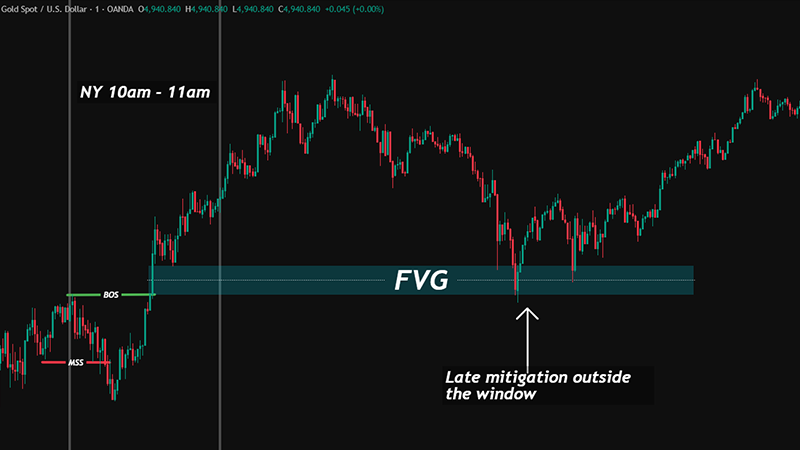
Displacement is confirmation. You want a decisive push away from the sweep that breaks local structure, creating an MSS that supports a directional bias.

Confirming Market Structure Shift

In professional terms, displacement indicates that the auction moved in a new direction rather than simply oscillating within the same range.

A Practical Guide to Using ICT Silver Bullet in Trading

Step 4 – Retrace: Timing the Entry

After displacement, you wait for a controlled retracement. A common operational failure is chasing the impulse and then rationalising the stop. The disciplined retracement entry is what allows tight invalidation under the strategy’s logic.

Step 5 – Enter: Executing the Trade

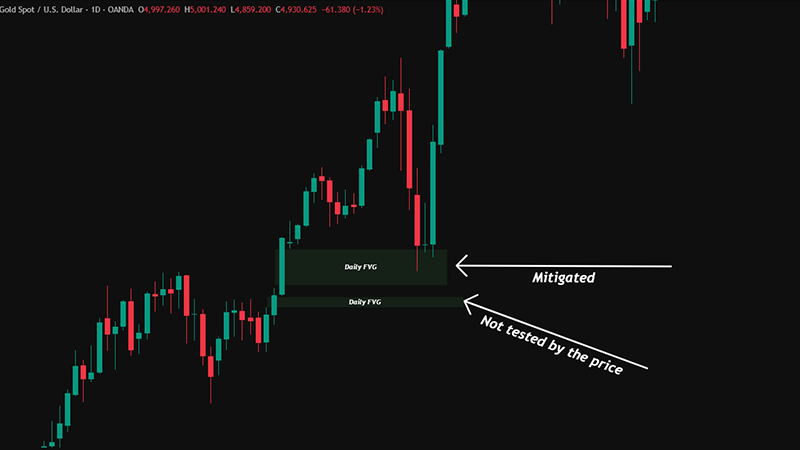
The entry is commonly taken at an imbalance left by displacement, often an FVG. The crucial distinction is conceptual: the FVG is an entry trigger, not the reason for direction. Direction comes from sweep plus MSS plus location context.

Mapping Liquidity Pools & Timing Moves in ICT Silver Bullet Trades

Your map should separate external and internal pools:

  • External liquidity: prior-session highs and lows, equal highs and lows on higher timeframes, major swings.
  • Internal liquidity: minor swing points inside the current range.

A clean approach:

  • Mark external pools first.
  • Identify the nearest internal pools that could be taken on the way.
  • During the window, require the sweep to be clear and displacement to be directional.
sms-star

Practical example:

If the London window begins and price runs below a prior session low (SSL), then immediately displaces upward and breaks a local swing high, the model now has a sweep and an MSS aligned. The decision becomes waiting for a retracement into the displacement imbalance.

Step-by-Step Setup for ICT Silver Bullet Trades

This section converts the workflow into chart-ready tasks with stable definitions. The aim is consistency: you should not redefine the model mid-trade.

H3: Spotting the Correct Intraday Liquidity Sweep & MSS Bias

Start with three definitions and do not change them mid-trade:

  • The reference level that must be swept. 
  • The execution timeframe used to confirm MSS. 
  • The invalidation condition if the model is wrong.

Bias rules that remain stable:

  • After an SSL sweep, you need bullish displacement plus MSS.
  • After a BSL sweep, you need bearish displacement plus MSS.
sms-star

If the market does not print displacement, treat it as informational: liquidity was taken, but acceptance did not appear. Stand down.
Using Displacement and FVG as ICT Silver Bullet Entry Triggers

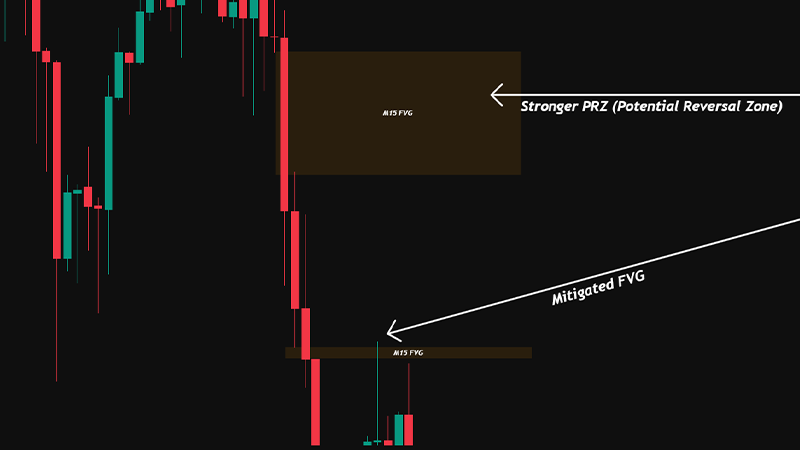
The use of imbalance is to avoid subjective “support and resistance” improvisation. Your entry zone is tied to the displacement leg.

Execution checklist for the entry trigger:

  • Identify the displacement candle sequence that created the imbalance.
  • Mark the relevant FVG zone.
  • Require the first clean retracement into that zone.
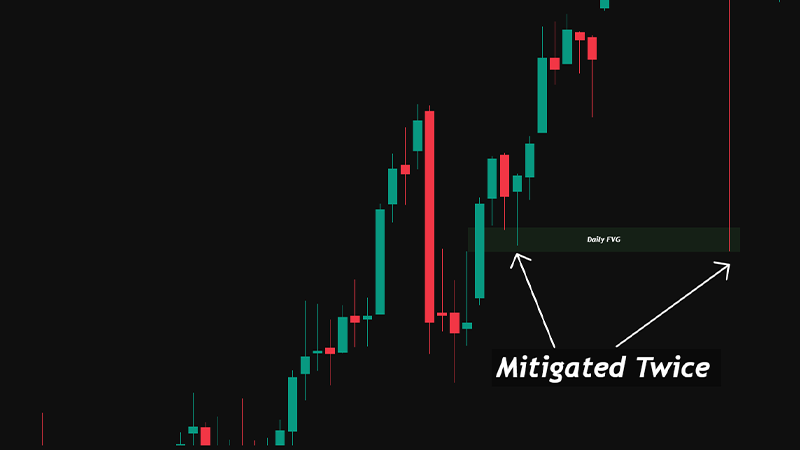
  • If price chops through the zone repeatedly, downgrade or invalidate the setup.
A Practical Guide to Using ICT Silver Bullet in Trading
sms-star

This is the operational difference between a structured ICT Silver Bullet setup and generic imbalance trading.

Positioning Between Premium & Discount & Targeting Liquidity Pools

Premium and discount context helps you avoid taking longs in premium or shorts in discount after the move is already mature.

A workable method:

  • Define the current dealing range, often the swing that contains the window’s sweep and displacement.
  • Prefer longs from discount after SSL sweep plus bullish MSS.
  • Prefer shorts from premium after BSL sweep plus bearish MSS.
sms-star

Targets should be framed as liquidity pools, such as the opposite side of the range or a nearby external pool. This keeps the model coherent: trading toward liquidity rather than toward arbitrary fixed points.
Entry, Stops & Managing Your Trades

Execution quality determines whether a strategy survives transaction costs and drawdowns. Under this model, risk is a function of invalidation logic. If invalidation is unclear, position sizing and decision making degrade.

Perfecting Retracement Entries, Stop-Loss & Target Placement in ICT Silver Bullet Trades

A professional stop is tied to model invalidation rather than comfort. Typical placements are structural:

  • Beyond the swept extreme, if the sweep is the key premise.
  • Beyond the structure level that the MSS implies should hold

Targets should align with the next meaningful liquidity pool. This keeps reward expectations realistic and prevents a one move model from becoming a “hold and hope” position.

Sanity check mini-table (execution integrity)

What you seeWhy it is riskySanity check
Entering on impulseOften forces wider stopsRequire retracement entry tied to displacement
Stop defined after entryBreaks risk logicInvalidation must be defined before entry
Multiple re-entries same hourIncreases churnOne attempt per window

Scaling, Partial Exits & Avoiding Overtrading

Scaling is useful only if it reduces risk, not if it increases complexity. In a one move framework, partial exits can be justified when:

  • The first target is a nearby internal liquidity pool.
  • The remaining portion targets an external pool.

Overtrading is the dominant failure mode in this strategy family. The most effective prevention is procedural:

  • One attempt per window.
  • If you miss the entry, you do not chase.
  • If the model does not trigger, the session is complete.

Rules & When Not to Trade

This strategy should be expressed through constraints. A model without disqualifiers becomes discretionary.

H3: Must-Have Conditions Before Taking an ICT Silver Bullet Trade

Use this as a yes/no gate:

  • Is the window open?
  • Was external liquidity swept?
  • Did displacement create an MSS?
  • Is there a clean retracement entry zone?
  • Is invalidation pre-defined and acceptable?

If any answer is “no,” the trade is not qualified.

H3: Validating the Time Window & Confirming Entries

Time validation is mechanical:

  • Your chart shows the window.
  • You only accept setups that complete the sweep and displacement during that window.
  • Retracement can occur slightly after, but only if displacement printed within the hour.
Validating the Time Window & Confirming Entries

Confirmation is also mechanical:

  • MSS must be visible on the execution timeframe you have chosen.
  • Displacement should be clean, not overlapping.
sms-star

This prevents backfitting, where normal volatility is labelled as Silver Bullet after the fact.

Strict Invalidation Rules to Stay Safe

Invalidation is what keeps the model professional:

  • If price returns through the displacement and reclaims the sweep side without holding structure, invalidate.
  • If retracement becomes extended chop and repeatedly trades through the entry zone, invalidate.
  • If a high-impact news event occurs during the window and spreads widen materially, invalidate.
sms-star

These rules are cost control. They protect the model’s assumptions from conditions where execution quality becomes unstable.
ICT Silver Bullet mitigation

Trading in Live Markets Like a Pro

Live execution introduces frictions invisible in screenshots. A professional approach integrates those frictions into the strategy definition rather than treating them as external noise.

Choosing the Best Timeframes & Market Pairs for ICT Silver Bullet

The model is commonly applied to liquid instruments where spreads are stable and session behaviour is readable. In practice, instrument choice is venue dependent.

A conservative operating stance:

  • Use a higher timeframe to mark liquidity pools and dealing range context.
  • Use a lower execution timeframe to observe sweep, displacement, and retracement without excessive noise.
  • Avoid instruments whose spreads widen materially during your window, because that distorts invalidation and skews outcomes.

Handling News, Spread, Slippage & Volatility

If you want institutional quality execution, treat costs as part of the strategy:

  • Check the economic calendar before the window.
  • Expect spreads to widen around releases and session transitions.
  • Assume slippage can occur during rapid price movement on market and stop orders.

Operational protocol table

Risk factorWhy it mattersWhat to do
News inside windowStructure can become non-informativeDowngrade execution or stand down
Spread wideningInvalidation becomes distortedAvoid or reduce exposure
SlippageEntry quality degradesUse conservative sizing and clear invalidation

Real-Life ICT Silver Bullet Trade Examples

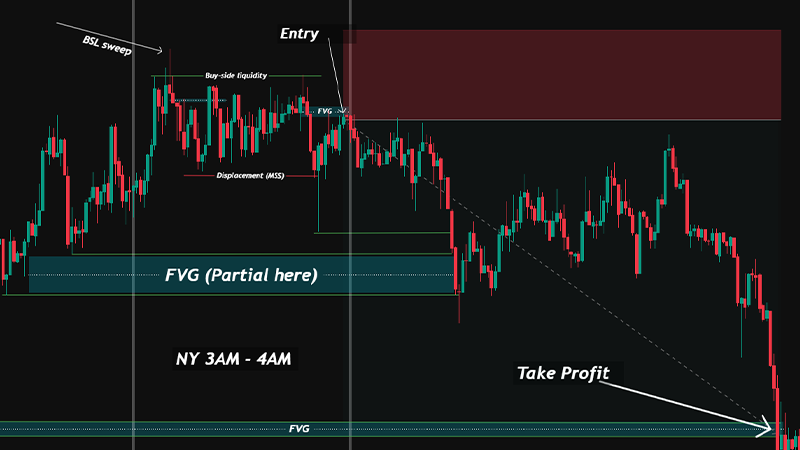
The examples below are schematic walkthroughs. They are not price claims and should not be read as trade recommendations. Their purpose is to show the decision sequence and the points where a “no trade” outcome is correct.

Bearish silver bullet walkthrough

Bearish setup following buy-side liquidity (BSL):
  • Window discipline: window is active; prior session high or equal highs marked as candidate BSL.
  • Liquidity event: price runs above an obvious high and takes buy-side liquidity.
  • Confirmation: decisive sell-side displacement breaks a relevant swing low, confirming MSS to the downside.
  • Entry location: retracement returns to the displacement imbalance zone; entry only if retracement is orderly and invalidation remains practical.
  • Trade management: objective is a single repricing leg toward the next liquidity pool, not prolonged multi-hour holding.
bearish silver bullet

Range Expansion, Reversals & Common Execution Mistakes

How to distinguish range expansion from reversal behaviour:

  • Range expansion context: internal liquidity is taken first, then displacement aligns with the broader draw. Retracements tend to be shallower and the move often seeks the next external pool.
  • Reversal context: a clear external pool is taken first, then displacement prints strongly in the opposite direction. MSS is more obvious and retracement often respects the imbalance more cleanly if intent is genuine.

Common execution mistakes that degrade the model

  • Trading without the sweep: entering because an FVG appears without a prior BSL or SSL event.
  • Ignoring the window: taking similar looking setups outside the defined time range increases overlap and false positives.
  • Chasing displacement: entering on impulse removes the risk edge of a retracement entry.
  • Using MSS loosely: labelling minor noise as a structure shift weakens confirmation.
  • Late or repeated retracement attempts: repeated revisits often indicate degrading quality.
  • Unclear invalidation: if the stop is negotiated after entry, risk logic is already broken.
  • Overtrading the same window: the one move principle exists to reduce churn.
  • Operational blind spots: mis mapped time zones during DST, trading into releases, ignoring spread widening.

Advantages & Limitations of the ICT Silver Bullet

The strategy’s strengths are conditional. They materialise under discipline and degrade under discretionary expansion. The correct evaluation questions specify instrument, costs, sample cleanliness, and rule stability rather than relying on labels such as “works” or “doesn’t work.”

Key Strengths of the ICT Silver Bullet Strategy

  • Clear timing constraint that reduces decision fatigue and opportunity overload.
  • Structured sequence that forces confirmation before entry.
  • Risk definition improves when entries are retracement based rather than impulse based.
  • Repeatability improves because study occurs within consistent windows.

Weaknesses & Risks of Overtrading

The model fails most often due to misuse, not because of the concept.

  • Trading outside the window to find more setups increases low-quality signals.
  • Skipping the sweep requirement increases false positives.
  • Chasing displacement removes the risk edge of retracement entry
Weaknesses & Risks of Overtrading

On performance questions:

  • “ICT Silver Bullet win rate” is not sufficient without distribution, costs, and sample size.
  • “Is it profitable” depends on execution discipline and whether testing includes realistic frictions.

ICT Silver Bullet vs Other ICT Models

This section positions Silver Bullet as one execution tool rather than a complete market doctrine. The practical value is knowing which framework is responsible for planning and which is responsible for execution constraints.

How It Compares With ICT Kill Zone Strategy

Kill zones are broader session windows used for context. Silver Bullet is narrower and more prescriptive.

Practical division of labour:

  • Kill zone work supports planning: where price is likely to seek liquidity.
  • Silver Bullet work supports execution: how to trade a single leg once liquidity and displacement align.

Silver Bullet vs Judas Swing Setups

Judas swing framing is often narrative: an initial move misleads participants before the real direction emerges. Silver Bullet is procedural:

  • It requires a sweep and confirmation displacement
  • It prioritises retracement entry and defines invalidation
sms-star

If using both, a conservative integration is to treat Judas swing ideas as context and keep Silver Bullet rules as the executable gate.


When to Use Each Model in Market Cycles

A practical allocation mindset:

  • In trending regimes with clean session delivery, Silver Bullet can align well with displacement and follow-through.
  • In choppy markets, displacement quality can degrade and retracements can become noisy, increasing stop frequency.

The professional response is not more trades. It is stricter filtering, smaller risk, or intentional inactivity.

Conclusion

The ICT Silver Bullet is most effective when treated as a constrained execution framework built on time windows, liquidity sweeps, confirmation displacement, and retracement based entries. Its main advantage is not a promised outcome. It is a clearer decision process with defined invalidation and a built-in limit on overexposure. If you enforce the window, require the sweep, and respect one move logic, the model becomes testable and operational. If you relax those constraints, it turns into discretionary pattern matching under a different name.

Continue Reading
not-found
calendar 6 April 2026
Rate this article
Plugin not installed

Leave a Reply

Your email address will not be published. Required fields are marked *

No thanks