
icon icon Home
icon icon Accounts
icon icon Quick start
icon icon Symbols

How to Trade the Inverse Fair Value Gap and Its Key Rules

Author
Abe Cofnas
Abe Cofnas
calendar Last update: 24 February 2026
watch Reading time: 16 min

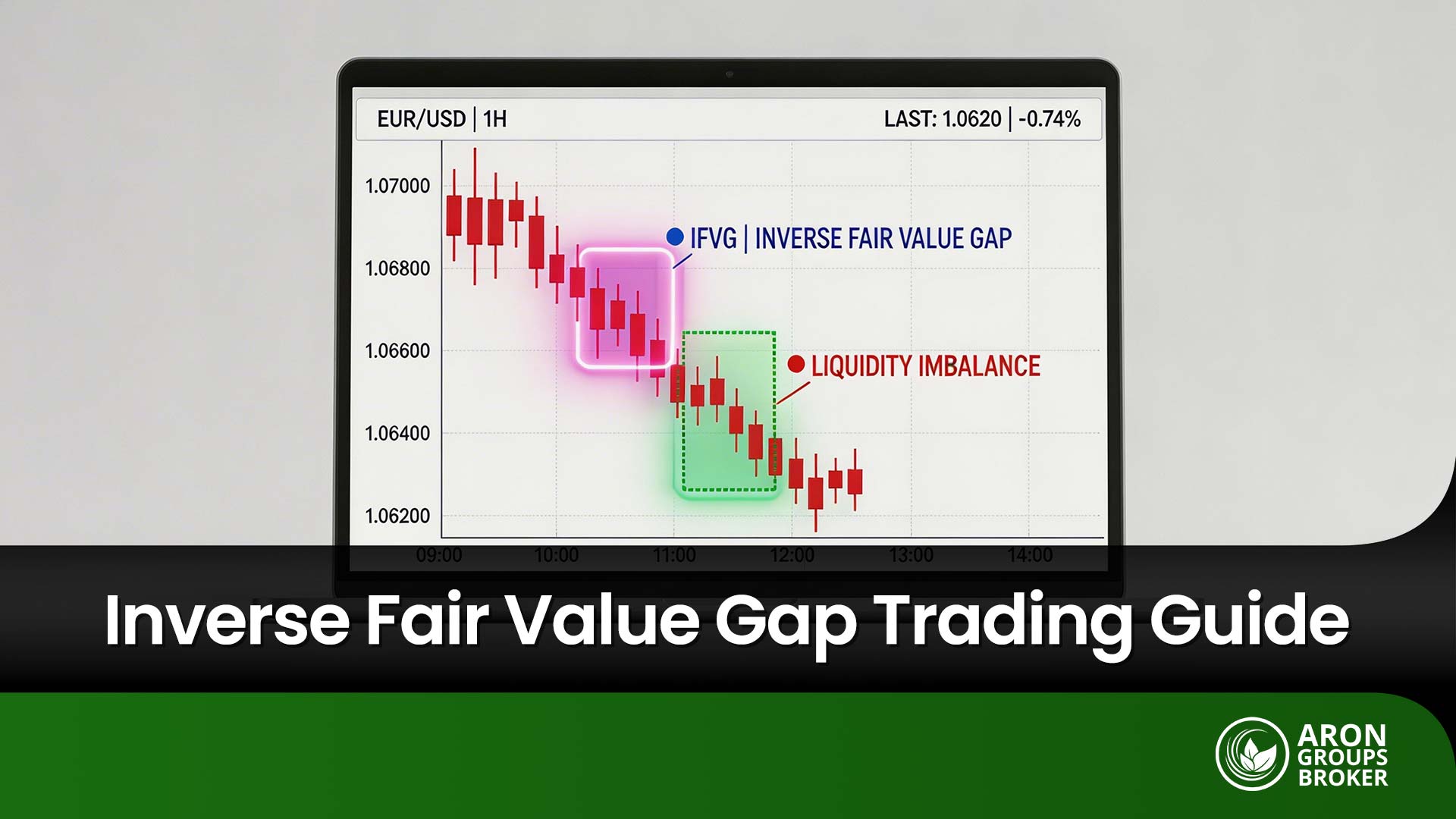
The inverse fair value gap (IFVG) is one of the most useful price concepts in modern technical trading. It describes a failed fair value gap that flips its role from support to resistance, or from resistance to support. This guide explains what an IFVG is, how it forms, and how to build a clear trading plan around it.

bookmark
Key Points:
  • An IFVG occurs when the market rejects a previous imbalance, turning an old resistance zone into new support or vice versa.
  • Successful setups usually follow a sweep of market liquidity and a decisive candle close that pierces through the original three-candle gap.
  • Traders should prioritise entries that align with a shift in market structure and occur within premium or discount price levels.
  • This model reflects institutional repricing, where the market accepts a new value area after clearing out opposing stop-loss orders.
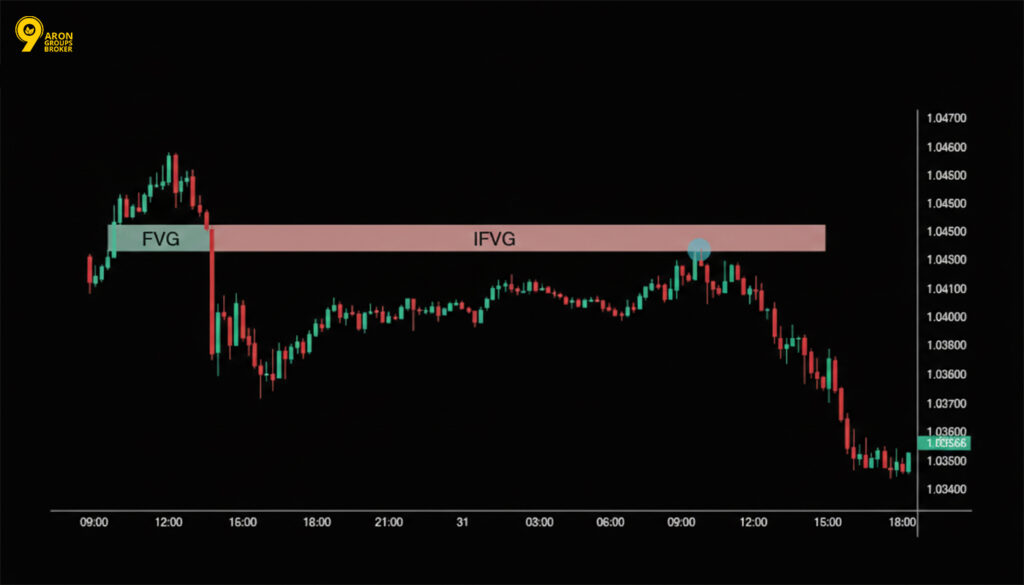
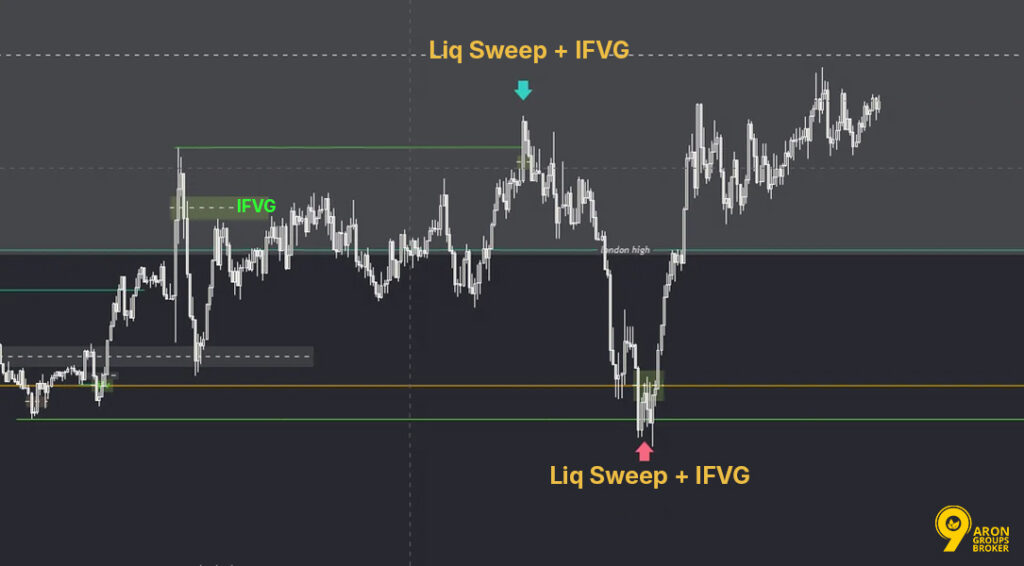
What is an Inverse Fair Value Gap (IFVG)?

This section breaks down the foundational mechanics of the inverse fvg. You will learn how price transforms a failed imbalance into a new trading opportunity.

Definition and Core Concepts of IFVG

A standard fair value gap (FVG) is a three-candle imbalance on a price chart. It forms when the price moves so fast that a visible gap appears between the high of candle one and the low of candle three. This gap represents an imbalance between buying and selling.

Inverse Fair Value Gap

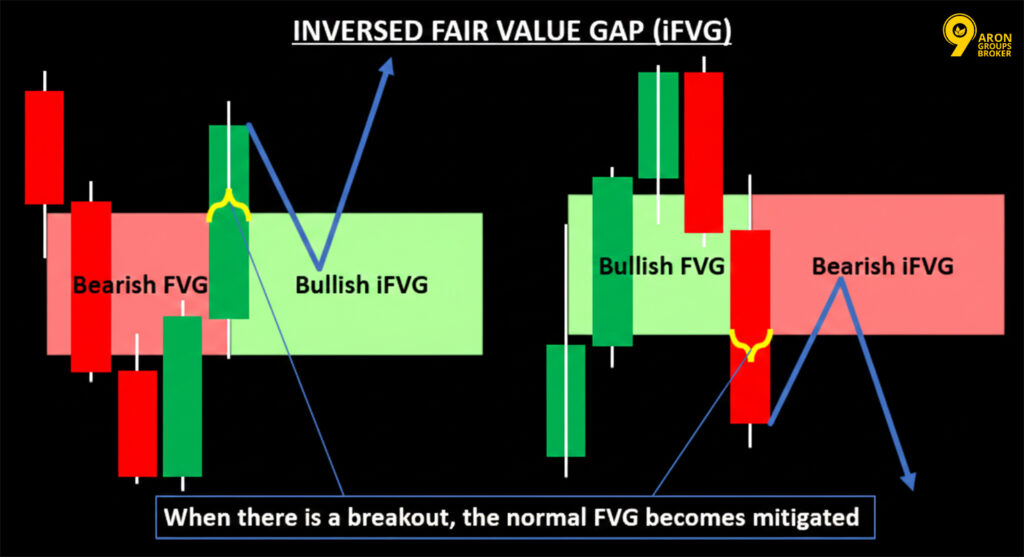
An inverse fair value gap forms when the price closes back through the original gap. The area that once acted as support or resistance now switches its role entirely. Traders call this a ‘flip’ or ‘FVG flip concept’.

In Other words:
An IFVG is simply a failed FVG. Price closes through the original gap, and that same area becomes a new zone of interest on the opposite side.

How an IFVG Forms Through Liquidity Sweep and Close Through the Gap

Before price can flip a fair value gap, something must happen first: a liquidity sweep. 

This means the price briefly extends beyond a recent swing high or low, triggering stop-loss orders in that area. After the sweep, strong directional movement pushes the price back through the original FVG, with the closing candle fully beyond it.

Inverse Fair Value Gap

The sequence is: 

liquidity sweep → displacement through the FVG → close beyond the gap. 

Only when all three steps occur is the original FVG considered invalidated and flipped into an IFVG.

sms-star

Important
A simple touch or wick through the gap does not create an IFVG. Price must close fully beyond the gap boundaries on the relevant timeframe.
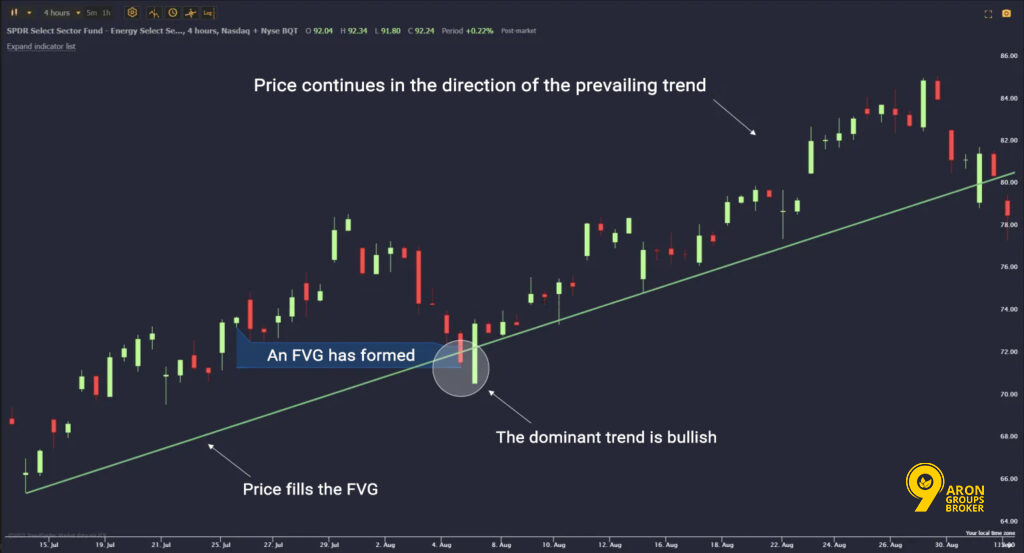
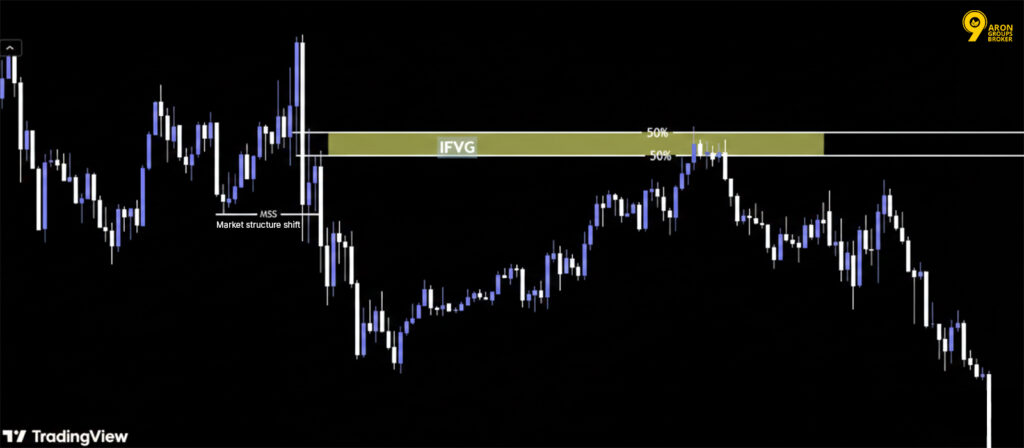
Key Differences to a Standard Fair Value Gap

A standard FVG is used as a continuation zone. Price pulls back into the gap and resumes its prior trend. 

Inverse Fair Value Gap

An IFVG, by contrast, is a reversal or counter-directional zone. Price previously moved aggressively through the FVG, invalidating it. When the price returns to that zone, traders expect a rejection rather than a continuation.

The table below summarises the main differences at a glance.

FeatureStandard FVGInverse FVG
RoleSupport/ResistanceFlipped role (opposite)
Price ActionPulls back, holdsCloses through, then returns
Trade TypeContinuationReversal / counter-move
TriggerThree-candle imbalanceLiquidity sweep + displacement
InvalidationPrice closes throughPrice closes back inside the gap

Context Setup and Bias Before IFVG Trades

An IFVG is only effective when traded within a high-probability environment. Here, we examine the key factors that drive strong market bias.

Market Structure and Liquidity Context for IFVG Entry

Trading an IFVG without context is one of the quickest ways to lose money. You must first identify the broader market structure. 

  • Is the price making higher highs and higher lows (a bullish structure)? 
  • Or lower highs and lower lows (bearish structure)?

A market structure shift (MSS) is a critical signal here. This occurs when the price breaks a significant swing point, suggesting that the trend may be changing. An IFVG that forms after a clean MSS carries far more weight than one appearing in the middle of a ranging market.

Inverse Fair Value Gap

Liquidity pools also matter. These are areas where many stop-loss orders gather, typically just above swing highs or below swing lows. When price sweeps these pools and then aggressively displaces through an existing FVG, the conditions for a valid IFVG setup are in place.

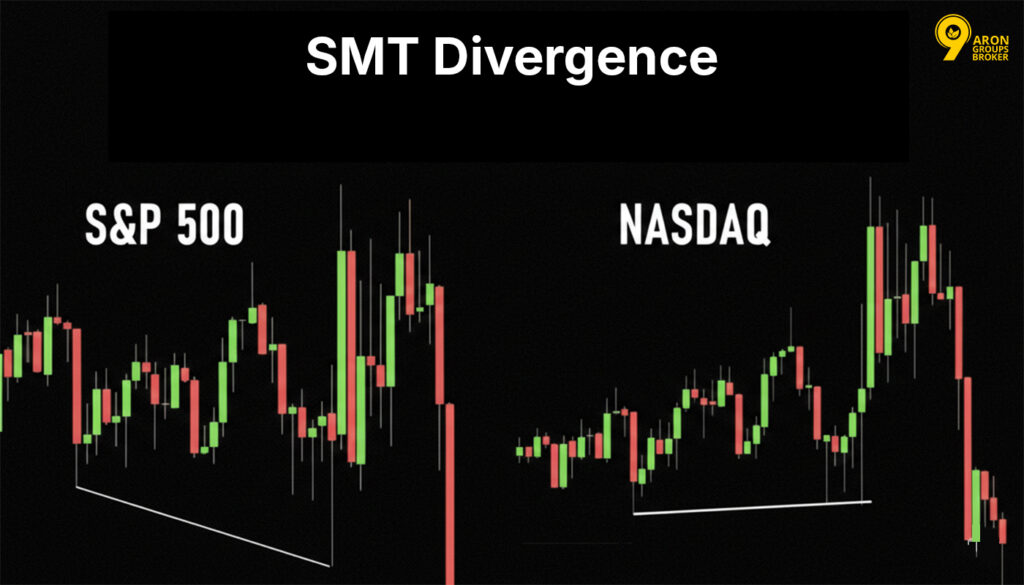
SMT Divergence and IFVG Confirmation Signals

SMT divergence (Smart Money Technique divergence) occurs when two correlated instruments move differently at a key level. 

For Example:
If the S&P 500 makes a new low while the Nasdaq fails to follow, that divergence suggests institutional buying pressure. 

Inverse Fair Value Gap

When SMT divergence coincides with an IFVG zone on the same timeframe, it is a strong confirmation that a reversal may be unfolding.

Other confirmation signals include: 

  • A strong displacement candle is forming after the sweep. 
  • A clear shift in the internal market structure on a lower timeframe;
  • And the IFVG zone sits within a discount area (for bullish setups) or a premium area (for bearish setups).

Choosing the Right Timeframes for Confluence

Multi-timeframe analysis is essential when trading the IFVG. Start with a higher timeframe, the daily or 4-hour chart, to identify the overall trend direction and key FVG locations. Then drop to a lower timeframe, such as the 1-hour or 15-minute chart, to look for the IFVG formation, liquidity sweep, and entry trigger.

A higher-timeframe IFVG combined with a lower-timeframe entry model creates a stronger probability setup. Never trade an IFVG on a single timeframe in isolation.

sms-star

Important
The higher timeframe sets the bias. The lower timeframe confirms the entry. Skipping the higher-timeframe check is a common and costly mistake.
Q: Do I need both a liquidity sweep and a market structure shift to trade an IFVG?
A: Both strengthen the setup considerably. A liquidity sweep alone can produce an IFVG, but without an MSS, the move may be a shallow retrace rather than a genuine reversal. For higher-probability trades, look for both events before committing.

The IFVG Trading Model and Rules

Precision in trading comes from following a strict mechanical process. This section outlines the exact rules for identifying and entering an IFVG setup.

Step‑by‑Step Formation of an Instant IFVG Setup

Understanding the exact formation sequence helps you identify setups in real time. Here is the step-by-step process:

Inverse Fair Value Gap
  • Step 1: Original FVG forms: A three-candle imbalance appears during a trending move. Price leaves a clear gap between candle one’s high and candle three’s low (for a bullish FVG).
  •  Step 2: Price approaches the FVG: In a later session, price retraces toward the gap, which is expected to hold.
  • Step 3: Liquidity sweep occurs: Price briefly moves beyond a nearby swing point, triggering stop orders before reversing.
  •  Step 4: Displacement through the gap: A strong candle, or a series of candles, closes fully beyond the original FVG boundary.
  • Step 5: IFVG is confirmed: The original gap is now an inverse fair value gap. Price may return to this zone later for a trade entry.

Entry Models: Returning Into the Flipped Gap

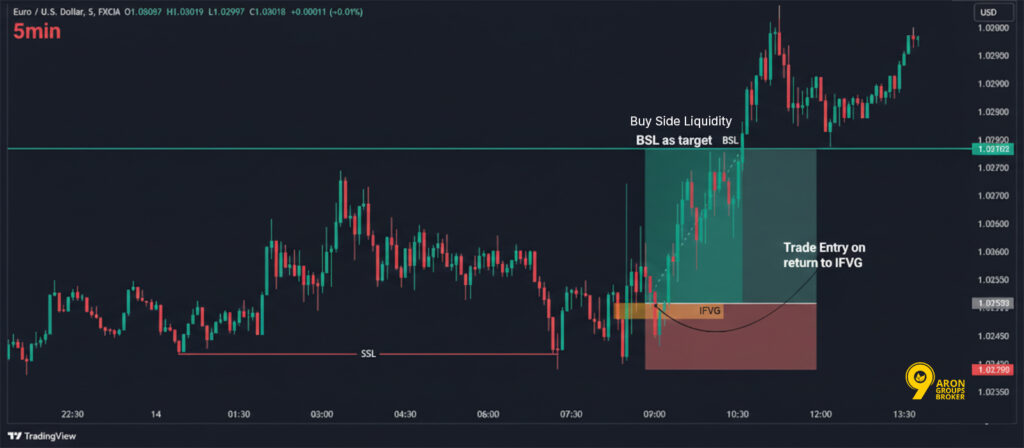
The core logic of IFVG trading is simple: wait for the price to return to the flipped zone after the displacement. 

That return is your entry opportunity. Price is revisiting an area of previous imbalance, but now the market sees it from the opposite perspective.

This return can happen immediately (within the same session) or several sessions later. The zone remains valid until the price either accepts it without reaction or specific time-based rules indicate expiry; more on invalidation later.

IFVG Entry Model with Limit, Market and Close‑Based Entries

There are three common ways to enter when the price returns to the IFVG zone:

  • Limit order entry: Place a limit buy (for bullish IFVG) or limit sell (for bearish IFVG) at the top or midpoint of the flipped gap. This gives a precise, pre-planned entry with a tight stop-loss.
  • Market order entry: Wait for a reaction candle to form within the IFVG zone, such as a pin bar or engulfing candle, then enter at market. This provides confirmation but may slightly reduce the risk-to-reward ratio.
  • Close-based entry: Enter when a candle closes back above (bullish) or below (bearish) the IFVG zone after initially passing through it. This is a more conservative approach suited to traders who prefer confirmation.
Inverse Fair Value Gap
sms-star

Warning:
Limit orders placed blindly at an IFVG zone without any additional confirmation carry a higher risk. Always combine the limit entry with at least one other signal, such as a displacement candle or SMT divergence.
Take‑Profit and Stop‑Loss Rules for IFVG Trades

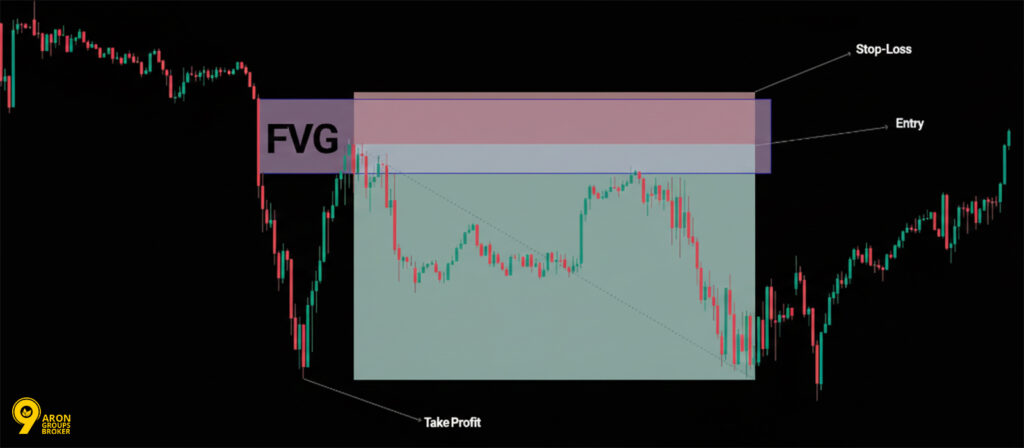
Your stop-loss should sit just beyond the opposite boundary of the IFVG zone. For a bullish IFVG, the stop goes below the lowest point of the flipped gap. For a bearish IFVG, it goes above the highest point.

Inverse Fair Value Gap

Take-profit targets are typically set at the next liquidity or structural level. Common targets include the nearest swing high or low, a previously identified FVG on a higher timeframe, or a key imbalance zone above or below the price. Aim for a minimum risk-to-reward ratio of 1:2 or better.

sms-star

Key Point:
A clean IFVG setup in a discount zone with SMT confirmation and a 1:3 risk-to-reward target is far stronger than forcing a trade at every IFVG you identify. Quality over quantity always.
Bullish vs Bearish IFVG Conditions

Market direction determines how you approach the IFVG. We will look at the specific requirements for both bullish and bearish trading scenarios.

Bullish IFVG Strategy: How to Trade Long Setups

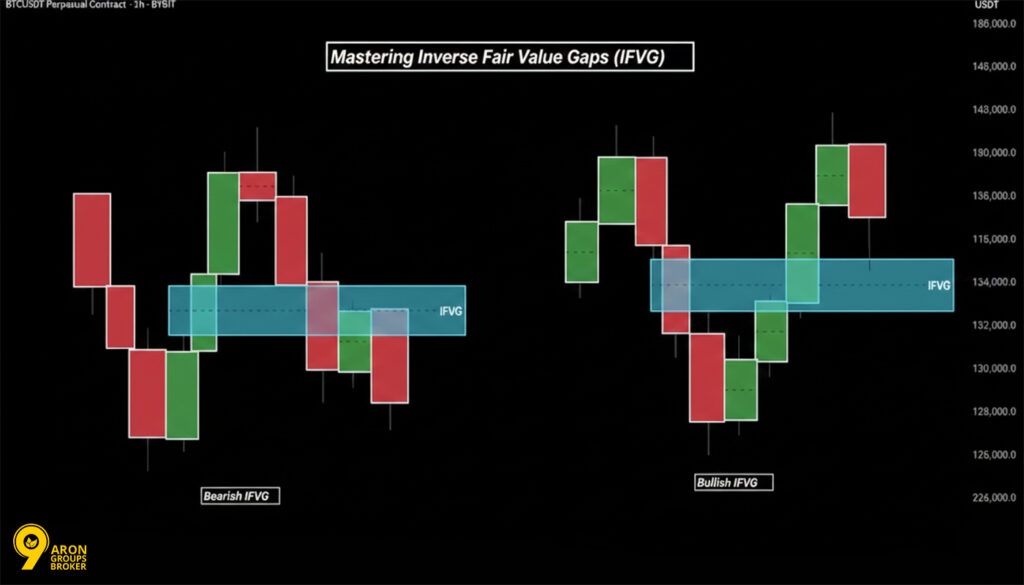
A bullish inverse fair value gap forms when a bearish FVG created during a downward price move is invalidated by a strong bullish displacement. The original bearish gap, which would have been a zone of resistance, now becomes a zone where buyers may step in.

For a long (buy) trade using a bullish IFVG, the ideal sequence is: 

  • price sweeps below a recent swing low (taking out sell-side liquidity), 
  • then displaces sharply upward through the bearish FVG. 

The bullish IFVG sits below the current price. When the price retraces into that zone, you look for a long entry.

The best bullish IFVG setups occur in a discount zone below the 50% level of the broader price range and align with a bullish market structure shift on the higher timeframe.

Inverse Fair Value Gap

Bearish IFVG Strategy: How to Trade Short Setups

A bearish inverse fair value gap forms when a bullish FVG is invalidated. Price sweeps buy-side liquidity above a swing high, then displaces sharply downward through the bullish FVG. The flipped zone is now a potential source of resistance.

For a short (sell) trade, wait for the price to retrace back up into the bearish IFVG zone. Look for rejection or confirmation signals within the zone, then enter short with a stop above the top of the IFVG.

Bearish IFVG setups are strongest in premium zones above the 50% level of the broader price range and when the higher-timeframe structure is bearish.

sms-star

Important:
Premium and discount positioning matter. Buying a bullish IFVG in a premium zone, or shorting a bearish IFVG in a discount zone, reduces the probability of success considerably.

Continuation vs Reversal Scenarios Using IFVG Signals

IFVGs can serve two purposes depending on the broader context. 

  • In a continuation scenario, the IFVG forms during a brief pullback within a strong trend. Price sweeps a nearby swing point, invalidates a short-term FVG, then continues in the original trend direction. Traders use the IFVG as a re-entry point into the dominant trend.
  • In a reversal scenario, the IFVG forms after a significant shift in market structure. Price has broken an important swing level, signalling a potential trend change. In this case, the IFVG acts as the first major pullback zone in the new direction.

Knowing which scenario you are in requires a higher-timeframe context. When uncertain, the continuation scenario is generally the safer assumption.

Advanced IFVG Techniques and Risk Controls

Professional traders use advanced confluence to filter out low-quality trades. These techniques provide a deeper understanding of institutional price movements and repricing.

Using Multi‑Timeframe Confluence to Strengthen IFVG Signals

Multi-timeframe confluence is what separates consistent IFVG traders from those who struggle. When an IFVG on the 15-minute chart lines up with a significant FVG or order block on the 4-hour chart, the probability of a reaction increases sharply.

The process is: 

  • Identify the higher-timeframe bias (daily or 4-hour), 
  • Find the nearest significant zone in that direction, 
  • Then use the lower timeframe (15-minute or 5-minute) to locate the IFVG formation and the entry trigger. 

This top-down approach ensures you are trading with the bigger picture in mind.

IFVG as a Repricing and Acceptance Zone

When price displaces through a fair value gap and then returns, it is essentially repricing into a previously mispriced area. 

Think of it as the market correcting itself. The IFVG zone represents an area where the market briefly overextended. The return into that zone is price ‘accepting’ a fair level before continuing.

This concept, often called a repricing or acceptance zone, explains why IFVGs attract institutional order flow on the return visit. Smart money is comfortable placing orders in zones that have been tested and validated through displacement.

sms-star

Key Point:
Viewing the IFVG as a repricing zone rather than just a chart pattern helps you understand why the price reacts there. Institutions use these areas to efficiently fill large orders.

Reclaimed IFVG: Turning Missed Setups into Opportunities

A reclaimed IFVG refers to a scenario where you missed the initial return into the flipped gap, but the price comes back to the zone a second time. This is sometimes called a ‘reclaimed FVG’ or a secondary test of the IFVG.

The reclaimed IFVG is a legitimate entry opportunity. The zone has already demonstrated that it held once, which adds confidence to the second visit. 

Apply the same confirmation rules, look for a reaction candle, check the broader context, and place your stop just beyond the zone boundary.

Displacement Through IFVG for Better Timing

One of the most precise timing methods is to wait for displacement through the IFVG zone itself on a very low timeframe, such as the 1-minute or 2-minute chart. When price enters the IFVG zone and then produces a sudden, sharp displacement candle in your expected trade direction, that momentum confirms institutional involvement.

This displacement through the IFVG is not the original displacement that created the gap. It is a secondary displacement that occurs within the zone during your trade setup. It provides an extremely tight stop-loss opportunity and a clear entry point.

Q: Can I use IFVG setups on cryptocurrency markets, or are they only for forex and indices?
A: IFVGs work on any liquid market where institutional order flow is present. This includes forex pairs, stock indices, individual equities, and cryptocurrencies like Bitcoin and Ethereum. The key requirement is liquidity; thinly traded assets produce unreliable patterns.

IFVG Invalidation, Mistakes and Pitfalls

Protecting your capital is the most important part of trading. Learn to identify the warning signs that suggest a setup has become invalid.

Invalidation Rules: When the IFVG Flip Fails

Not every IFVG will hold. Knowing when a setup has failed is just as important as knowing when to enter. An IFVG is invalidated when:

  • Price closes fully back inside the original gap boundaries. This means the displacement was insufficient, and the market has rejected the flip.
  • Price passes through the IFVG zone without any meaningful reaction, continuing aggressively in the original direction. This shows the zone has been disregarded by the market.
  • A significant news event or external shock overrides normal price behaviour, leading to disorderly price action that renders the IFVG unreliable.

When invalidation occurs, exit the trade immediately if you are already in it. Do not wait or hope for a recovery. Accept the loss, reassess the context, and look for the next valid setup.

sms-star

Warning:
One of the most dangerous mistakes in IFVG trading is holding a losing trade beyond the invalidation level. This turns a manageable loss into a significant one. Respect your stop-loss at all times.

Common Mistakes to Avoid When Trading IFVG

Several recurring errors trip up traders who are new to the IFVG concept:

  • Trading an IFVG without a prior liquidity sweep. Without the sweep, the FVG may not have truly flipped, making the setup unreliable.
  • Ignoring higher-timeframe bias. Entering a bullish IFVG when the daily chart is strongly bearish places you directly against the dominant order flow.
  • Using an expired or old IFVG. IFVGs become less reliable as they age, especially after multiple price passes through the same zone.
  • Over-leveraging on IFVG setups. Because the zone looks precise on a chart, traders sometimes risk far too much. A failed IFVG with excessive position sizing can be devastating.
  • Confusing a standard FVG with an IFVG. Always confirm that the price has fully closed through the original gap before classifying it as an inverse setup.

Managing Risk and Re‑Assessing Setups After Invalidations

After a failed IFVG trade, resist the urge to immediately re-enter. Take time to understand why the setup failed. 

  • Did the higher-timeframe context change? 
  • Was there a news release that disrupted normal price behaviour? 
  • Did you misidentify the liquidity sweep?

Good risk management on IFVG setups means risking no more than one to 2 percent of your trading capital per trade. After two consecutive losses on IFVG setups, step back, review your trade log, and look for pattern errors before placing another position.

Re-entry after invalidation is possible, but only after a new context is established, a fresh market structure shift, a new liquidity sweep, and a newly formed IFVG in line with the updated bias.

sms-star

Important:
Keeping a detailed trade journal for every IFVG setup, including screenshots, context notes, and outcomes, is one of the most powerful tools for improving your accuracy over time.


Q: How long does an IFVG zone remain valid after it is created?
A: There is no fixed expiry time, but most traders treat an IFVG as valid until the price either reacts to it or closes through it on the timeframe where it was identified. Zones that have been tested multiple times or are several weeks old typically carry less weight. Always combine the zone’s age with the current market context before entering.

Conclusion 

Mastering the inverse fair value gap involves more than just identifying a simple chart pattern. This strategy requires discipline, a clear trading plan, and a deep understanding of institutional order flow. 

By aligning with higher-timeframe bias and market structure, you can find high-probability trade setups. Always treat failed trades as valuable data, not just losses, to refine your market perspective.

Continue Reading
not-found
calendar 24 February 2026
Rate this article
Plugin not installed

Leave a Reply

Your email address will not be published. Required fields are marked *

No thanks