
icon icon Home
icon icon Accounts
icon icon Quick start
icon icon Symbols

Tape Reading in Forex: How to Interpret Raw Price Movement

Author
Abe Cofnas
Abe Cofnas
calendar Last update: 18 May 2026
watch Reading time: 8 min

In fast-moving Forex markets, indicators often lag behind price. This is where Tape Reading Forex becomes valuable. Instead of relying on delayed signals, tape reading focuses on raw price movement, order flow, and real-time market behaviour. It allows traders to see what is happening now, not what has already happened.

In this article, you will learn how reading the tape trading works, how to use price tape analysis, and how to build a practical tape reading strategy using real examples from Forex and Gold markets.

bookmark
Key Takeaways
  • Tape reading focuses on real-time order flow rather than historical data.
  • Fast, clean price movement usually signals strong market participation.
  • Absorption suggests potential reversal, while consumption signals possible breakout.
  • Combining tape reading with support/resistance improves decision accuracy.
  • Avoid noise and overtrading; focus on high-quality setups at key levels.


What Is Tape Reading in Forex and Why It Matters

Tape reading in Forex focuses on interpreting real-time price behaviour and order flow rather than relying on delayed indicator signals. It helps traders understand who is in control of the market at any given moment—buyers or sellers—and whether a move is likely to continue or reverse. This approach is especially useful in fast markets where timing is critical.

Definition of Tape Reading Forex

According to Investopedia, tape reading Forex is the process of analysing live price movements, execution speed, and reactions at key levels to identify market intent. Instead of looking at indicators, traders observe how the price behaves as orders are filled.

For example, if EUR/USD moves from 1.0980 to 1.1000 in a few seconds, this reflects aggressive buying. However, if the price reaches 1.1000 and stops despite continued buying attempts, it signals that sell-side liquidity is absorbing demand.

Core elements include:

  • Speed of price movement
  • Frequency of ticks (transactions)
  • Behaviour at support and resistance levels

Difference Between Tape Reading and Technical Indicators

The key difference lies in how information is generated and used. Technical indicators such as RSI or MACD are derived from historical price data, making them inherently lagging tools. Tape reading, by contrast, operates in real time and reflects actual market activity as it unfolds.

For instance, RSI may indicate overbought conditions after a strong move. However, tape reading can reveal weak buying pressure during the move, enabling earlier decision-making.

Differences Between Tape Reading and Technical Indicators

AspectTape Reading ForexTechnical Indicators (RSI, MACD, etc.)
Data SourceReal-time order flow and executionHistorical price data
Nature of SignalLeading (forward-looking)Lagging (based on past data)
Core MechanismMarket behaviour and liquidity interactionMathematical formulas and averages
TimingImmediate, tick-by-tickDelayed confirmation
Market InsightShows the intent of buyers and sellersShows the result of past price movement
Decision SpeedFaster decision-makingSlower, confirmation-based
Skill RequirementHigh (requires experience and interpretation)Moderate (rule-based and systematic)
FlexibilityDiscretionary and adaptiveStructured and rule-driven
Example Use CaseDetecting absorption at resistanceIdentifying overbought/oversold conditions

Q: Is tape reading better than indicators?

A: Not necessarily. Tape reading provides real-time insight, while indicators offer confirmation. The best approach is combining both.

Q: Can beginners use tape reading? 

A: Yes, but it requires practice. Beginners should start with simple price behaviour and key levels before analysing complex order flow.

The Core Elements of Price Tape Analysis

Price tape analysis is built on observing how transactions occur in real time and how liquidity influences price movement. By breaking down price into smaller components—ticks, flow, and order interaction—traders can better understand momentum, strength, and potential turning points in the market.

Understanding Price Flow and Tick Data

Price flow refers to the sequence of trades occurring in the market. Each tick represents a completed transaction, and together they form a continuous stream of activity. Analysing this flow helps identify whether buyers or sellers are in control.

Three key signals define price flow:

  • Speed: Rapid movement indicates strong participation
  • Consistency: Continuous movement in one direction shows control
  • Reaction: Slowing or stalling suggests opposing liquidity

Example:
If EUR/USD rises steadily from 1.0950 to 1.0965 with minimal pullback, buyers are dominant. If the move nears 1.0970, it may signal emerging resistance.

sms-star

A practical rule:
Fast, clean movement suggests imbalance, while slow, uneven movement often signals absorption.
Key Concepts in Order Book Reading

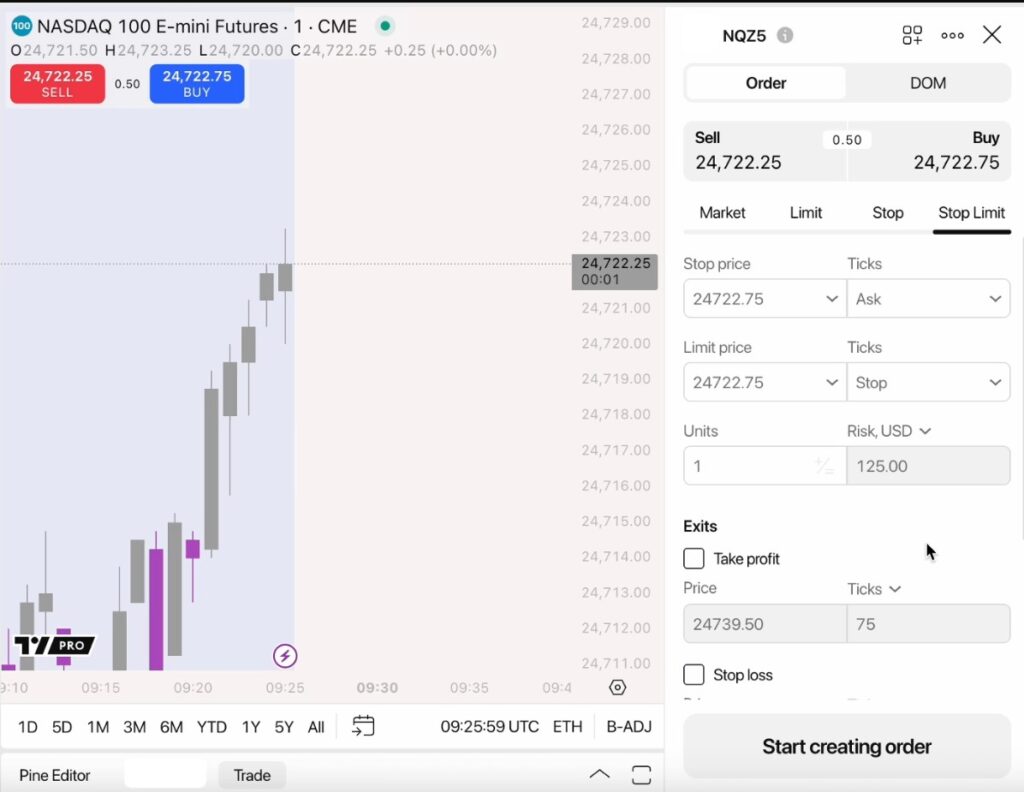
Order book reading focuses on analysing available liquidity and the positioning of orders in the market. It provides insight into where the price is likely to react based on supply and demand concentration.

Important concepts include:

  • Bid and Ask: Bid represents buying interest, while ask represents selling pressure
  • Liquidity Pools: Areas where large volumes of orders are clustered, often near round numbers
  • Absorption: When large opposing orders prevent the price from moving further
  • Order Removal: When liquidity disappears, allowing the price to move quickly 

Level 2 Forex Explained: Market Depth and Liquidity

According to TradingView, level 2 Forex provides a deeper view of the market by showing available liquidity and pending orders at different price levels. While standard charts only display executed prices, Level 2 data reveals where buyers and sellers are positioned before trades happen. This helps traders anticipate reactions, breakouts, and potential reversals with greater precision.

Market Depth and Liquidity

What Is Level 2 Data in Forex?

Level 2 data, often referred to as market depth, displays a list of bid and ask prices along with the volume of orders at each level. It gives traders insight into the liquidity above and below the current price.

In Forex, this data is usually aggregated from liquidity providers such as banks and institutions, since the market is decentralised.

A simplified example:

  • EUR/USD current price: 1.1000
  • Sell orders:
    • 1.1001 → 5 million
    • 1.1002 → 8 million
  • Buy orders:
    • 1.0999 → 6 million
    • 1.0998 → 10 million

This structure shows where the price may face resistance or support.

However, it is important to note that Forex Level 2 is less transparent than futures markets. Some liquidity remains hidden, meaning traders must combine this data with price tape analysis for better accuracy.

sms-star

Key takeaway:
Large order clusters often act as temporary barriers, slowing or reversing price movement.

How Liquidity and Orders Shape Price Movement

Price moves because of an imbalance between buyers and sellers. Level 2 data helps identify where this imbalance may occur by showing how liquidity is distributed.

There are three primary dynamics:

  • Liquidity Absorption: Large orders absorb incoming trades, preventing the price from moving further
  • Liquidity Vacuum: When few orders exist in a price range, the price moves quickly through that zone
  • Order Consumption: Once large orders are filled, the price often accelerates in that direction

Reading the Tape Trading: Identifying Market Intent

Reading the tape trading is fundamentally about identifying who is in control of the market and why. Instead of reacting to price after it moves, traders analyse execution behaviour to determine whether moves are driven by strong participation or weak liquidity. This allows for earlier and more informed decisions.

Spotting Aggressive Buyers and Sellers

Aggressive participants are willing to cross the spread and execute immediately at market prices. Their presence often signals urgency and directional intent.

Key signs of aggressive buyers:

  • Rapid upward price movement with minimal pullbacks
  • Consecutive ticks printing higher without hesitation
  • Breakouts through resistance with strong momentum

Key signs of aggressive sellers:

  • Sharp downward moves with little retracement
  • Continuous selling pressure at key levels
  • Failure of price to hold above support

Real Market Scenario: Identifying Aggressive Buyers

Gold (XAUUSD) approaches a resistance level at 2050:

  • Price moves rapidly from 2045 to 2050  
  • Multiple strong bullish ticks appear  
  • No significant pullback occurs  

At 2050:

  • Price briefly pauses  
  • Then breaks strongly above  

This behaviour indicates aggressive buyers and a high probability breakout.

Recognising Absorption and Exhaustion

Two critical concepts in price tape analysis are absorption and exhaustion. These help traders identify potential turning points.

  • Absorption occurs when large opposing orders prevent the price from moving further despite continued pressure.
  • Exhaustion happens when the dominant side loses strength and can no longer push the price further.

Recognising Absorption and Exhaustion table

AspectAbsorptionExhaustion
DefinitionStrong opposing orders absorb incoming pressureThe dominant side loses strength and momentum
Market BehaviourPrice holds at a level despite aggressive ordersPrice slows down after a strong directional move
Order Flow SignalHigh volume but little or no price progressDecreasing volume and weaker price movement
Price ReactionRepeated tests of a level without a breakoutSmaller candles and reduced volatility
Key InterpretationPresence of strong liquidity (hidden or visible)Lack of participation from buyers or sellers
Typical OutcomePotential reversal after absorption completesLikely reversal or consolidation
Trading OpportunityEnter the opposite direction after confirmed failureExit current trade or prepare for reversal

Tape Reading Strategy for Forex Traders

A structured tape-reading strategy combines observation of order flow, liquidity, and price reactions to create precise entry and exit decisions. The goal is not to predict, but to react to real-time market behaviour with clarity and discipline.

Entry Techniques Using Tape Reading

Entries based on tape reading focus on confirming real participation, not just price levels.

Common entry techniques:

  • Breakout Confirmation:
    Enter when the price breaks a key level with strong, fast ticks
    Example: EUR/USD breaks 1.1000 with momentum → buy entry
  • Absorption Reversal:
    Enter the opposite direction when the price fails to break a level
    Example: Price fails at resistance → short entry
  • Pullback Entry:
    Enter after a strong move when the price briefly retraces but maintains momentum
sms-star

Pro Tip:

Tape reading is not about reacting faster. It is about reacting with clarity at the right location in the market.

Exit Strategies Based on Order Flow

Exits in tape reading are based on changes in behaviour, not fixed targets alone. The focus is on identifying when the original trade idea is no longer valid.

Key exit signals:

  • Loss of Momentum: Price slows down after entry, indicating weakening pressure
  • Opposite Aggression: Strong counter-moves appear (e.g., sellers entering a long trade)
  • Liquidity Barrier: Price reaches a level with strong opposing orders

Combining Tape Reading with Other Trading Tools

Tape reading becomes significantly more effective when combined with structured tools such as support/resistance and momentum indicators. While tape reading provides real-time insight, these tools help define context and improve decision accuracy. The goal is to align live order flow with broader market structure.

Tape Reading combined with Support and Resistance

Support and resistance levels act as decision zones, where large volumes of orders are often placed. Tape reading helps confirm whether these levels will hold or break.

To combine them effectively, use support/resistance to define key levels, and tape reading to confirm behaviour at those levels

When the price reaches a key level, the objective is to quickly assess strength vs weakness and liquidity behaviour. Instead of reacting to every move, focus on two core questions: how fast the price moves, and what happens to orders at that level.

  • If price moves fast and clean, it signals strong participation and a higher probability of continuation.
  • If price moves slowly with hesitation, it often indicates weak pressure or strong opposition.

At the same time, observe liquidity:

  • If price cannot break despite repeated attempts, orders are being absorbed → potential reversal
  • If price keeps pushing and getting closer to a breakout, orders are being consumed → potential continuation

Tape Reading Decision Table

Price BehaviourOrder Flow ConditionInterpretationLikely OutcomeTrading Bias
Fast, strong movementOrders consumedAggressive participationBreakout / ContinuationTrade with the trend
Slow, hesitant moveOrders absorbedStrong opposing liquidityReversal / RejectionTrade against move
Repeated testingOrders weakeningLiquidity is being gradually removedImminent breakoutPrepare for a breakout
Choppy, inconsistentNo clear structureMarket noiseNo clear directionAvoid trading

Tape Reading with RSI and MACD Confirmation

Momentum indicators such as RSI and MACD help validate whether a move has strength or is likely to weaken. When combined with tape reading, they provide a more balanced view of the relationship between real-time action and statistical confirmation.

If tape reading and indicators provide conflicting signals, priority should generally be given to tape reading, as it reflects live market behaviour. However, in such situations, it is prudent to reduce position size or wait for clearer confirmation to manage risk more effectively.

Q: Should indicators override tape reading?
A: No. Technical indicators should not override tape reading, because they are derived from past price data and inherently lag behind real-time market activity. Instead, they should be used as a secondary tool to confirm what tape reading is already revealing about current order flow and market intent.

Common Mistakes in Tape Reading Forex and How to Avoid Them

Tape reading is highly effective, but only when interpreted correctly. Many traders struggle not because the concept is flawed, but because they react too quickly or misread what the market is showing. The most common issues stem from confusing noise with meaningful signals and from taking too many low-quality trades. A structured approach helps filter out these errors and improves consistency.

Misinterpreting Market Noise

One of the biggest challenges in Tape Reading Forex is distinguishing real market intent from random fluctuations. Not every price movement carries information. In quiet or low-volume conditions, the price may move in small, inconsistent steps without any clear direction. These movements often trap traders into entering positions without a valid edge.

To avoid unnecessary losses, traders should focus only on clear reactions at key levels. Meaningful signals are usually accompanied by speed, consistency, or strong rejection. If a price lacks these characteristics, it is often better to stay out of the market.

sms-star

Trading rule:
When there is no structure or momentum, there is no trade.

Overtrading Based on Short-Term Signals

Another common mistake is overtrading. Because tape reading provides rapid, real-time feedback, traders may feel compelled to act on every small movement. This leads to excessive entries, reduced accuracy, and increased emotional pressure.

A more effective approach is to be selective. High-quality trades typically occur at well-defined levels, supported by clear order flow behaviour. Waiting for these conditions reduces noise and improves risk management.

sms-star

Pro Tip:
Focusing on a limited number of strong setups rather than many weak ones leads to better outcomes. Tape reading is not about reacting faster, but about reacting more precisely.


Conclusion

Tape Reading Forex offers a direct way to understand market behaviour by focusing on real-time price movement and order flow. Instead of relying solely on lagging indicators, traders can observe how liquidity is absorbed or consumed and make decisions based on actual market activity. When combined with key levels and proper risk management, tape reading becomes a practical framework for identifying high-probability setups. The key is not speed, but clarity—waiting for meaningful signals and acting with discipline.

Continue Reading
not-found
calendar 18 May 2026
Rate this article

Leave a Reply

Your email address will not be published. Required fields are marked *

No thanks