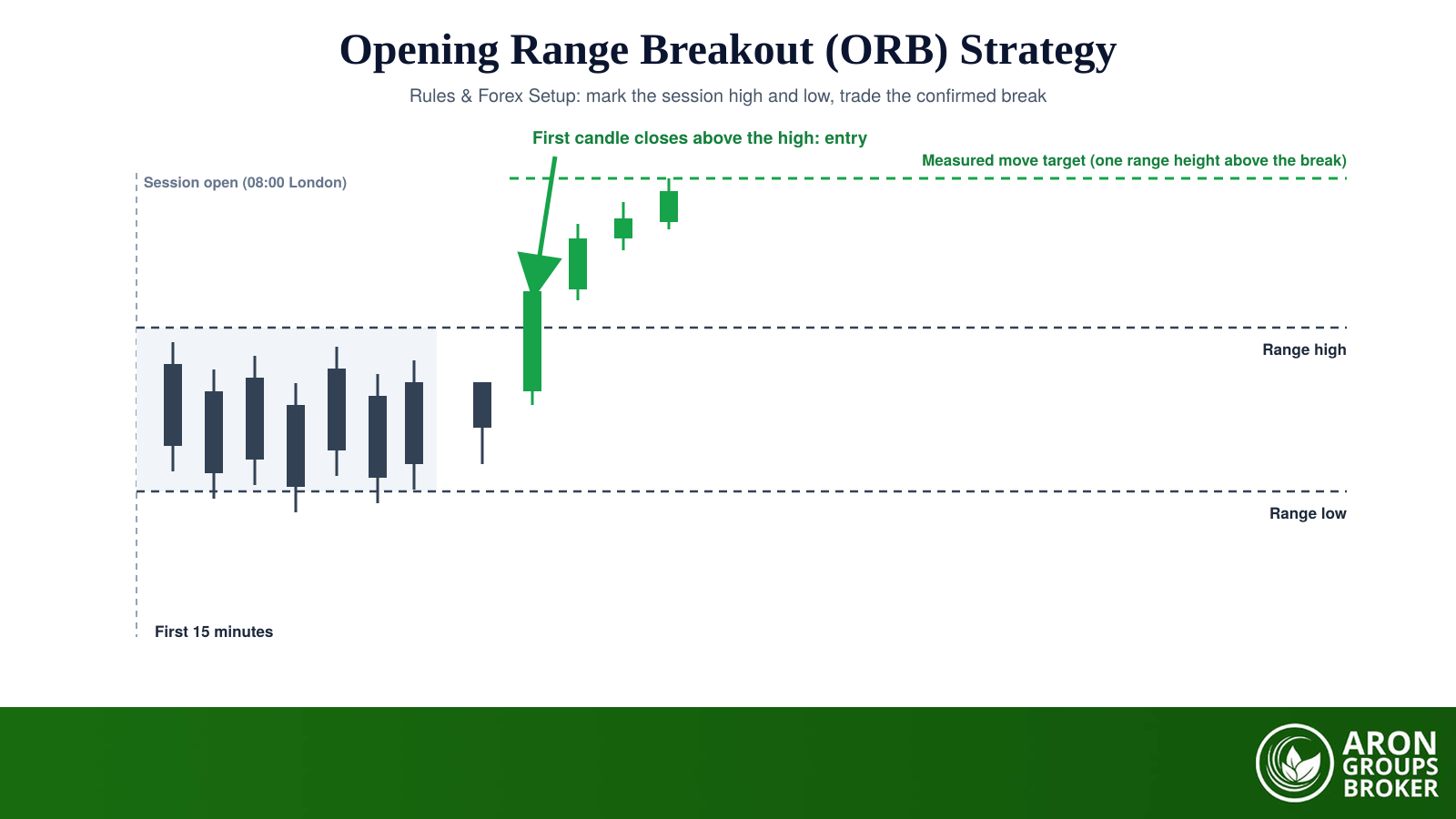

The opening range breakout (ORB) is a day trading strategy that marks the high and low of a session’s first minutes, then trades the break of those levels. A move above the range high is a long signal, and a move below the range low is a short signal. The logic is simple: the opening minutes concentrate the day’s first wave of orders, and a clean escape from that early range often sets the direction for the whole session.
The method was built for stock index futures, yet it adapts naturally to trading forex, gold and oil once the range is anchored to the right session open. That anchor is where most guides go wrong, because the currency market never actually closes. Get it right and the ORB strategy becomes one of the most structured ways to trade the most liquid hours of the day.
This guide covers the full rule set: how the opening range is defined, which session opens suit which instruments, how to choose between the 5, 15, 30 and 60 minute windows, exact entry and exit rules, and what large backtests honestly say about win rates and expectancy. Everything here is educational rather than a promise of profit.
- The opening range is the high and low of a session's first 5 to 60 minutes; ORB trades the confirmed break of those levels.
- Forex has no single open, so anchor the range to the London open for EUR/USD and GBP/USD, and to the New York open for USD/JPY and USD/CAD.
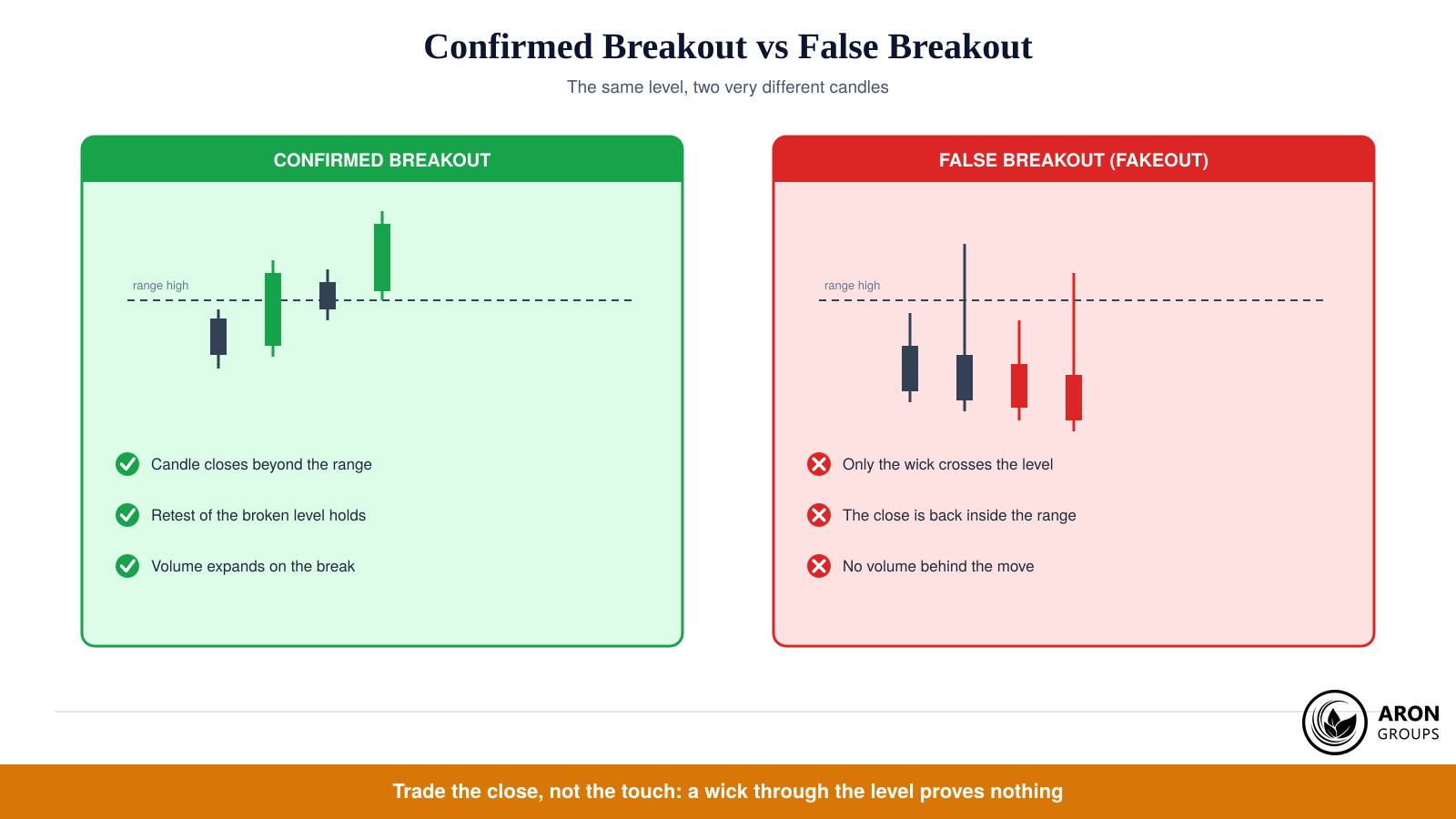
- Enter on a candle close beyond the range, never on the first touch; retests, fair value gaps and volume filter out fakeouts.
- Place the stop on the far side of the range or at its midpoint, and target a measured move or a fixed 2 to 3 times the risk.
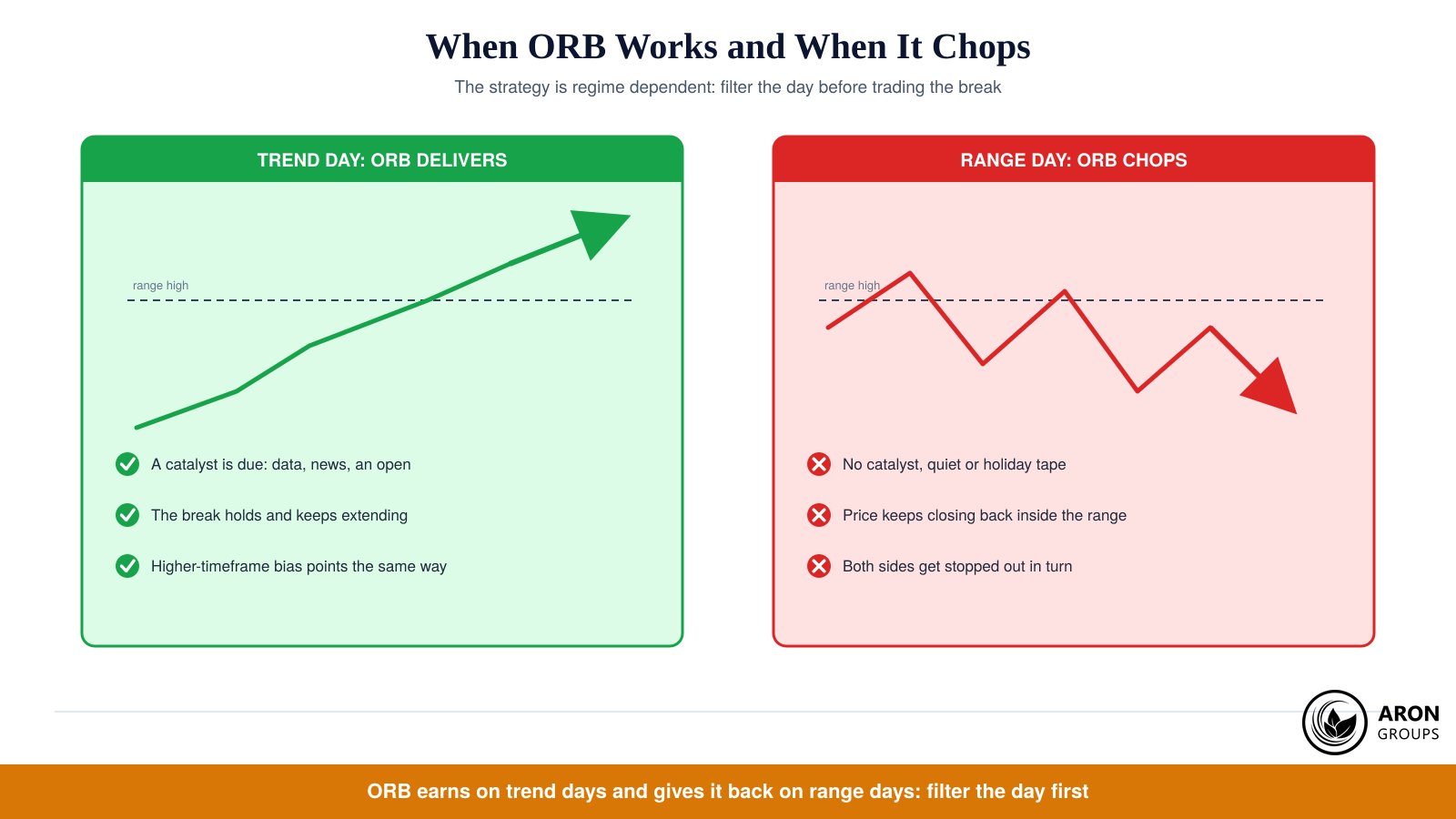
- Backtests show a real but modest edge that depends on regime: ORB performs on trend days and chops on quiet range days.
What Is the Opening Range Breakout (ORB) Strategy?
The opening range breakout strategy is a rules-based day trading method with three parts: a defined range, a trigger and a planned exit. You mark the highest and lowest prices printed during the first minutes of a session, wait for price to break out of that box, then trade in the direction of the break. It sits in the same breakout family as the classic Darvas Box, compressed into a single session. The trader Toby Crabel systematised the approach in his 1990 book on short term price patterns, which is why his name is still attached to it.
Risk Disclosure
Trading forex and CFDs carries a high level of risk and can result in the loss of all your capital. This content is educational and is not investment advice. Never risk money you cannot afford to lose.
Why the Opening Minutes Matter
The first minutes of a session concentrate overnight orders, news reactions and fresh institutional flow, so they often set the tone for the day. Volume and volatility both peak near the open, which gives breakout entries something to feed on. Intraday studies of liquid US index funds find the session high prints inside the first 30 minutes on roughly a quarter of trading days. The session low does so on a similar share. That is several times more than the clock alone would predict, and it is the statistical seed the ORB strategy grows from.
The Forex Adaptation: Anchor the Range to a Session Open
A stock has one opening bell, but currencies trade around the clock from Sydney to New York, so the ORB strategy only works in forex once you choose an anchor. The practical answer is to treat each session open as its own bell. The Bank for International Settlements puts global FX turnover above 7.5 trillion dollars a day, and most of that volume changes hands during London and New York hours, which is exactly when opening range breakouts have participation behind them.
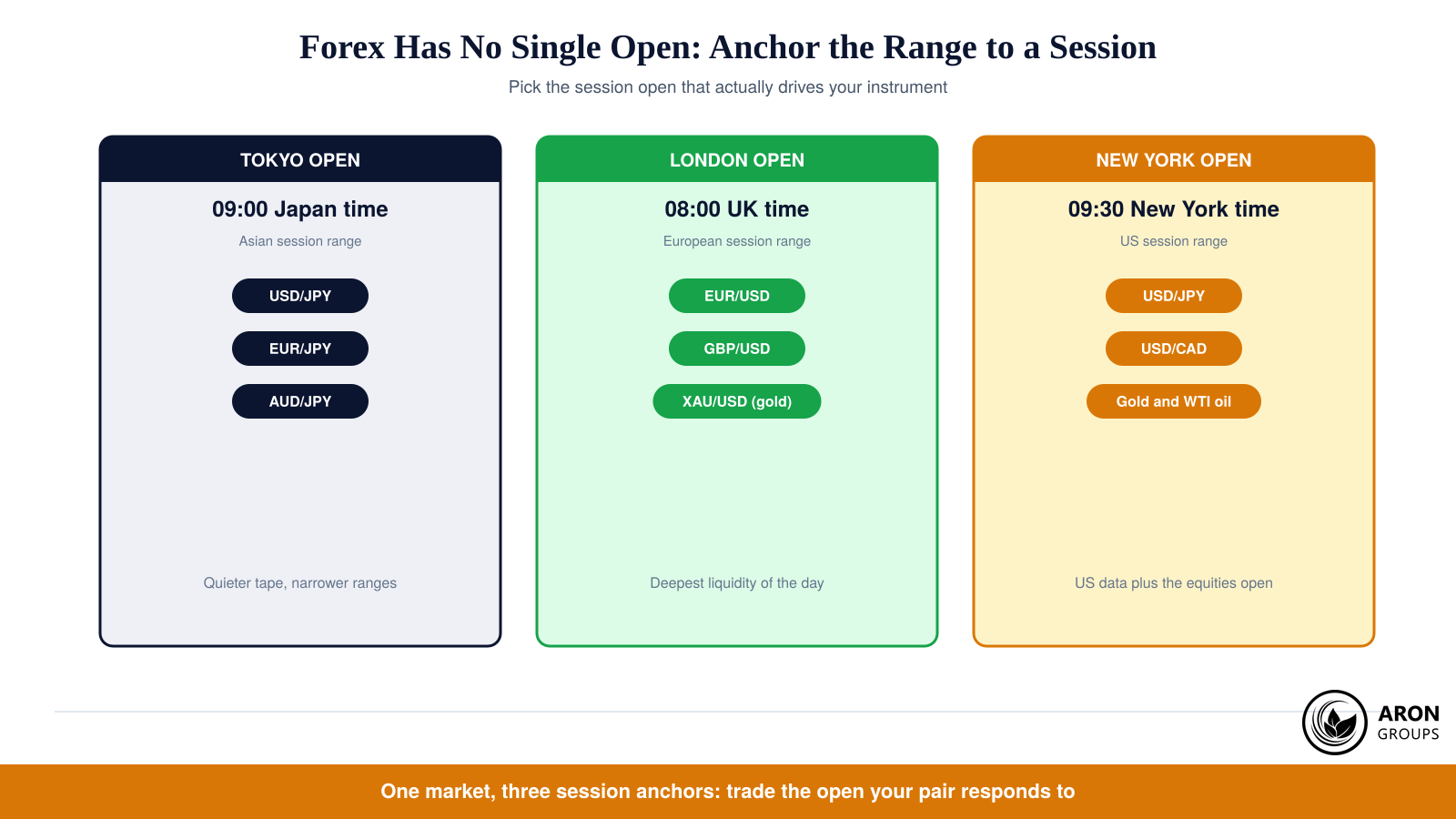
Match the anchor to the instrument. The London open at 08:00 UK time suits EUR/USD and GBP/USD, because European dealers dominate flow in those pairs. The New York open at 09:30 Eastern Time suits USD/JPY and USD/CAD, since US data releases and the equities open arrive together. JPY crosses can be anchored to the Asian session open instead. Gold and oil CFDs respond best to the London and New York opens, when their reference markets are active. Whichever anchor you pick, keep it fixed so your statistics stay comparable.
| Session anchor | Local open | Typical instruments |
|---|---|---|
| London | 08:00 UK time | EUR/USD, GBP/USD, XAU/USD |
| New York | 09:30 Eastern Time | USD/JPY, USD/CAD, gold, WTI oil |
| Tokyo (Asian) | 09:00 Japan time | JPY crosses such as EUR/JPY and AUD/JPY |
Table 1: Session anchors and the instruments each open drives best.
Choosing the Opening Range Timeframe: 5, 15, 30 or 60 Minutes
There is no single correct window, only trade-offs. The shorter the range, the earlier the signal and the higher the noise. The 5 minute range fires fastest and suits scalpers who accept frequent false breaks. The 15 minute ORB strategy is the common default because it balances speed with reliability. The 30 minute range is steadier for intraday swings, and the 60 minute range suits session traders who want the fewest, highest conviction signals.
| Opening range | Signal speed | False break risk | Best suited to |
|---|---|---|---|
| 5 minutes | Fastest | Highest | Scalpers wanting many trades |
| 15 minutes | Fast | Moderate | Most day traders, the usual default |
| 30 minutes | Slower | Lower | Intraday swing entries |
| 60 minutes | Slowest | Lowest | Session traders aligned to opens |
Table 2: Shorter ranges signal earlier but fail more often; longer ranges are steadier but later.
Charting the range takes seconds on MetaTrader 5: drop horizontal lines on the first window’s high and low, or load one of the free opening range breakout indicator scripts that draw the box automatically. TradingView offers similar tools. If you prefer full automation, the rules are mechanical enough to code into an expert advisor, which also makes honest testing far easier. Whatever the tool, the levels must be set before the breakout and never redrawn after it.
ORB Entry Rules Step by Step
The sequence below is deliberately mechanical. The ORB trading strategy rewards consistency far more than cleverness, so treat these as systematic trading rules to run in order every session, rather than suggestions to improvise around.
Step 1: Mark the Opening Range
At your chosen session open, let the first 5, 15, 30 or 60 minutes complete, then mark the highest high and the lowest low of that window. Those two lines are the opening range. Extend them across the rest of the session, because they stay relevant as support and resistance all day.
Step 2: Wait for a Confirmed Close
Do nothing on the first touch of either level. A valid signal is a full candle close beyond the range, on your range timeframe or one below it. Wicks that poke through and close back inside are fakeouts in the making, and skipping them removes a large share of losing trades.
Step 3: Choose Your Entry Model
The simplest entry is at market on the confirmed close. Higher probability variants wait for a pullback that retests the broken level and holds, or for price to return into a fair value gap (FVG) left by the breakout impulse. Retest entries miss some runners, but they improve the average fill and tighten the stop distance considerably.
Step 4: Confirm with Volume and Bias
Before the order goes in, check two filters. Volume, or tick volume in spot forex, should expand on the breakout candle, showing real participation. The higher timeframe picture should not fight the trade: a long above the range is more reliable when price also sits above VWAP and the daily bias points the same way.
Rule
No touch trades. The ORB signal is a candle close outside the range plus your chosen confirmation. If the close never comes, there is no trade, whatever the wick did.
Stop-Loss, Targets and Risk Management
Two stop placements dominate. The conservative stop sits on the opposite side of the range, so a long from a break of the high is protected below the range low. The tighter alternative sits at the range midpoint, which roughly halves the risk per trade and improves the achievable risk-reward. Whichever you choose, position sizing should risk a fixed fraction of the account on the stop distance, typically 1 per cent or less. European regulators report that 74 to 89 per cent of retail CFD accounts lose money, and oversized breakout trades are a classic cause.
Targets follow the range itself. The measured move projects one full range height beyond the broken level, and a fixed target at 2 to 3 times the risk is the common alternative. Some traders trail the stop behind structure on trend days instead. A risk-to-reward indicator on the chart keeps the numbers honest while the trade is live, and an obvious key level ahead always outranks a mechanical target.
Mini Example: EUR/USD 15 Minute ORB at the London Open
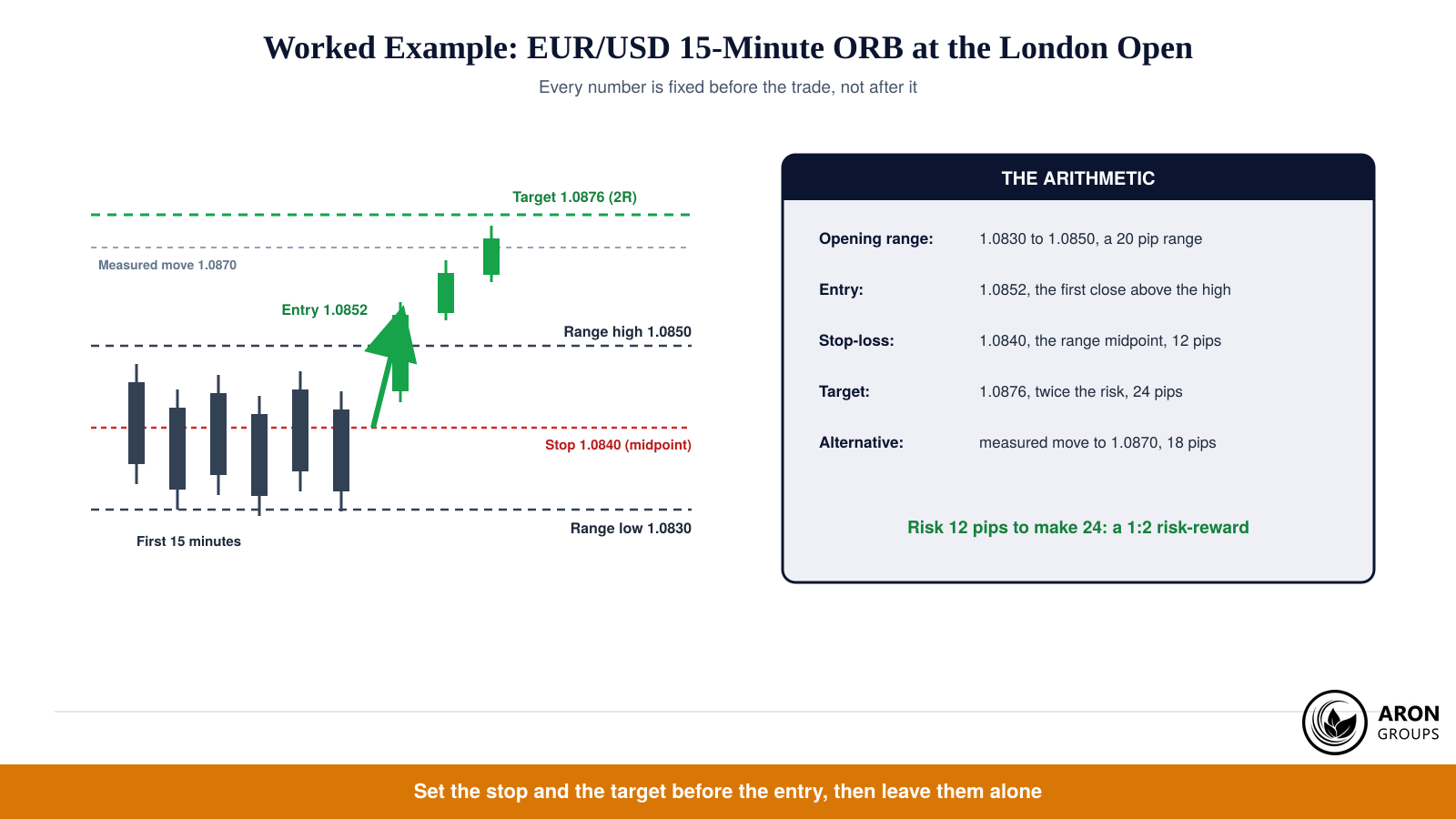
Between 08:00 and 08:15 UK time, EUR/USD prints a high of 1.0850 and a low of 1.0830, a 20 pip opening range. At 08:30 a 15 minute candle closes at 1.0852, clearly above the range high, and the long is taken at that close.
The stop goes at the 1.0840 midpoint, 12 pips of risk, and the target at 1.0876, exactly twice the risk, with the 1.0870 measured move noted as the conservative alternative. If the target trades, the position banks 24 pips against 12 risked. If the midpoint gives way first, the loss is capped and the setup is finished for that session.
Does the ORB Strategy Actually Work? The Honest Data
Yes, but the edge is real and modest rather than magical. One large backtest covering more than a million ORB trades across US shares found that the 5 minute range had the highest win rate at close to 54 per cent, the 15 minute range produced the best expectancy per trade, and the 30 minute range won about 49 per cent of the time. None of those figures is impressive on its own. The strategy pays through the relationship between win rate and risk-to-reward, not through being right most of the time.
The caveats matter as much as the headline. Those results come from equities rather than spot forex, and they swing heavily on the stop-loss setting, the costs assumed and the period tested. Independent academic tests of similar signals on index futures found the edge can vanish once realistic spreads and slippage are charged, and regulatory reviews of day-trading firms reached similar conclusions about most customers long ago. Treat any published win rate as a hypothesis, run your own out-of-sample backtesting on your pairs and sessions, and only then decide whether you hold a genuine trading edge.
When ORB Fails: False Breakouts and Range Days
The strategy’s known weakness is the quiet day. When no catalyst is due and volatility contracts, price breaks the range, attracts entries, then closes straight back inside, and it can do that in both directions before lunch. Strings of those fakeouts are where the drawdown builds. The filters are simple: prefer sessions with scheduled data or a strong overnight theme, stand aside when the opening range is already unusually wide, and accept that skipping a day is itself a position.
Where Aron Groups Fits
Opening range breakouts need fast fills and honest costs at the busiest minutes of the day, which is a fair test of any broker. Aron Groups runs ECN accounts on MetaTrader 5 with market execution and floating spreads, so breakout orders fill at the next available price without requotes. The commission-free Nano account trades from 0.0001 lots, small enough to run the strategy live for pennies while the statistics build.
Once the rules test well, Aron Prop offers funded evaluations where the same session discipline applies under fixed drawdown limits, a natural next step for an ORB trader with a proven record. Because breakout trading concentrates risk into a few minutes, pairing the method with strict capital preservation habits matters more than any indicator. Demo first, size small, and let the numbers decide.
Conclusion
The opening range breakout endures because it converts the most information-rich minutes of a session into a fixed, testable plan: a range, a confirmed break, a stop and a target that all exist before the trade does. In forex, the edge starts with the anchor, so choose the session open your instrument actually responds to and keep it constant.
Respect what the data says. The ORB strategy carries a modest, regime-dependent edge that rewards confirmation, fixed rules and honest testing, and it punishes touch trades on quiet days. Build the statistics before the size, and the first minutes of a session become a plan rather than a temptation.
Frequently Asked Questions
Quick answers to the questions traders ask most about the ORB strategy.
What is the best timeframe for the opening range breakout?
The 15 minute ORB strategy is the most popular default because it balances early entry with fewer false breaks, and it produced the best expectancy per trade in large equity backtests. Scalpers favour the 5 minute range for speed, while the 30 and 60 minute windows suit slower intraday and session trading.
What win rate should I expect from the ORB strategy?
Large backtests cluster between roughly 49 and 54 per cent, depending on the timeframe and the stop placement. That is close to a coin flip, which is why the profit comes from taking targets at 2 to 3 times the risk rather than from accuracy. Your own tested numbers on your instrument matter more than any published figure.
Is there an opening range breakout indicator?
Yes. Free ORB indicators for MetaTrader 5 and TradingView draw the session box automatically from your chosen open and window. They save time and remove marking errors, but an indicator only draws levels. The confirmation rules, the stop and the target still have to come from your written plan.
Which forex pairs suit the opening range breakout best?
Pairs with a strong session identity work best. EUR/USD and GBP/USD anchored to the London open, and USD/JPY and USD/CAD anchored to the New York open, are the standard choices. Gold and oil CFDs also respond well to those two opens. Thin exotic pairs break falsely too often to trust.