
IV crush is a sudden, sharp fall in an option’s implied volatility that drains the contract’s extrinsic value. The option loses value fast, even when the underlying moves your way. It usually arrives in the minutes after a scheduled event, and the earnings announcement is the classic case. The uncertainty that inflated the premium disappears the moment the news is out.
Buyers are caught because two forces act on the same contract and pull in opposite directions. The move in the underlying adds value. The collapse in implied volatility takes value away. When the second effect is larger than the first, a correct read on direction still loses money, and position sizing cannot repair that.
This guide explains how vega measures the exposure, why the crush is mechanical, and what the arithmetic of a losing winner looks like. It also covers the seller’s side of the same event, and why selling premium is not free money.
- IV crush is a sharp fall in implied volatility that drains an option's extrinsic value after a scheduled event.
- Vega measures the change in an option price per one percentage point of implied volatility, not per one per cent of it.
- Implied volatility is bid up while an outcome is unknown and falls back once the outcome is known.
- A buyer can be right on direction and still lose, because the volatility loss can exceed the directional gain.
- Sellers collect the inflated premium, but a move larger than the market priced costs far more than it paid.
What IV crush actually is
IV crush is the rapid loss of an option’s extrinsic value caused by a fall in implied volatility. Implied volatility is the market’s expectation of future movement, backed out of the option’s own price. When that expectation drops, every contract priced off it becomes cheaper, whatever the underlying is doing. The crush is not a separate market event; it is the option repricing to a smaller expected range.
Risk Disclosure
Trading forex and CFDs carries a high level of risk and can result in the loss of all your capital. This content is educational and is not investment advice. Never risk money you cannot afford to lose.
The part of the price that can vanish
Only extrinsic value is exposed. An option’s price splits into intrinsic value, the amount it is already in the money by, and extrinsic value, which covers time and volatility. Intrinsic value is arithmetic and cannot be crushed. Extrinsic value is an expectation, and expectations reprice.
Which contracts take the hardest hit
Out of the money contracts suffer most, because their value is almost entirely extrinsic and nothing is left once the volatility component goes. Short dated contracts are also more exposed in percentage terms, since extrinsic value is a large share of a small price. The cheapest options on the board are usually the ones the crush empties fastest.
Vega, the number that prices the exposure
Vega is the change in an option’s price for a one percentage point change in implied volatility. That definition trips traders up constantly. It means one hundred basis points on the implied volatility scale, not a one per cent relative change in the level. A move from 30 to 32 is a two point change, not a rise of roughly seven per cent.
The Options Industry Council gives a clean illustration. Take a stock at 50 with a twelve month call, implied volatility at 30 per cent, vega of 0.15 and an option value of 4.00. A two point rise in implied volatility adds about 0.30 to the contract, taking it to roughly 4.30. The same arithmetic runs in reverse when implied volatility falls.
Long options are long vega, so every buyer is implicitly betting that implied volatility will not fall. Short premium positions are short vega and gain as it falls. The vega exposure arrives with the position whether or not the trader has looked at it.
Key Point
Read a two point drop in implied volatility as two whole points on the scale, from 40 to 38. It is not two per cent of 40. The difference changes the arithmetic by an order of magnitude.
Why implied volatility rises into an event and falls after it
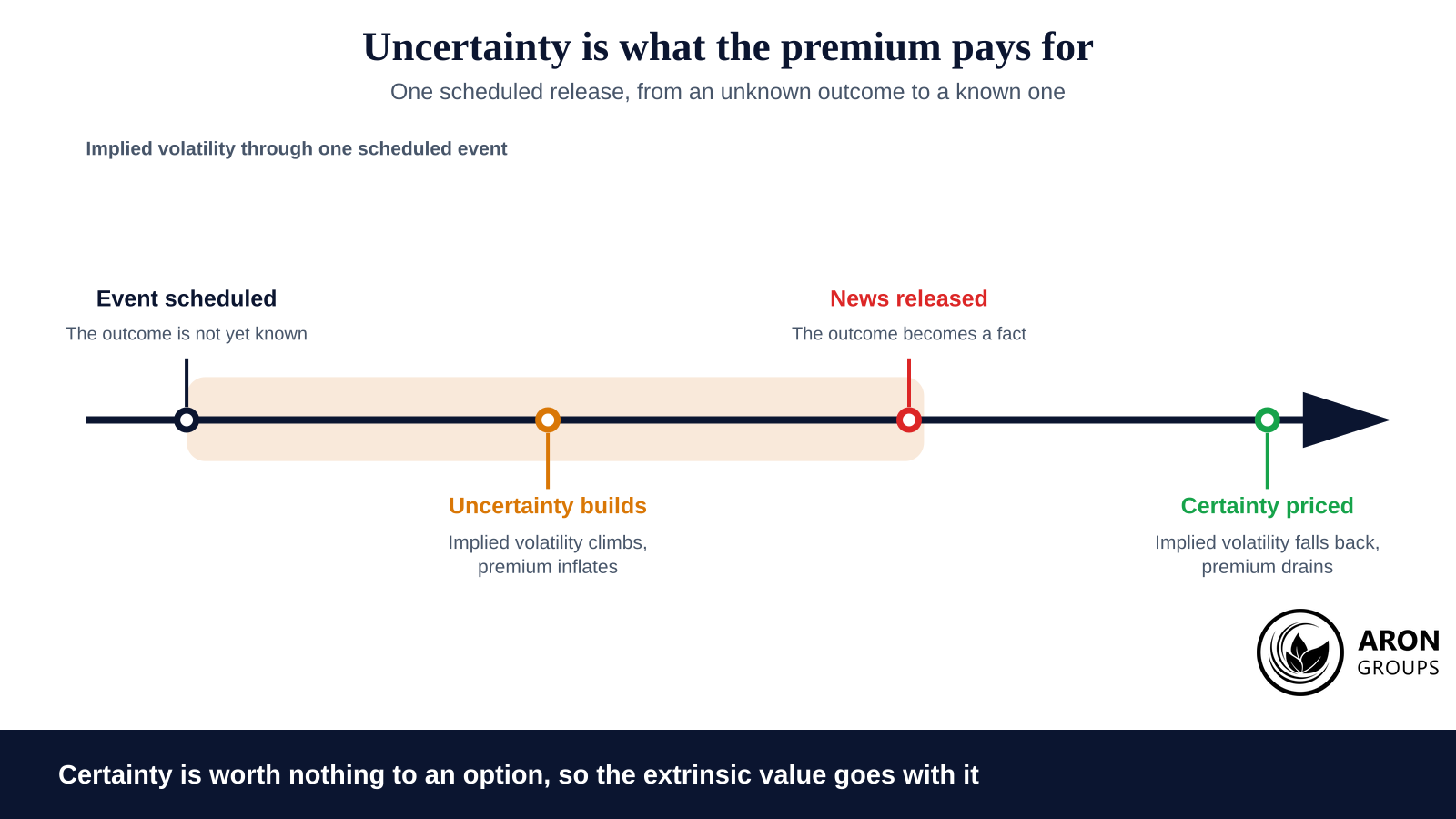
Implied volatility rises into a scheduled event because the outcome is unknown, and falls once it is known. Sellers will not write cheap contracts across an announcement that could move the underlying sharply. Buyers bid for the exposure or the protection. Implied volatility therefore climbs through the sessions before the date.
The release itself resolves the uncertainty. Whatever the number is, the market now knows it, and the expected range shrinks. Implied volatility drops towards its ordinary level, and the extrinsic value priced off it goes with it. Direction is irrelevant to this part.
The scale can be severe. One documented case shows at the money implied volatility at 112 two days before an earnings release and 34 the day after. That is seventy eight points removed in two sessions. Realised volatility, the movement that actually occurs, is measured after the fact, unlike the volatility bands drawn on a chart.
Which events produce the pattern
Any scheduled release with a binary or near binary outcome does it. Corporate earnings are the most watched example. A regulatory ruling on a drug application, a central bank decision, major economic data and product launches all behave the same way. Crypto option markets do it around protocol upgrades.
Practical filter
If implied volatility is already elevated and the event is still ahead, you are paying for uncertainty that is about to end. Price the trade on that basis rather than on the chart.
The trap: right on direction and still losing
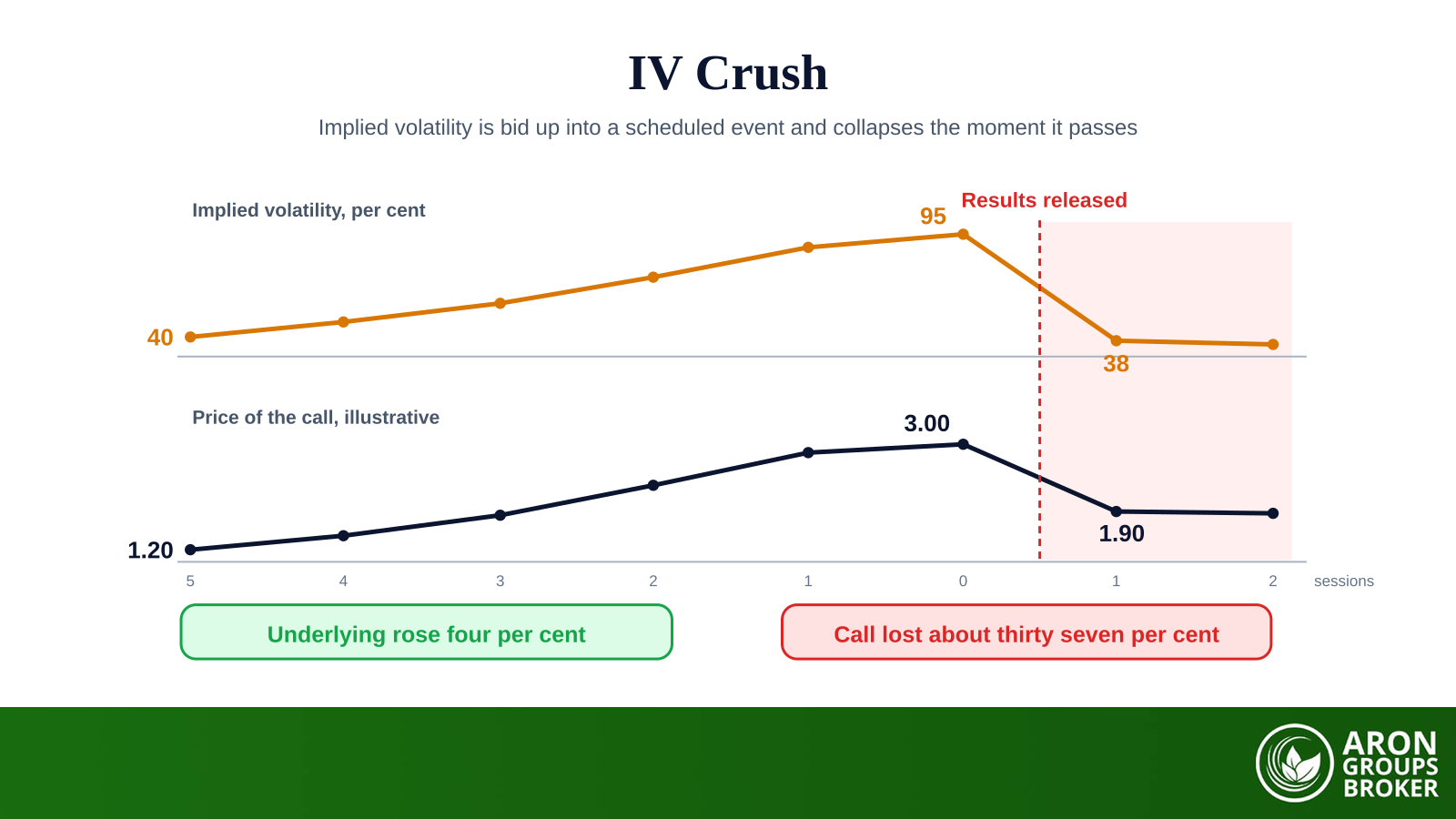
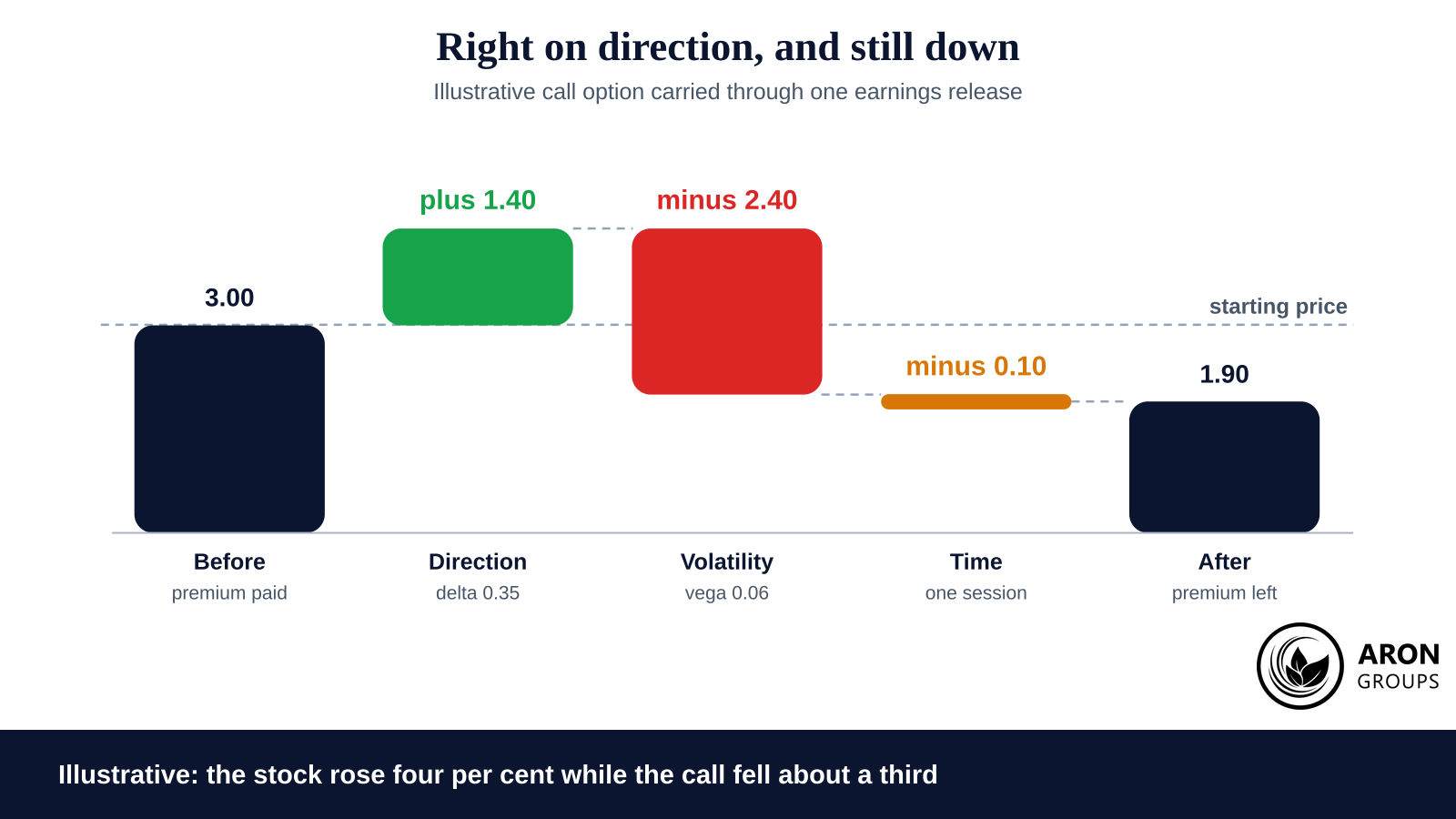
A buyer can be correct about direction and still lose, because the volatility loss can be larger than the directional gain. This is the most expensive misunderstanding in event trading. The position was never a pure bet on direction. It was a bet on direction and on implied volatility holding up.
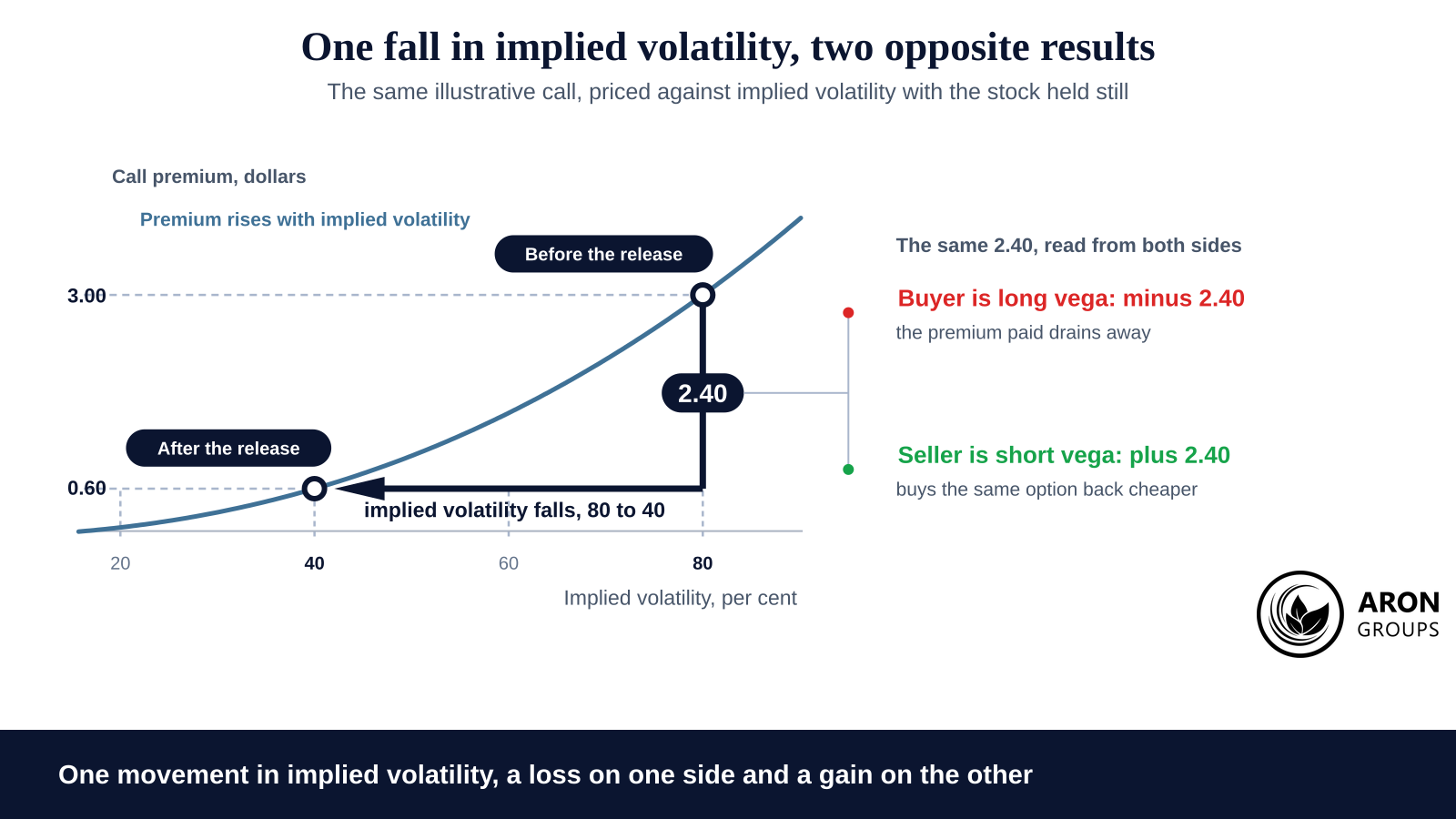
Consider an illustrative case. A stock trades at 100 the afternoon before earnings. A call struck at 105, expiring shortly after the event, costs 3.00 with implied volatility at 80. Its delta is 0.35 and its vega is 0.06.
The results are published and the stock rises four per cent to 104. The buyer was right about direction. Implied volatility falls from 80 to 40, a drop of forty points on the scale. Both effects now hit the same contract at once.
| Component | What happened | Effect on the call |
|---|---|---|
| Starting price | Bought the afternoon before the release | 3.00 |
| Directional gain | Delta 0.35 across a 4.00 rise in the stock | plus 1.40 |
| Volatility loss | Vega 0.06 across forty points of implied volatility | minus 2.40 |
| Time decay | One session closer to expiry | minus 0.10 |
| Closing price | Sold the morning after the release | 1.90 |
Illustrative figures: the stock gained four per cent and the call lost about a third.
The stock did exactly what the buyer expected and the contract still lost roughly a third of its value. A directional gain of 1.40 was never going to cover a volatility loss of 2.40. This is a first order illustration: it ignores gamma and the interaction between the two effects.
The lesson is not that buying options into earnings never works. It is that the move has to beat the volatility loss as well as the strike. Traders describe this as needing to beat the implied move, which is the range the option market has already priced. That changes the risk to reward before the order is placed.
Q: How large does the move have to be to beat the crush?
A: Large enough that the intrinsic value gained exceeds the extrinsic value lost, which normally means larger than the move the option market has already priced. There is no fixed threshold. It depends on the strike, the time to expiry, the vega and the size of the fall in implied volatility.
The seller's side of the same event
Sellers take the other side and profit as the inflated premium collapses. Writing an option into an event means receiving the rich premium and buying it back cheaper once implied volatility normalises. The same fall that ruins the buyer’s position pays the seller.
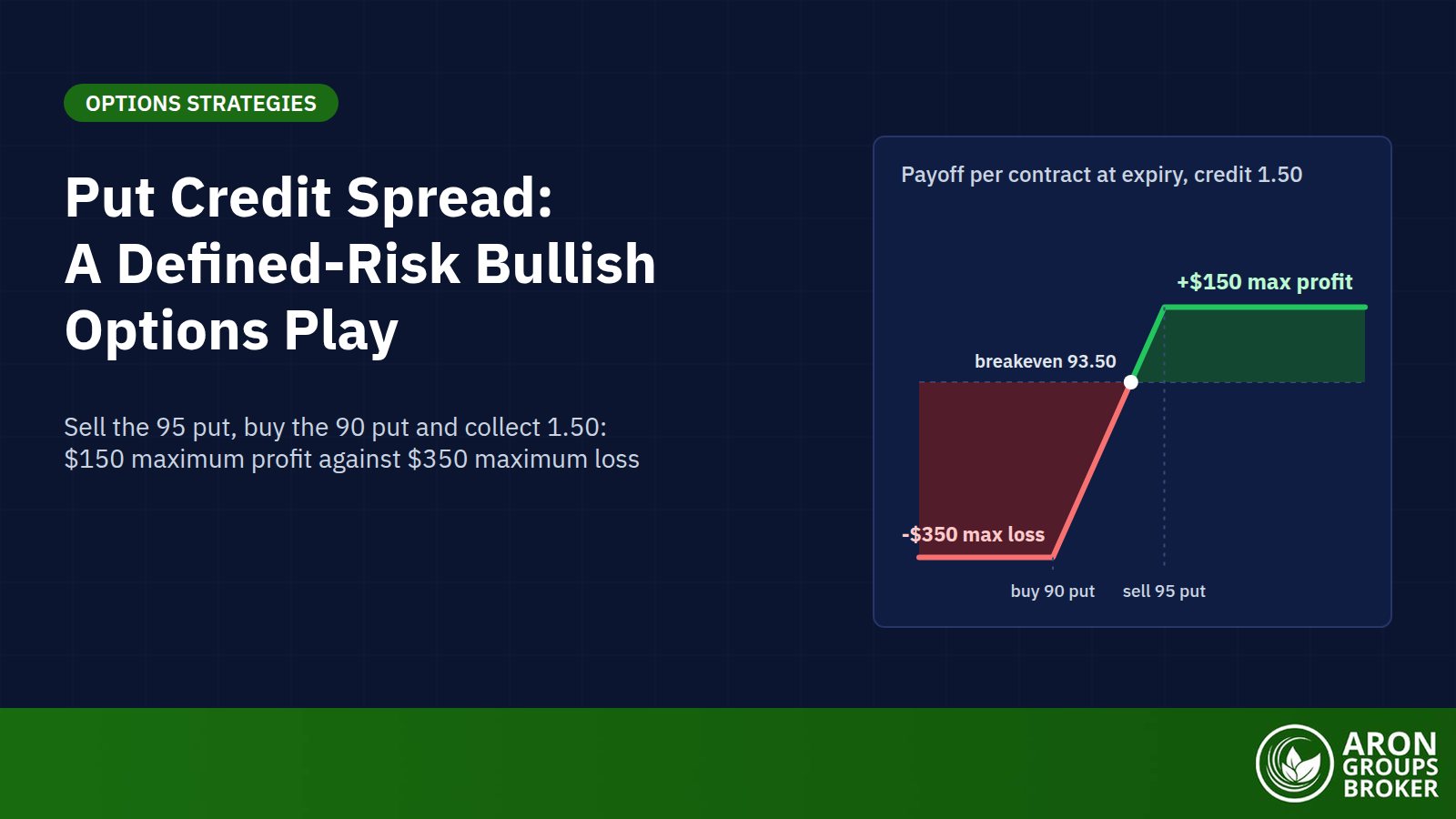
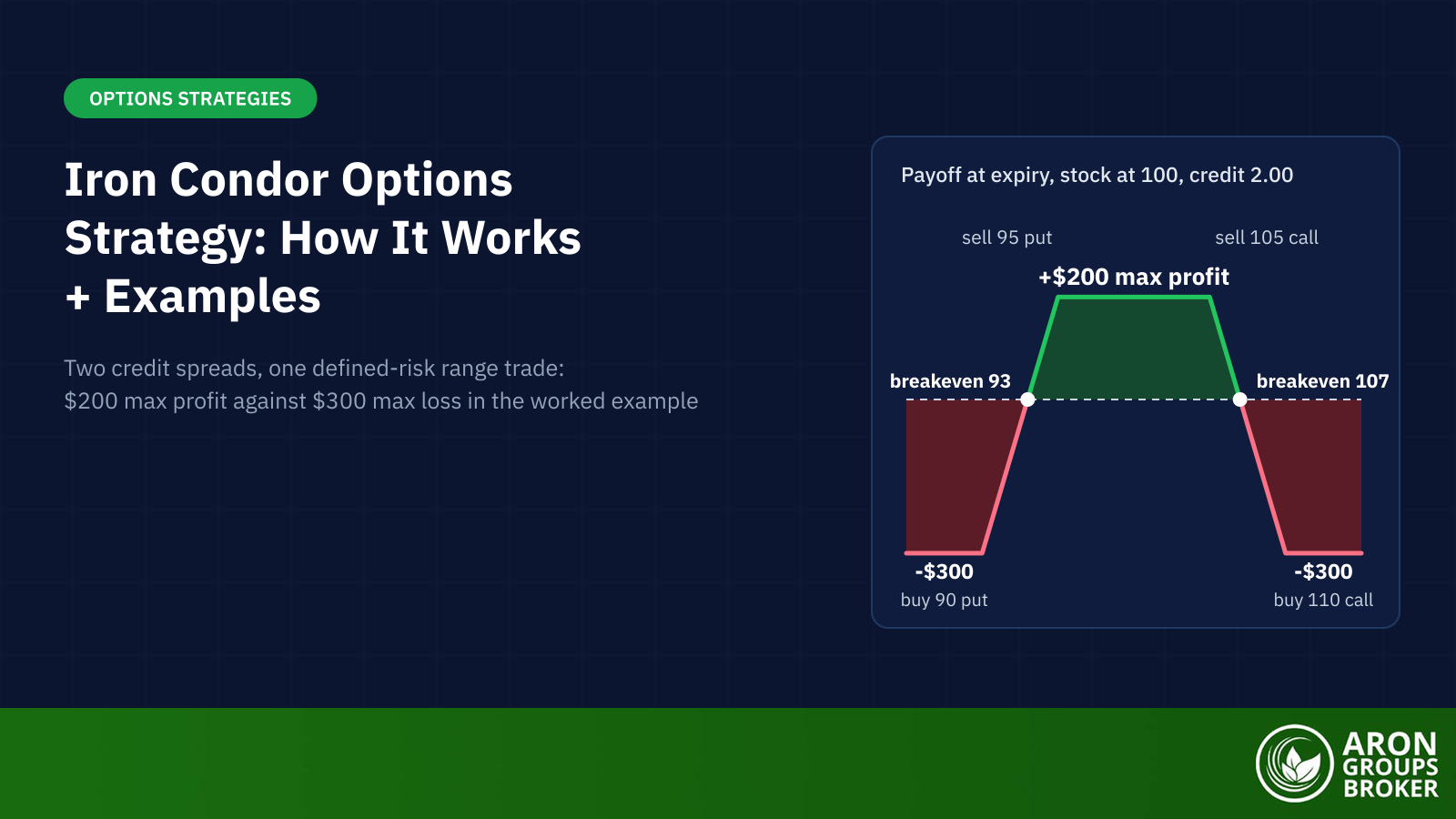
Defined risk structures are the usual way to express this. A short strangle sells premium either side of the current price, and an iron condor adds further out contracts to cap the loss. Both are short vega, so both gain as implied volatility falls.
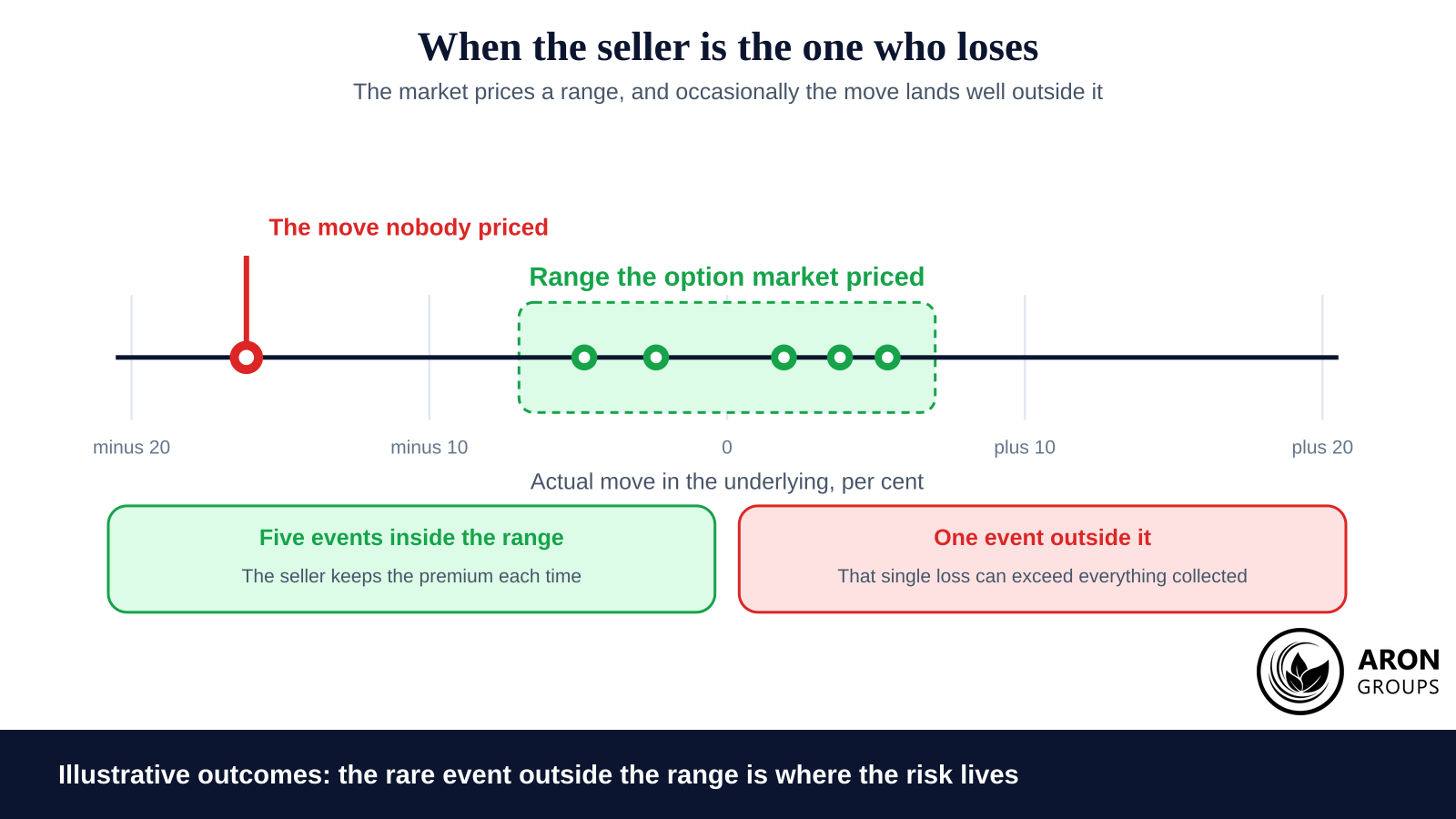
The counter-risk is real, and it is the part promotional material skips. A move larger than the options market priced hurts a seller badly, because the loss on the losing leg grows with the move. Defined risk structures cap that loss but do not remove it, and the cap is easily a multiple of the premium taken in. Regulators publish plain warnings about advanced strategies that use leverage.
IV rank and percentile: judging whether premium is rich
Implied volatility rank and percentile answer a different question from the raw level. The level tells you what movement is priced right now. Rank and percentile place that level against its own recent history, which is how you judge whether premium is genuinely rich.
Rank compares today’s implied volatility with the highest and lowest readings over a lookback window, usually a year. Percentile counts the share of days in that window that closed lower. The two can disagree, and a high rank with a modest percentile means one brief spike set the range.
| Measure | What it answers | How to read it |
|---|---|---|
| Raw implied volatility | What movement is priced right now | Comparable across time for one instrument, not across instruments |
| Implied volatility rank | Where today sits between the low and the high | A high rank means the level is near the top of its own range |
| Implied volatility percentile | Share of days in the window that closed lower | Less sensitive to a single outlier spike than rank is |
The raw level prices the next move; rank and percentile place that price in its own history.
Mini Example: checking premium before a scheduled release
A trader looks at a stock reporting in two days, using illustrative figures. Implied volatility on the front expiry reads 70, against a twelve month range of 25 to 75. The rank is high, so premium is expensive by the instrument’s own standards.
That reading changes the structure rather than the direction. Buying outright premium here means paying near the top of the range and needing a large move to justify it. Waiting for the crush is a different trade with its own risk.
None of this forecasts the size of the crush. A high rank says premium is expensive relative to its history, which is useful to a seller and a warning to a buyer. It does not say the premium is mispriced. Expensive and overpriced are different claims, and only the second is a trading edge.
The honest limits of trading around IV crush
The direction of the crush is predictable; its size is not. Implied volatility reliably falls after a scheduled event. How far it falls varies with the instrument, the expiry and how much of the move was already priced. It never collapses to the same level every time.
Expensive premium is not the same as mispriced premium. High implied volatility before an event may turn out to be an accurate forecast of what follows. Selling it only pays if the market has overpriced the move, and out of sample testing is the only honest way to examine that claim.
Selling premium into events is a strategy with a fat left tail, not free money. The wins are frequent and small; the losses are rare and large, and one event outside the priced range can undo a long run of collected premium. Size the position around that shape rather than around the win rate. Stress test the sequence rather than the single trade, and know the drawdown it can produce.
Two further limits are worth stating plainly. The crush is well known, so a large part of it already sits in the price you pay before the event. And short horizon, high turnover trading of this kind carries a long documented record of poor retail outcomes.
Risk Warning
A defined risk structure caps the loss on one event. It does not make a run of events safe, and the capped loss is still a multiple of the premium collected.

Where Aron Groups fits
Aron Groups offers spot and CFD instruments rather than options, so IV crush is not something you can trade here. What carries over is the event behaviour itself, which shapes cash markets in the same way. The quiet grind before a scheduled release, the widening spread and the sharp resolution afterwards are the same story without the option chain. The platform is MetaTrader 5, with market execution that fills at the next available price with no requotes and spreads float with the market.
That floating spread is the practical point. Liquidity thins into a major release and the cost of entering widens, which is the cash market signalling the same uncertainty that lifts option premium. On the Nano account there is no commission, the cost sits in the spread, and it supports micro volumes from 0.0001 lots. Keep capital preservation ahead of curiosity, and watch the running cost in the MT5 toolbox.
Conclusion
IV crush is a repricing, not a mystery. Option premium is inflated while a scheduled outcome is unknown and deflated the moment it is known. Vega tells you how much of the position depends on that. The direction of the effect is dependable, but the size of it is not.
For a buyer, being right on direction is only half the trade. For a seller, rich premium arrives with a rare loss large enough to matter. Build risk management around both sides. Regulators have documented how consistently retail accounts lose money on leveraged products.
Frequently asked questions
Four questions come up repeatedly once traders start positioning around scheduled events.
What causes IV crush?
Uncertainty ending. Implied volatility is bid up while the outcome of a scheduled event is unknown, because sellers demand more to carry that risk. Once the news is out the uncertainty is gone, implied volatility falls back, and the extrinsic value priced off it falls with it.
Can you profit from IV crush?
Yes, by being short premium into the event rather than long it. Sellers collect the inflated premium and buy it back cheaper once implied volatility falls. The trade carries a rare but large loss when the move exceeds what the market priced, so position size decides whether the approach survives.
Does IV crush happen outside earnings?
Yes. Any scheduled event with an uncertain outcome produces it, including central bank decisions, regulatory rulings, major economic releases and product launches. Crypto option markets show the same pattern around protocol upgrades.
How do I avoid IV crush as a buyer?
Buy before implied volatility has been bid up, or choose a longer expiry where vega is a smaller share of the price. A third route is to express the view without buying premium at all. None of these removes the exposure completely. Trading discipline matters more than the structure, because the temptation is to buy when premium is dearest.