





AI Trading Bots: Practical Guide for Retail Traders in 2026
AI trading has gone from a Wall Street luxury to a retail trader’s everyday toolkit. Whether you trade forex pairs, crypto CFDs, gold, or indices, the question is no longer “will AI change trading?” but “how do I use it without getting burned?” This guide walks you through what ai trading actually involves, how trading bots work across the full workflow, which types of bots exist, what to look for, and how to get started responsibly with a broker like Aron Groups.
What Is AI Trading and Why It Matters Now
Can artificial intelligence really help you trade? Yes-but it is not a magic money machine. AI tools amplify a trader’s ability to process data, spot patterns, and maintain discipline. They do not eliminate risk or guarantee success.
AI trading refers to using machine learning, deep learning, natural language processing, and other forms of artificial intelligence to support or automate trading decisions across financial markets. Unlike static rule-based systems, AI trading bots learn from historical and real time data, adapt to shifting market conditions, and can generate signals, manage risk, or execute trades automatically. The global AI trading market was valued at USD 18.2 billion in 2023. By 2026, the broader algorithmic trading market is projected to exceed $32.8 billion, with retail AI tool usage growing from roughly 9.1 million active U.S. users in early 2025 to about 12.8 million by Q1 2026. The growth is real-and so are the risks.
It helps to distinguish between an ai trading bot and an AI trading app. An ai trading bot is an automated system that places buy and sell orders without manual confirmation-for example, an Expert Advisor on MT5 that trades GBPUSD based on momentum signals, or a crypto bot running 24/7 trend-following on BTCUSD. An AI trading app, on the other hand, might screen markets, highlight divergences, or flag sentiment shifts but leaves executing trades to the human. Both have a place, but the distinction matters for risk and control.
How do machine learning models actually analyse markets? They ingest historical price and volume data, volatility metrics, order-book depth, macro releases, and sentiment signals. Features like 14-day RSI or 20-day ATR are extracted, and predictive models-gradient boosting, LSTMs, reinforcement learning agents-forecast direction, volatility, or optimal position size. AI can process millions of data points and technical indicators instantly, far faster than any human. But AI trading tools amplify trading skills; they do not replace them. AI trading effectiveness depends on the quality of input data.
At Aron Groups Broker, traders access forex, commodities, indices, and crypto CFDs from a single MetaTrader 5 account. That multi-asset access, combined with copy trading, prop trading challenges, and the IB program, creates an environment where AI tools-whether fully automated bots or semi-automated assistants-can integrate naturally. AI trading bots help automate trading strategies and reduce emotional decision-making, which is one of their most practical benefits for retail traders.
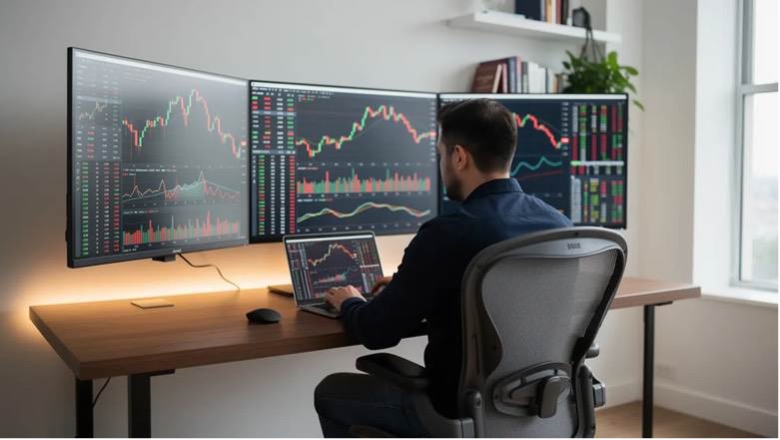
How AI Is Used Across the Trading Workflow
Here is how ai fits into each step of a typical trading lifecycle-from raw data to live order execution.
- Data collection – Raw tick or bar data (price, OHLC, volume), order-book snapshots, macroeconomic calendars, news headlines, social media feeds, and crypto on-chain flows. AI systems ingest both structured and unstructured data to analyze market conditions comprehensively.
- Feature engineering – Transforming raw inputs into model-ready variables: momentum indicators (RSI, MACD), volatility measures (ATR, Bollinger Bands), cross-asset correlations (EURUSD vs DXY), and sentiment scores from news or social platforms.
- Signal generation – Machine learning algorithms identify patterns in financial data to predict price movements. Models output categorical signals (buy/sell/hold) or probability scores (e.g., “65% chance EURUSD rises next hour”).
- Risk management & portfolio allocation – Determining position sizing, diversification across assets, maximum drawdown targets, and daily loss limits. AI can optimize portfolio decisions using reinforcement learning to adjust allocations dynamically.
- Order execution – Bots send orders via APIs or platform EAs. AI trading bots can execute trades faster and more efficiently than manual placement, reducing slippage through smart timing and order splitting.
- Monitoring & iteration – AI continuously evaluates its performance and adjusts algorithms for improved accuracy. Traders review logs, track metrics, and intervene if the trading system misbehaves.
AI trading tools can operate continuously, monitoring markets around the clock-24/5 for forex, 24/7 for crypto CFDs. This is a significant edge over manual trading for traders who cannot watch screens all day.
Market Data Processing and Feature Creation
Every ai trading bot starts by transforming raw market data into usable features. Price ticks, volume bars, order-book depth, macroeconomic releases, and social media sentiment all need cleaning, normalisation, and alignment before a model can use them. AI models help extract features like momentum and volatility from this raw data-for example, a 14-day RSI captures momentum, a 20-day ATR measures volatility, and a correlation coefficient tracks how EURUSD moves relative to the Dollar Index (DXY).
For crypto, features may include on-chain metrics such as exchange flows or active addresses. Research combining FinBERT sentiment embeddings with technical indicators has shown improved prediction of extreme Bitcoin moves. Aron Groups traders can access multi-asset data-forex, commodities, indices, crypto CFDs-from one account, enabling feature-rich strategies that draw on cross-market signals. AI trading strategies can analyze complex financial time series spanning multiple asset classes simultaneously.
Model Prediction and Signal Generation
Once features are built, AI models convert them into actionable trade ideas. Common techniques include gradient boosting (XGBoost, LightGBM) for tabular data, LSTM and Transformer networks for sequential time-series, and reinforcement learning agents that learn adaptive policies. Ensemble methods-combining multiple models-tend to reduce variance and improve generalisation.
The prediction horizon shapes the bot type: scalping bots forecast seconds or minutes ahead, intraday bots predict hours, and swing bots look days or weeks out. Each carries different risk profiles and leverage needs. Before any bot goes live, signals must be backtested on at least 3–5 years of historical data spanning bull, bear, and high-volatility regimes. A concrete example: an ai bot predicting volatility spikes in crude oil around weekly inventory reports, using ATR, energy-sector sentiment, and USD index covariance to time entries. AI can analyze complex financial time series for portfolio optimization and signal generation alike.
Portfolio Optimisation and Risk Management
Accurate prediction alone is meaningless without position sizing, diversification, and clear risk rules. A bot that calls direction correctly 60% of the time will still lose money if it risks too much on each trade.
AI can suggest position sizes based on current volatility, prediction confidence, maximum drawdown targets, and correlations across forex pairs and CFDs. Reinforcement learning is increasingly used for dynamic capital allocation, adjusting exposure in real time as market conditions change. Concrete rules an ai bot might enforce:
- 1–2% of account equity risked per trade
- Maximum daily loss limit of 3%
- Automatic position size reduction after three consecutive losses
- AI can set precise stop-loss limits for risk management on every position
Aron Groups traders can use multiple trading accounts or sub-portfolios-one hosting a conservative forex swing bot, another running a higher-risk crypto strategy-to separate risk profiles cleanly.
Order Execution and Live Trading
Execution-focused AI aims to reduce slippage and transaction costs by timing entries within seconds. Practical examples include splitting a large EURUSD order across multiple fills, using limit orders on indices CFDs to capture better prices, and avoiding low-liquidity windows around market close or holidays. AI trading bots can execute trades based on predefined rules, removing hesitation from the process.
The gap between paper trade results and live trading is real. Demo accounts simulate spreads and conditions, but live markets introduce actual slippage, latency, and variable liquidity. Aron Groups offers fast execution on MT5, which matters when connecting EAs or bots that place many orders intraday. For more on platform-level auto trading setup, the MT5 guide covers EA connectivity in detail.
Even the best ai trading bot needs supervision. Maintain logs, set alerts for unusual drawdowns, and review execution quality weekly.
Learn more about 15 Forex Trading Tips.
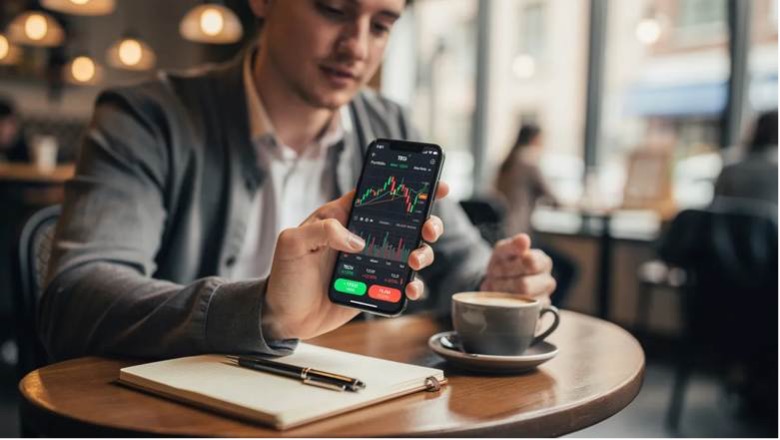
Types of AI Trading Bots Retail Traders Use
Retail traders generally work with a few core bot categories: trend-following, mean reversion, dollar cost averaging, grid, arbitrage, and sentiment-driven bots. Beginners often start with simple AI-assisted rule bots-momentum plus stop-loss-then progress to more advanced tools involving deep learning or multi-factor models. No single “best ai trading bot” exists universally; suitability depends on timeframe, asset class, and risk tolerance. Stock trading bots share similar logic but apply to equities rather than forex or CFDs.
Trend-Following and Momentum Bots
Trend-following bots ride sustained price moves using indicators like 50/200-period moving average crossovers on GBPUSD or MACD signals on NASDAQ CFD indices. AI enhancements optimise entry filters, stop-loss distances, and take-profit rules based on historical win/loss distributions.
Use case: a bot trading XAUUSD (gold) during London and New York sessions, entering when price crosses above the 50-period MA with confirmed momentum, setting a 50-pip stop-loss and 100-pip target, risking 1% of account per trade. Strengths: catching large directional moves. Weaknesses: choppy, range-bound markets generate false signals. Always pair trend bots with a daily risk cap.
Mean Reversion and Range Bots
Mean reversion bots buy when price deviates significantly below an average and sell when it reverts. They rely on RSI, Bollinger Bands, or statistical z-scores. During the 2022–2024 EURUSD consolidation phases, a mean reversion bot entering long when RSI dropped below 30 at the lower Bollinger Band could profit from predictable bounces.
AI helps detect when markets shift from range-bound to trending, automatically disabling these bots or widening thresholds. Strict stop-losses are essential-mean reversion fails badly during strong breakouts or macro shocks. Low-spread major pairs on Aron Groups reduce trading costs, making frequent range-bot entries more viable.
Dollar Cost Averaging (DCA) and Grid Bots
Dollar cost averaging means investing a fixed amount at regular intervals-weekly or monthly-into a crypto or index CFD position. DCA bots reduce timing risk by spreading entries, especially in volatile instruments like BTCUSD or ETHUSD. AI trading bots can start with investments as low as $100, making DCA accessible to nearly anyone.
Grid trading differs: it places a series of buy and sell orders at predefined price levels to profit from oscillations. AI-driven volatility filters can adjust grid spacing based on current conditions. Both strategies are popular with beginners because rules are simple. The risk? Grid bots can lose heavily during strong trending moves outside the grid, so risk limits remain non-negotiable.
Arbitrage, News, and Sentiment Bots
Arbitrage bots exploit price differences across venues. In practice, most retail traders on a single broker rarely access pure arbitrage, but the concept underpins some statistical strategies. News and sentiment bots are more practical-they scan economic calendars, Twitter/X, and financial headlines, flagging shifts around assets like USD, gold, or Bitcoin.
Example: AI models flagging negative sentiment on a major bank, prompting a bot to reduce exposure to related indices CFDs. TrendSpider offers AI-powered market scanners for various assets that can feed into such strategies. Aron Groups clients can benefit from sentiment insights even without full automation, using ai tools for analysis and then placing trades on MT5. These bots require careful testing around high-impact events (FOMC, NFP, CPI) due to extreme volatility.
Key Features to Look For in an AI Trading Bot
Choosing the best ai trading bot is about matching key features to your trading strategy-not chasing hype or guaranteed returns. Trade Ideas is often cited as the best AI trading bot for 2026 in terms of signal generation, while platforms like StockHero and TrendSpider serve different needs. Core evaluation points include transparency, backtesting quality, risk controls, broker compatibility, and education. Many bots in 2026 now offer no-code interfaces and LLM-based assistants.
Transparency, Control, and Security
Traders must know what data the bot uses, what signals it generates, and how it manages open positions. Black-box systems carry higher risk. A practical checklist:
- Can I see trade logs and historical signal accuracy?
- Can I cap maximum position size and daily loss?
- Can I pause or disconnect the bot instantly?
- Are API keys restricted to trade-only permissions (no withdrawals)?
- Is two-factor authentication enabled?
Reputable brokers like Aron Groups encourage clients to keep withdrawal and account-management rights separate from bot permissions. Users retain full control and can switch back to manual or copy trading if a bot behaves unexpectedly.
Backtesting, Paper Trading, and Live Trading Modes
Backtesting is essential for evaluating AI trading strategies before live trading. Use high-quality data-tick or 1-minute bars from 2018–2025-across multiple regimes (bull, bear, high-volatility). Common pitfalls include overfitting to past data, ignoring transaction costs, and testing only in favourable periods. Past performance never guarantees future results.
Paper trading using demo accounts with virtual funds bridges the gap before risking real capital. Aron Groups demo accounts on MT5 reflect real market conditions and spreads, making them suitable for testing EAs. The recommended path: backtest → paper trade in a simulated environment → small-size live test → gradual scaling with performance monitoring.
Risk Management and Monitoring Tools
Every trading bot must include built-in risk controls. Non-negotiable features:
- Stop-loss and take-profit on every position
- Maximum open positions and daily/weekly loss limits
- Alerts when drawdown exceeds a threshold
- Real-time P&L dashboards and daily summaries
A concrete rule set: maximum 1% of account equity risked per trade, halt trading after 3 consecutive losing trades in one day. Aron Groups clients can combine platform-side risk features (margin settings, stop-out levels) with bot-side rules for layered protection.
Ease of Use, Education, and Support
For most retail traders, the best ai is the one they can actually understand, configure, and troubleshoot. Desirable features include no-code strategy builders, clear dashboards, and presets for common strategies like DCA and trend-following. StockHero allows users to create automated trading bots without coding skills, lowering the barrier significantly.
Tutorials, webinars, video courses, and multilingual support matter-aligned with Aron Groups’ focus on education and multi-language service. Platforms offering copy trading or a strategy marketplace help beginners learn from experienced traders before building their own bots. Access to more advanced tools should come gradually, after fundamentals are solid.
Learn more about Forex Myths.
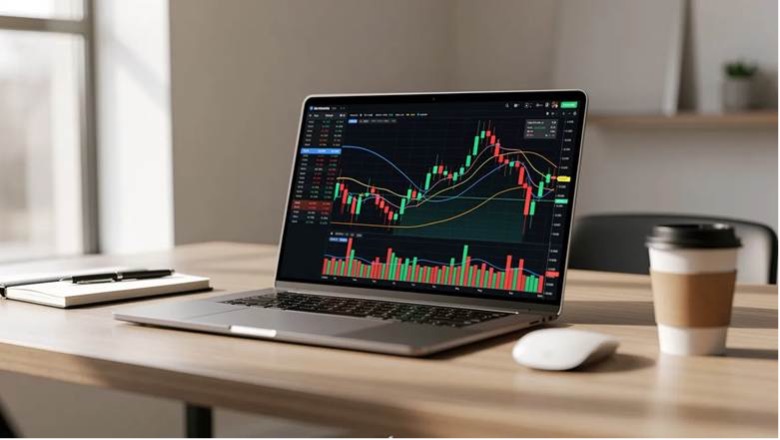
Getting Started: Choosing and Testing Your First AI Trading Bot
You do not need a large account or a computer science degree to start. Begin with small amounts, simple rules, and a demo account, then scale based on real results-not hopes.
Define Your Goals, Markets, and Timeframe
Before any bot setup, answer these questions honestly:
- Am I day trading or swing trading?
- Which instruments? Forex majors, gold, crypto CFDs, indices?
- How many hours per week can I monitor?
- What annual return am I targeting, and what drawdown can I stomach?
Two personas: a part-time trader focusing on EURUSD and gold during European sessions vs a crypto enthusiast running BTC and ETH ai powered bots 24/7. Clearer goals-“aim for 8–12% annual plan return with max 15% drawdown”-help select the right strategy and bot. Aron Groups offers various account types (standard, ECN/low spread, swap-free) suited to different holding periods and trading strategies.
Set Up a Secure Broker Account and Demo Environment
Concrete steps:
- Open an Aron Groups brokerage account and complete KYC
- Choose MT5 as your trading platform
- Create both a live and a demo account
- If using external bots, configure API or EA connectivity
Security practices: use strong passwords, enable 2FA, restrict API keys to trading only (no withdrawals), and review account access regularly. Start with a demo balance that mirrors your planned real deposit-e.g., $1,000–$5,000-not unrealistic millions. Some Aron Groups prop trading challenges or copy trading setups can also be tested with AI-assisted strategies where allowed by rules.
Start Simple: One Strategy, One Bot, Small Size
Resist the urge to run five bots across twenty symbols on day one. Start with a single, proven strategy on one instrument. A concrete configuration example:
- Trade EURUSD on H1 timeframe
- 50/200 MA crossover as the core signal
- 1% risk per trade via position sizing
- No trading around major news releases
- Minimum lot size (0.01) for the first weeks
Treat any early loss as tuition. Review trades daily or weekly: did the bot respect rules, risk limits, and behave as expected during volatile periods? This discipline separates traders who survive from those who don’t. For help building a structured approach, see How to Create a Trading Plan.
Evaluate Performance and Decide Whether to Scale
After 4–8 weeks, measure what matters: win rate, average reward-to-risk, maximum drawdown, and whether results align with backtests. Treat at least 30–50 live or demo trades as a minimum sample before making big changes.
If the bot performs well and risk assessment is positive, gradually increase position size or add a second, uncorrelated strategy-one forex, one gold CFD, for example. Poor performance should trigger diagnosis: data issues, overfitting, wrong parameters, or a market that changed regime. Aron Groups clients can seek guidance from support or educational resources when interpreting early results.
Using AI Tools Beyond Fully Automated Bots
Not every trader wants-or should want-full automation. Many traders at Aron Groups start with ai tools for research, coding assistance, and decision support before trusting automated trading entirely. The “human-in-the-loop” workflow-AI suggests, human reviews, then trades manually or semi-automatically-is often the most practical approach.
AI as a Coding and Research Assistant
Large language models can draft or review code for indicators and Expert Advisors on MT5, even if you are not an expert programmer. Examples: generating a Python backtesting script, converting a trading rule set into MQL5, or debugging common logic errors. Strategy development that once took weeks now takes hours of iterating with an AI assistant.
A realistic day: you describe a forex strategy in plain English, the LLM drafts the EA code, you test it on an Aron Groups demo account, find a bug, ask the AI to fix it, re-test. Speed is the benefit. But AI-generated code still requires careful review-bugs in live trading cost real capital. For a deeper look at algorithmic trading software, Aron Groups covers platforms and use cases in a dedicated guide.
Sentiment Analysis, News Filters, and Market Briefings
Modern AI models can read thousands of articles, tweets, and economic releases to generate concise market briefings. Imagine a daily morning summary that flags sentiment shifts on USD, gold, and major stocks-colour-coded dashboards, short bullet-point summaries, and probability-based alerts.
Traders can use AI-generated sentiment scores as an extra filter on existing strategies rather than as a sole decision maker. Pitfalls exist: false signals from social media, lagging reactions to fast news, and AI systems that can misinterpret market manipulations leading to unexpected losses. Always cross-check sentiment with price action.
No-Code Strategy Builders and Semi-Automation
Many trading platforms in 2026 allow traders to build rule-based or AI-enhanced strategies using visual interfaces instead of programming. StockHero allows users to create automated trading bots via API with no coding required. Semi-automation is an appealing middle ground: AI generates alerts or pre-filled orders, but the human clicks “confirm” to send them to the market.
This approach suits Aron Groups clients who want to reduce screen time yet maintain final control over entries and exits. A concrete workflow: set conditions on MT5 or a connected tool, receive push notifications on your phone, confirm trades via mobile. You keep the edge of automation without the anxiety of full delegation.
Risks, Limitations, and Best Practices for AI Trading
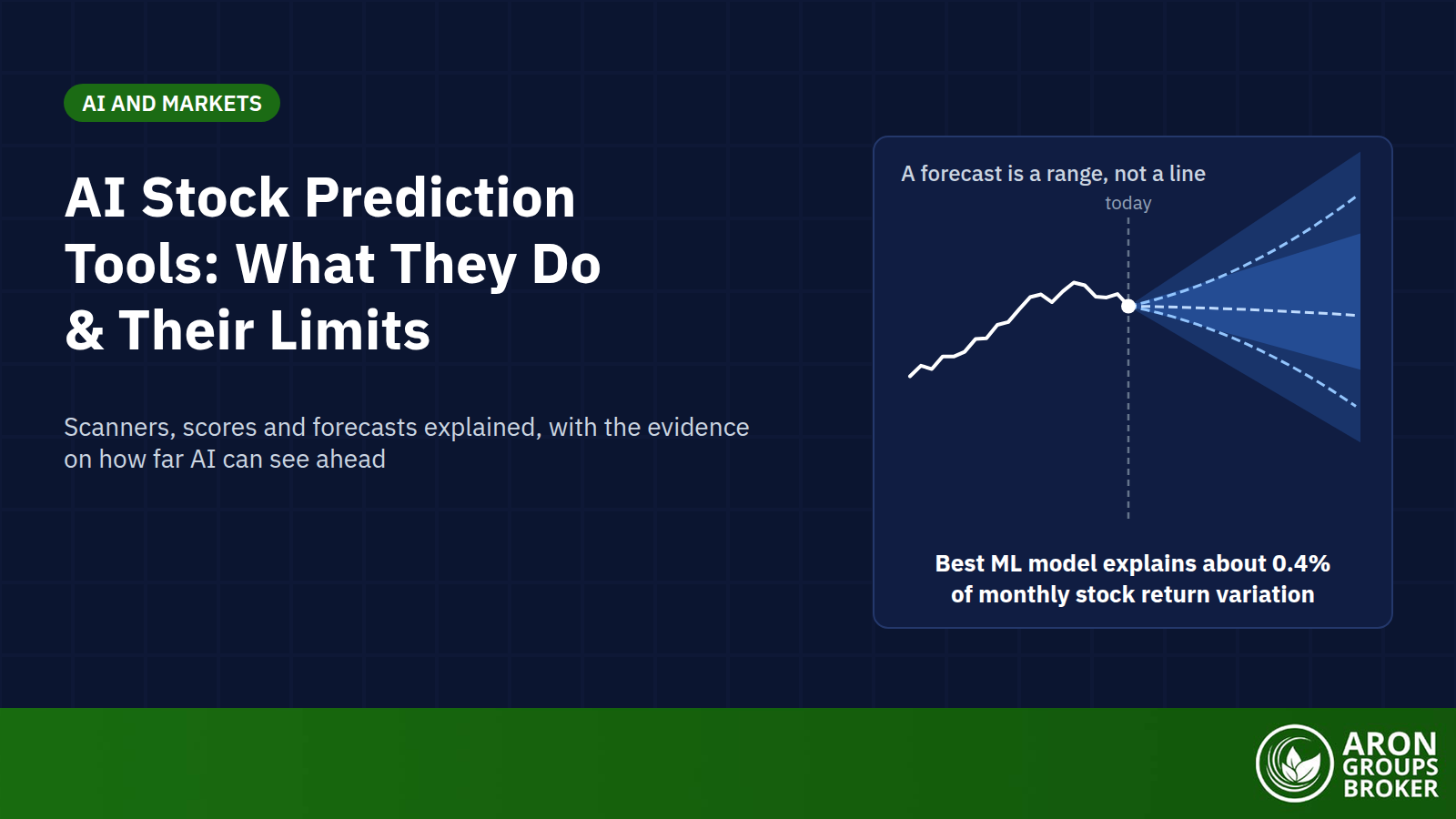
AI trading is powerful-but the years 2020–2024 proved that unexpected events can break even sophisticated models. Flash crashes, pandemic-driven volatility, and geopolitical shocks exposed the limits of automation. AI may fail to predict rapidly changing market conditions, and AI systems can struggle with chaotic market events and unexpected volatility.
Common Pitfalls: Overfitting, Hype, and Unrealistic Expectations
Overfitting can occur if AI is too optimized for historical data-a bot that looks flawless on 2018–2023 data but collapses in 2024–2026 because it memorised noise rather than genuine patterns. The CFTC has warned that AI trading bots are increasingly sold with unreasonable guarantees.
If a vendor promises “100% win rate” or guaranteed returns, walk away. Expect variance: losing streaks happen. One cautionary scenario: a trader scales a grid bot on crypto CFDs after three profitable weeks, only to suffer a 42% drawdown during a sudden market crash. Research shows an estimated 70–80% of retail trading bots fail to produce sustainable returns, largely due to overfitting, insufficient risk management, or inflexible strategy design.
Technical and Operational Risks
Operational risks include internet outages, VPS failures, platform crashes, incorrect bot code updates, and changes in broker symbol settings. During the March 2026 Bitcoin flash crash, 78% of AI bots experienced drawdowns exceeding 60%. Safeguards:
- Use a reliable VPS for uninterrupted bot operation
- Set fail-safe stops at broker level in addition to bot-level stops
- Maintain manual access via mobile MT5
- Keep logs, version control of bot settings, and written emergency playbooks
Regulatory or market structure changes-new margin rules, trading halts-can affect AI strategies and require periodic review. Aron Groups provides stable infrastructure and support channels, but strategy and bot maintenance remain the client’s responsibility.
Risk Management Habits for AI Traders
Core habits that protect capital over time:
- Always use stop-losses on every trade
- Diversify across strategies, instruments, and timeframes
- Limit leverage-especially on experimental bots
- Allocate maximum 5–10% of capital to untested bots; keep the rest in proven strategies or manual trading
- Withdraw profits periodically to lock in gains
- Conduct monthly or quarterly performance reviews
AI trading tools can help reduce emotional decision-making in trading, but they require the same discipline as manual approaches-arguably more, because the illusion of automation can breed complacency. Disciplined managing risk often matters more than having the “smartest” AI model. Different market conditions demand different responses, and market conditions change constantly. For a deeper dive into risk and capital management, Aron Groups’ gold trading guide covers principles that apply across all assets.
How Aron Groups Broker Fits Into Your AI Trading Journey
Aron Groups provides the trading environment-multi-asset access across forex, commodities, indices, and crypto CFDs, MT5 platform connectivity, copy trading, prop trading challenges, and an IB program-within which clients can use ai tools and bots. The broker does not promote any specific third-party bot but supports clients who wish to connect EAs or external AI tools responsibly through its platform.
Concrete advantages: fast execution for live trading bots, competitive spreads on forex and CFDs, a wide array of crypto instruments for 24/7 strategies, and multilingual support. Whether you are an advanced user building custom machine learning models or a beginner exploring a working strategy with a simple trend-following EA, the infrastructure is designed to support your journey.
Start with a demo account, experiment with simple AI-assisted strategies, and leverage Aron Groups’ educational resources before committing real capital. If you want to test your skills without financial risk first, the No-Deposit Skill Challenge is worth exploring. AI trading is a long-term skill set-not a one-click shortcut. Build it methodically, manage your risk, and let your results guide every next step.